PreparED Study Materials

CHEM 1215: CHEM 1215
School: Oklahoma State University
Number of Notes and Study Guides Available: 2
Notes
Videos
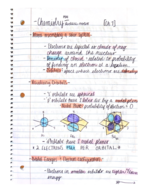
Lone Pair vs. Bonding Pair Electrons: Atomic Insights Unveiled

Want To Learn More? To watch the entire video and ALL of the videos in the series:
full solution
Explore the atomic world and the crucial distinctions between lone pair and bonding pair electrons in this insightful video. Delve into the fundamental aspects of atomic structure, electron orbitals, and their roles in chemical bonding, reactivity, and molecule formation.
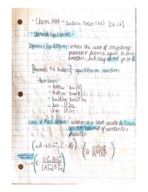
Diprotic Acid Titration: Determining Molar Mass
Want To Learn More? To watch the entire video and ALL of the videos in the series:
full solution
Discover how to find the molar mass of an unknown diprotic acid through a titration experiment with 0.1288 M NaOH. Learn step by step in this chemistry tutorial.
0.800g Match to SO?: Volume Calculation at 725 Torr & 32°C!
Want To Learn More? To watch the entire video and ALL of the videos in the series:
full solution
Detailed walkthrough of calculating sulfur dioxide gas volume produced from burning tetraphosphorus trisulfide. Utilizes stoichiometry and the Ideal Gas Law to derive results under specific conditions. Step-by-step guide for understanding chemical reactions and gas volume calculations
Speed of Light Explained: Earth, Billions of Km & the Concept of Light
Want To Learn More? To watch the entire video and ALL of the videos in the series:
full solution
Discover the incredible speed of light as it zips 7.5 times around Earth in just a second! Marvel at its daily and yearly travels, equating to billions and trillions of kilometers. Dive deeper into the concept of a 'light year' and its significance in astronomical measurements.
Unveiling Earth's Crust: Calculating Silicon Mass
Want To Learn More? To watch the entire video and ALL of the videos in the series:
full solution
Explore the fascinating process of calculating the mass of silicon in Earth's crust. Learn how to convert Earth's total mass to grams, determine the crust's mass percentage, and find the silicon's mass within the crust. Discover the scale of silicon's presence in our planet's outer layer.
Classifying the Boiling of Water: Physical or Chemical Change? Justify
Want To Learn More? To watch the entire video and ALL of the videos in the series:
full solution
This video tackles the classification of boiling water as either a physical or chemical change, examining the provided options. We conclude that boiling is a physical change, as the water's chemical composition remains the same during the transition from liquid to gas.