PreparED Study Materials

CH 1020: General Chemistry
School: Clemson University
Number of Notes and Study Guides Available: 66
Notes



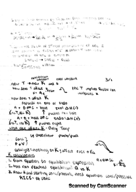



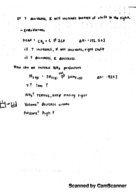







Chapter 4.1-4.2 general chemistry notes (Chemistry)
CH 1020
Clemson University
3 pages | Spring 2016


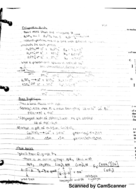


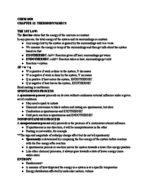
Ch1020 chapter 12 thermo notes 1/7/2016 (Chemistry)
CH 1020
Clemson University
5 pages | Spring 2016


Study Guides




Videos
Finding NaOH Molarity: Titration of 0.200L SO?-Derived H?SO? Solution

Want To Learn More? To watch the entire video and ALL of the videos in the series:
full solution
Determine the molarity of a NaOH solution through titration with sulfurous acid. Starting with the ideal gas equation we derive the concentration of a 0.200L SO?-derived H?SO? solution. Concluding with a molarity of 1.64 M for NaOH using calculated values.
Homogeneous vs Heterogeneous Mixtures: Examples & Classification Expla
Want To Learn More? To watch the entire video and ALL of the videos in the series:
full solution
Explore the distinction between homogeneous and heterogeneous mixtures. Through real-world examples like baby oil, chocolate chip cookies, and wine, understand their uniformity, phases, and how components are distributed.
Vaporization vs. Condensation: Heat Absorption & Release
Want To Learn More? To watch the entire video and ALL of the videos in the series:
full solution
Discover the contrasting processes of vaporization and condensation and their thermal nature. Understand why boiling is endothermic, absorbing heat, while condensation is exothermic, releasing heat, and how these processes impact ?H values.
Quantitative vs Non-Quantitative: Precision in Scientific Observations
Want To Learn More? To watch the entire video and ALL of the videos in the series:
full solution
Unpack the difference between quantitative and non-quantitative observations. Examples include a person's weight on the Moon and the depth a hand pump can reach. Learn why precise measurements are crucial in scientific studies.
SN2 Rate: Doubling NaOH & 1-Bromopropane Effects
Want To Learn More? To watch the entire video and ALL of the videos in the series:
full solution
"Explore how altering concentrations and volume impacts the rate of an SN2 reaction between 1-bromopropane and sodium hydroxide. Learn the rate equation that describes this reaction and see real examples of how rate changes with concentration and volume adjustments
Endothermic Rxn: Ba(OH)2·8H2O & NH4NO3 Heat Dynamics
Want To Learn More? To watch the entire video and ALL of the videos in the series:
full solution
Explore the endothermic reaction between Ba(OH)2·8H2O and NH4NO3 observing its impact on surroundings like the freezing water. Discover why touching the beaker feels cold and learn about heat transfer in such chemical reactions. This video is an insightful demonstration of heat absorption in chemical reactions.