PreparED Study Materials

BIO 123: General Biology II
School: Syracuse University
Number of Notes and Study Guides Available: 35
Notes



















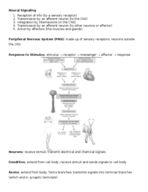

Study Guides






Videos
Haemoglobin Explained: Dissecting Its Structure & Oxygen Binding Capab

Want To Learn More? To watch the entire video and ALL of the videos in the series:
full solution
Dive into the biochemistry of haemoglobin, a pivotal protein in red blood cells. We assess key statements about its structure and function, clarifying common misconceptions.
Mixtures vs. Solutions: Decoding Their Chemistry & Interrelationships
Want To Learn More? To watch the entire video and ALL of the videos in the series:
full solution
Discover the distinctions between mixtures and solutions in chemistry. Through everyday examples and a visual aid, grasp the relationship between these two concepts. Comprehend how mixtures and solutions are intertwined, yet uniquely different.
Photosynthesis Explained: Transforming Sunlight into Sugars in Plants
Want To Learn More? To watch the entire video and ALL of the videos in the series:
full solution
Unpack the intricate process of photosynthesis, revealing the two major stages within chloroplasts. Discover the vital roles of ATP and NADPH in the Calvin Cycle. Grasp the essence of how plants fuel life on Earth.
ATP Showdown: Which Metabolic Pathway Reigns Supreme in ATP Production
Want To Learn More? To watch the entire video and ALL of the videos in the series:
full solution
Discover which metabolic pathway is the heavyweight champion of ATP production. We'll evaluate contenders like lactic acid fermentation, the Krebs cycle, and more to determine the top ATP generator.
Ion Pumps & Phagocytosis: Which Transport Types?
Want To Learn More? To watch the entire video and ALL of the videos in the series:
full solution
Explore active and passive transport and understand how ion pumps and phagocytosis fit in. Discover endocytosis as an active transport where cells engulf particles. Differentiate between active transport mechanisms and passive methods like facilitated diffusion.
Evolution vs. Intelligent Design: Diversity in Biochemical Pathways
Want To Learn More? To watch the entire video and ALL of the videos in the series:
full solution
Discover the debate between Intelligent Design (ID) and evolutionary science as they clash over the complexity of biochemical pathways in nature. Explore the concept of guided vs. unguided evolution and how diverse pathways challenge the ID perspective.