PreparED Study Materials

CH 111: College Chemistry Multisection
School: University of Hartford
Number of Notes and Study Guides Available: 42
Notes


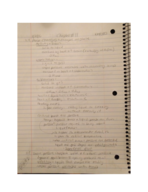





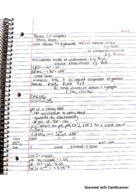


End of chapter 11, chapter 12 and 13 (Chemistry)
CH 111
University of Hartford
6 pages | Spring 2016


Study Guides







Videos
1828 Synthesis of Urea: Pioneering Steps in Biochemistry

Want To Learn More? To watch the entire video and ALL of the videos in the series:
full solution
Explore the groundbreaking moment in 1828 when Wöhler synthesized urea, the first organic compound. Join us in this video as we trace the profound impact of this achievement on the field of biochemistry and its significance in unraveling the mysteries of life's complex chemistry.
STP Reactions: How Phosphorus & Oxygen Form P?O??
Want To Learn More? To watch the entire video and ALL of the videos in the series:
full solution
Grasp the concept of Standard Temperature and Pressure (STP) and its significance in chemistry. Through a practical example, this video elucidates how phosphorus reacts with oxygen at STP to produce tetraphosphorus decaoxide. Comprehensive mole calculations and chemical equations simplify this intriguing chemical process.
Copper Bombardment: Calculating X-ray Photon Energy
Want To Learn More? To watch the entire video and ALL of the videos in the series:
full solution
We'll guide you through the process of calculating the energy associated with X-ray photons when the wavelength is 0.154 nm. This video offers a practical application of physics and helps you understand the energy spectrum of X-rays. Whether you're a science enthusiast or a student, you'll gain valuable insights into this intriguing topic.
Chromium & Oxygen: Limiting Reactants & Chromium(III) Oxide Formation
Want To Learn More? To watch the entire video and ALL of the videos in the series:
full solution
Unravel the reaction of chromium and oxygen forming chromium(III) oxide. Examine different scenarios to determine the limiting reactant using stoichiometric ratios. Understand how to predict product amounts through these calculations.
Why is a short RNA primer needed for replication?
Want To Learn More? To watch the entire video and ALL of the videos in the series:
full solution
Unlocking the Mystery of Short RNA Primers in DNA Replication: Discover the essential role they play and why they are a crucial component in the replication process. Join us in this video as we delve into the fascinating world of molecular biology and DNA replication.
Number of molecules in 3.5g H?O, 56.1g N?, 89g CCl?, 19g C?H??O?
Want To Learn More? To watch the entire video and ALL of the videos in the series:
full solution
This video shows how to determine the number of molecules in a given sample by utilizing the concept of moles, Avogadro's number (6.022 x 10²³), and the molar mass of the substance. It provides step-by-step calculations for different substances, converting mass to the number of molecules and highlighting the versatile application of this approach.