PreparED Study Materials

CHEM 4890: Organic Chemistry 2, Molecular Genetics, Biochemistry 1
School: Youngstown State University
Number of Notes and Study Guides Available: 0
Videos
From CH? to C?H?: Decoding Molecular Formula with Molar Mass

Want To Learn More? To watch the entire video and ALL of the videos in the series:
full solution
Discover the process of determining a compound's molecular formula from its empirical formula and molar mass. Understand the calculations and reasoning behind deriving C?H? from the empirical formula CH? with a molar mass of 56.11 g/mol. Gain insight into fundamental chemistry concepts and computations.
Want To Learn More? To watch the entire video and ALL of the videos in the series:
full solution
Chromium & Oxygen: Limiting Reactants & Chromium(III) Oxide Formation
Want To Learn More? To watch the entire video and ALL of the videos in the series:
full solution
Unravel the reaction of chromium and oxygen forming chromium(III) oxide. Examine different scenarios to determine the limiting reactant using stoichiometric ratios. Understand how to predict product amounts through these calculations.
Utilizing Chemical Names and Symbols in Copper Cycle Analysis
Want To Learn More? To watch the entire video and ALL of the videos in the series:
full solution
Explore the power of chemical names and symbols in deciphering copper compound formation at each step of the copper cycle, with an illustrative example.
Understanding Microwaves: Boiling Water's Time and Photon Count
Want To Learn More? To watch the entire video and ALL of the videos in the series:
full solution
This video breaks down the process of calculating the time and number of photons required to boil water in a microwave. Using given power, wavelength, and water specifics, we determine both energy needs and photon count.
Calculating Percent Error: Insights into Experiment Accuracy & Refinem
Want To Learn More? To watch the entire video and ALL of the videos in the series:
full solution
Discover the importance of calculating percent error to assess the precision of experiments. Through real-world examples like measuring alcohol's density and the mass of gold, learn how this value offers insights into measurement accuracy and ways to refine methods.
Textbook Solutions (0)
Top Selling Study Tools



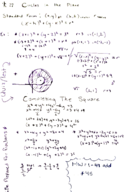
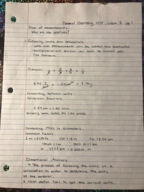

General chemistry week 3 notes (Chemistry)
CHEM 41310
Youngstown State University
1 page | Fall 2018