PreparED Study Materials

CHM 251: Organic Chemistry 1
School: Miami University
Number of Notes and Study Guides Available: 15
Notes






Study Guides

Videos
Drawing Open-Chain Structures: A Visual Guide to Four Sugars

Want To Learn More? To watch the entire video and ALL of the videos in the series:
full solution
Learn how to draw open-chain structures for various sugars, from ketotetrose to amino sugars. This video offers visual demonstrations of ketopentose, deoxyaldohexose, and more, highlighting key molecular differences.
Want To Learn More? To watch the entire video and ALL of the videos in the series:
full solution
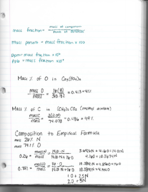
Mass of Solutions: 12g Sucrose in 4.1%, 3.2%, & 12.5% Cases
Want To Learn More? To watch the entire video and ALL of the videos in the series:
full solution
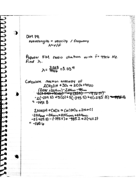
Determining the total mass of sucrose solutions at varying concentrations: 4.1% 3.2% and 12.5%. Learn step-by-step calculations to find solution masses containing 12 grams of sucrose. Results: ~292.68g ~375g and 96g for each concentration respectively.
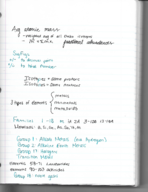
Protons reveal electron count in atoms. Which statement applies?
Want To Learn More? To watch the entire video and ALL of the videos in the series:
full solution
In this video, we explore the information that knowledge of the number of protons in a neutral element's atom can provide. Options for determining neutron count, electron count, and identifying the element's name are examined, with a conclusion that it allows us to know both the number of electrons and the element's name.
Weight% of Ba, K, Cl in Heated BaCl2·2H2O & KCl Mix
Want To Learn More? To watch the entire video and ALL of the videos in the series:
full solution
In this video we explore the process of calculating the weight percent of barium potassium and chlorine in a mixed sample of barium chloride dihydrate and potassium chloride. Through a step-by-step approach we examine the changes in sample weight after heating to 160°C breaking down the calculations for each elemental content.
Boyle's Law Explained: From Compression to Pressure Calculation
Want To Learn More? To watch the entire video and ALL of the videos in the series:
full solution
Learn the intricacies of Boyle's Law through an example involving isothermal compression of a perfect gas. Watch as we calculate the original pressure using the change in volume and final conditions. This tutorial simplifies complex gas laws for easy comprehension.