PreparED Study Materials

CHM 332: Outlines of Biochemistry
School: Miami University
Number of Notes and Study Guides Available: 1
Study Guides

Videos
Determining Moles of Released Ions in Dissolution Reactions

Want To Learn More? To watch the entire video and ALL of the videos in the series:
full solution
When an ionic compound dissolves in water, it undergoes dissociation into its constituent ions. The total moles of ions released is determined by adding up the moles of each ion generated during this dissociation process. In the case of (a) disodium hydrogen phosphate (Na?HPO?), it dissociates into two sodium ions and one hydrogen phosphate ion. For (b) copper(II) sulfate pentahydrate (CuSO? · 5H?O), it dissociates into one copper ion and one sulfate ion. In (c), nickel(II) chloride (NiCl?) diss
Determining Neutrons from Atomic & Mass Numbers: A Comprehensive Guide
Want To Learn More? To watch the entire video and ALL of the videos in the series:
full solution
Understand the relationship between atomic number, mass number, and neutrons within atoms. This video breaks down the simple calculation to determine the number of neutrons for specific elements like Nickel, Uranium, Scandium, and Argon.
Understanding Reaction Rate Decrease Over Time
Want To Learn More? To watch the entire video and ALL of the videos in the series:
full solution
This explanation delves into the phenomenon where the reaction rate decreases over time due to the decrease in reactant concentration, resulting in fewer successful collisions and reactions, without revealing specific examples or findings.
Mastering Molar Mass: Calculations for Key Chemical Compounds
Want To Learn More? To watch the entire video and ALL of the videos in the series:
full solution
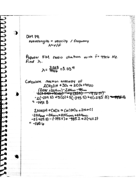
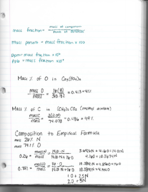
Discover how to calculate the molar mass of various chemical compounds, including Mercury(I) chloride, Calcium sulfate dihydrate, Chlorine pentoxide, and Sodium hydrogen sulfate. Learn the step-by-step process and atomic mass calculations for accurate results.
Number of molecules in 3.5g H?O, 56.1g N?, 89g CCl?, 19g C?H??O?
Want To Learn More? To watch the entire video and ALL of the videos in the series:
full solution
This video shows how to determine the number of molecules in a given sample by utilizing the concept of moles, Avogadro's number (6.022 x 10²³), and the molar mass of the substance. It provides step-by-step calculations for different substances, converting mass to the number of molecules and highlighting the versatile application of this approach.
Oxidizing & Reducing Agents: Electron Exchange Demystified
Want To Learn More? To watch the entire video and ALL of the videos in the series:
full solution
Explore the world of oxidizing and reducing agents in chemistry. Gain a clear understanding of what they are and how they function without delving too deep into the subject matter.