PreparED Study Materials

CHEM 178: General Chemistry II
School: Iowa State University
Number of Notes and Study Guides Available: 22
Notes



Study Guides


Videos
Diluting a 5.5 M KCl Solution to 0.100 M

Want To Learn More? To watch the entire video and ALL of the videos in the series:
full solution
Learn the steps to make a 2.5 L of 0.100 M KCl solution from a 5.5 M stock solution in this easy-to-follow tutorial.
Finding NaOH Molarity: Titration of 0.200L SO?-Derived H?SO? Solution
Want To Learn More? To watch the entire video and ALL of the videos in the series:
full solution
Determine the molarity of a NaOH solution through titration with sulfurous acid. Starting with the ideal gas equation we derive the concentration of a 0.200L SO?-derived H?SO? solution. Concluding with a molarity of 1.64 M for NaOH using calculated values.
Evolutionary Implications of Cytochromes vs. Hemoglobin and Myoglobin
Want To Learn More? To watch the entire video and ALL of the videos in the series:
full solution
In this video, we delve into the fascinating world of evolutionary adaptations in heme-containing proteins.
Why Fluorine Can't Form FH? or FCl?: Unpacking VSEPR Theory & Electron
Want To Learn More? To watch the entire video and ALL of the videos in the series:
full solution
Explore why fluorine, with its seven valence electrons, doesn't form compounds like FH? or FCl?. Understand the role of VSEPR theory, atomic size, and electronegativity in limiting bond formation. Grasp the interplay of geometric challenges and electron repulsion in compound stability.
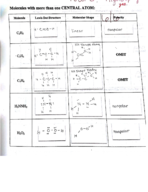
BrF?, ClF?, & IF? Lewis Structures: Which Don't Obey Octet Rule?
Want To Learn More? To watch the entire video and ALL of the videos in the series:
full solution
Unravel the Lewis structures of BrF?, ClF?, and IF? and their relationship with the octet rule. Examine how fluorine bonds with bromine, chlorine, and iodine. Identify molecules that deviate from the standard octet distribution.
Vaporization vs. Condensation: Heat Absorption & Release
Want To Learn More? To watch the entire video and ALL of the videos in the series:
full solution
Discover the contrasting processes of vaporization and condensation and their thermal nature. Understand why boiling is endothermic, absorbing heat, while condensation is exothermic, releasing heat, and how these processes impact ?H values.