PreparED Study Materials

CHEM 333: Organic Chemistry I
School: University of South Carolina
Number of Notes and Study Guides Available: 70
Notes



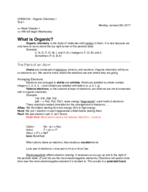
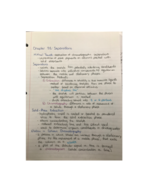
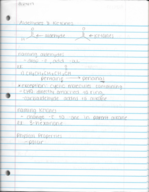
Organic chemistry 333 week 1 notes (OTHER)
CHEM 333
University of South Carolina
3 pages | Fall 2015




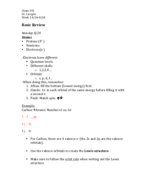
Organic chemistry week 1 notes (Chemistry)
CHEM 333
University of South Carolina
7 pages | Fall 2015


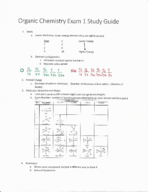
Study Guides



Videos
Chemical Combo: How N2 and F2 Produce Nitrogen Trifluoride Explained!

Want To Learn More? To watch the entire video and ALL of the videos in the series:
full solution
Explore the chemical combination of nitrogen and fluorine to produce nitrogen trifluoride. Learn how to determine the limiting reactant and calculate the theoretical yield using stoichiometry principles.
Producing Ammonium Sulfate: Calculating the Required Ammonia
Want To Learn More? To watch the entire video and ALL of the videos in the series:
full solution
Discover the process to determine the quantity of ammonia (NH?) required to produce a specific amount of ammonium sulfate ((NH?)?SO?). Through a step-by-step explanation, learn the application of the balanced chemical equation and molar mass conversions. Transform theoretical chemistry into practical knowledge with this insightful guide.
Want To Learn More? To watch the entire video and ALL of the videos in the series:
full solution
Neon Gas Pressure Change in 0.75-L Cylinder
Want To Learn More? To watch the entire video and ALL of the videos in the series:
full solution
In this problem, we are tasked with determining the pressure of neon gas in a 0.75-L cylinder at 30°C after compressing it from a 2.50-L sample at 0.00°C and 1.00 atm using the combined gas law equation, with step-by-step calculations leading to a final pressure value of approximately 3.699 atm.
Molecular Geometry & Polarity: Why CO? & CCl? Are Nonpolar Explained
Want To Learn More? To watch the entire video and ALL of the videos in the series:
full solution
Uncover the intriguing relationship between molecular geometry and polarity in chemistry. Using CO? and CCl? as examples, learn how polar bonds can result in nonpolar molecules. Recognize the role of symmetry in determining molecular polarity.
Identifying Elements, Compounds, and Mixtures
Want To Learn More? To watch the entire video and ALL of the videos in the series:
full solution
Join us in this enlightening video where we unravel the world of chemistry. We'll examine a series of options to identify elements, compounds, and mixtures. Explore the fascinating world of matter and discover how to distinguish these fundamental concepts. Whether you're a student or simply curious about the world of chemistry, this video will help you sharpen your understanding of the building blocks of matter.