PreparED Study Materials

CHEM 1311: General Chemistry I
School: University of Texas at Dallas
Number of Notes and Study Guides Available: 77
Notes




Study Guides


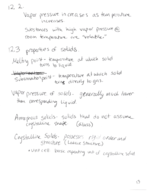
Oxidation and reduction notes (Chemistry)
CHEM 1311
University of Texas at Dallas
1 page | Fall 2015


General chemistry study guide (Chemistry)
CHEM 1311
University of Texas at Dallas
1 page | Fall 2015


Videos
Chromium Oxides: Acidity Comparison in Water

Want To Learn More? To watch the entire video and ALL of the videos in the series:
full solution
Compare the acidity of chromium trioxide (CrO?) and chromium (II) oxide (CrO) in water. Chromium trioxide forms strong chromic acid increasing hydronium ions, while chromium (II) oxide has weaker oxidizing properties, resulting in a less acidic solution.
Chemical Combo: How N2 and F2 Produce Nitrogen Trifluoride Explained!
Want To Learn More? To watch the entire video and ALL of the videos in the series:
full solution
Explore the chemical combination of nitrogen and fluorine to produce nitrogen trifluoride. Learn how to determine the limiting reactant and calculate the theoretical yield using stoichiometry principles.
Dilution Calculations: Copper(II) Nitrate, Calcium Chloride, Lithium C
Want To Learn More? To watch the entire video and ALL of the videos in the series:
full solution
Learn how to perform dilution calculations for solutions, including copper(II) nitrate, calcium chloride, and lithium carbonate, to achieve specific concentrations.
Pure Substances vs. Mixtures: Classifying Based on Composition & Distr
Want To Learn More? To watch the entire video and ALL of the videos in the series:
full solution
Understand the fundamental distinctions between pure substances and mixtures. Unpack the definitions and real-world examples of elements, compounds, homogeneous, and heterogeneous mixtures.
Calculate the Volume of 3.00 Moles of Kr(g) at STP
Want To Learn More? To watch the entire video and ALL of the videos in the series:
full solution
This video delves into the principles of gas behavior at standard temperature and pressure (STP) and how to determine the volume occupied by a given number of moles of gas under these conditions.
Hypothesis to Theory: The Evolution of Scientific Understanding
Want To Learn More? To watch the entire video and ALL of the videos in the series:
full solution
Delve into the journey of scientific ideas as we discuss how a hypothesis can evolve into a theory, and whether a theory can ever become a law. Uncover the distinctions and connections between these fundamental elements of scientific understanding in this illuminating video.