
Consider a gun of mass M (when unloaded) that fires a shell of mass m with muzzle speed v. (That is, the shell's speed relative to the gun is v.) Assuming that the gun is completely free to recoil (no external forces on gun or shell), use conservation of momentum to show that the shell's speed relative to the ground is v /(1 m/M).
Read moreTable of Contents
1
Newton's Laws of Motion
2
Projectiles and Charged Particles
3
Momentum and Angular Momentum
4
Energy
5
Oscillations
6
Calculus of Variations
7
Lagrange's Equations
8
Two-Body Central-Force Problems
9
Mechanics in Noninertial Frames
10
Rotational Motion of Rigid Bodies
11
Coupled Oscillators and Normal Modes
12
Nonlinear Mechanics and Chaos
13
Hamiltonian Mechanics
14
Collision Theory
15
Special Relativity
16
Continuum Mechanics
Textbook Solutions for Classical Mechanics
Chapter 3 Problem 3.20
Question
Consider a system comprising two extended bodies, which have masses \(M_1\) and \(M_2\) and centers of mass at \(R_1\) and \(R_1\). Prove that the CM of the whole system is at
\(R= MiRI M2R2 + M2\mathbf{R}=\frac{M_1\mathbf{R}_1+M_2\mathbf{R}_2}{M_1+M_2}\).
This beautiful result means that in finding the CM of a complicated system, you can treat its component parts just like point masses positioned at their separate centers of mass even when the component parts are themselves extended bodies.
Solution
Step 1 of 3
Let us consider a system made of 
The total mass of the system 1 is,

Here, 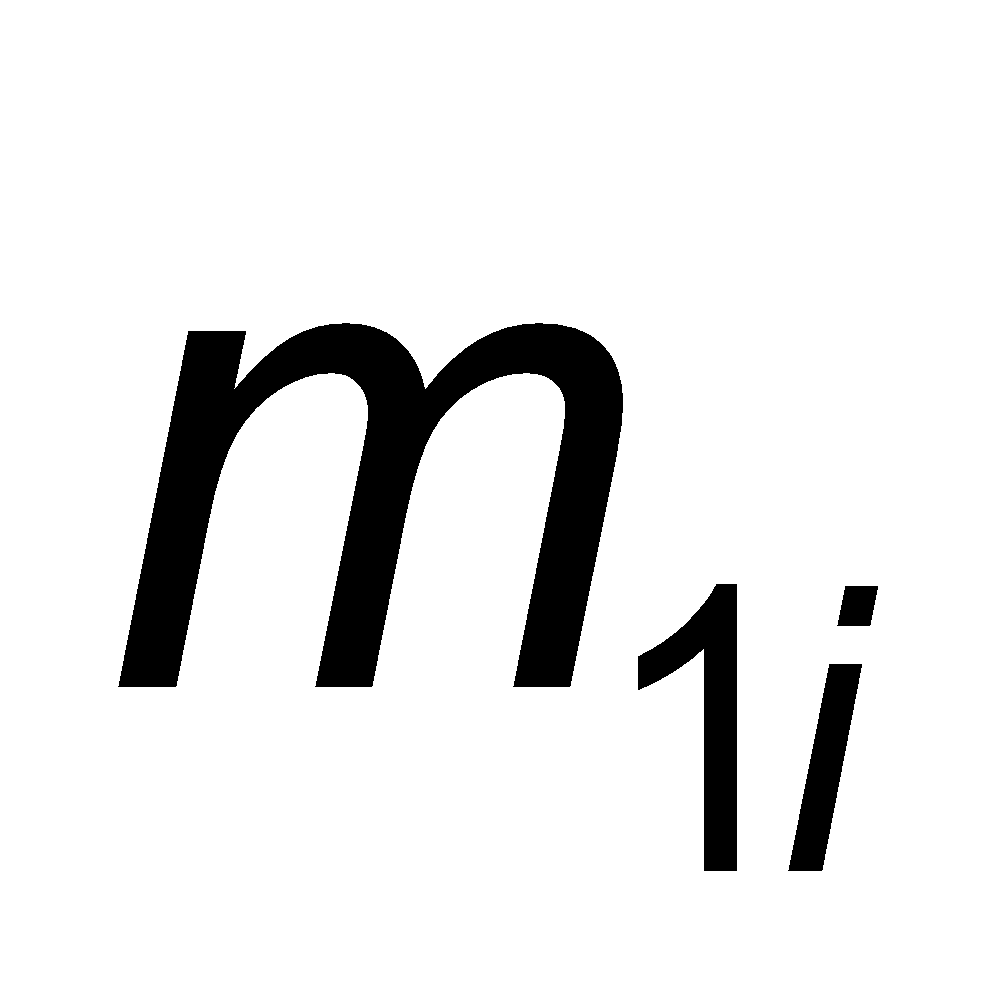
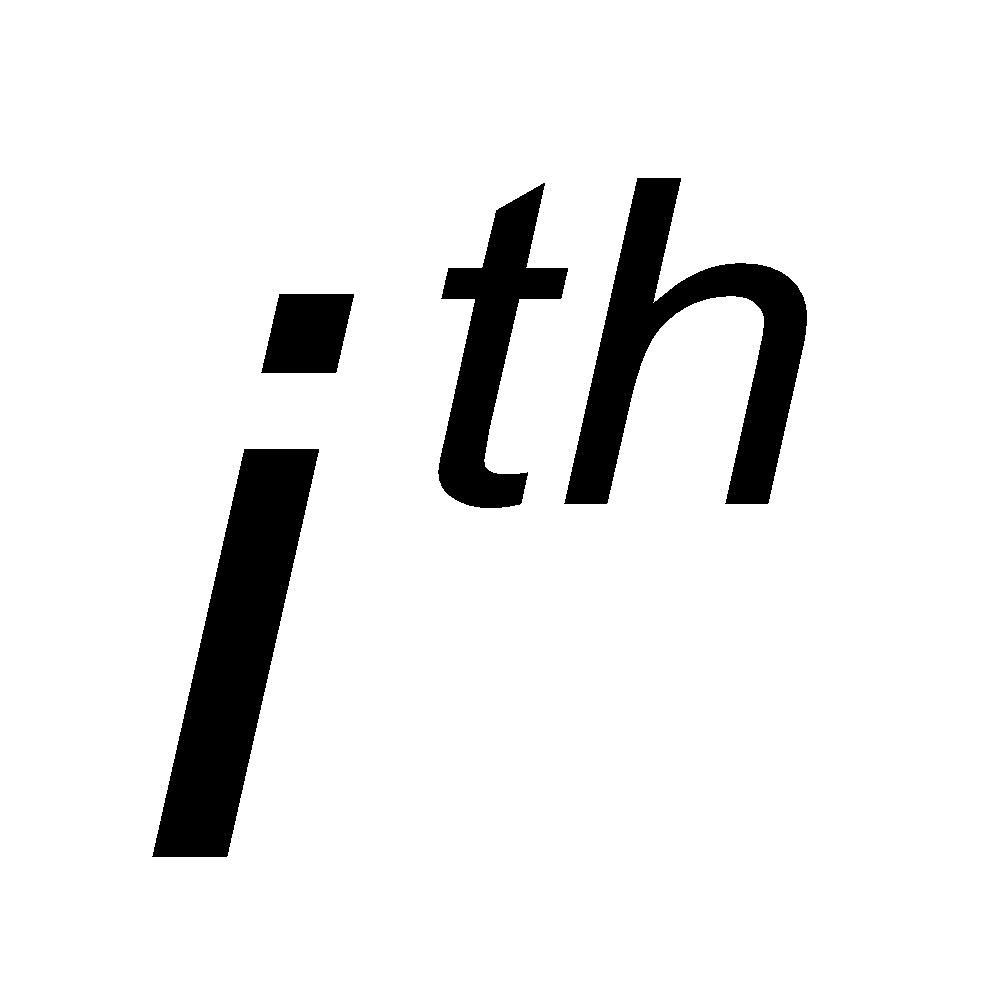
The total mass of the system 2 is,

Here, 
Subscribe to view the
full solution
full solution
Title
Classical Mechanics 0
Author
John R Taylor
ISBN
9781891389221
Consider a system comprising two extended bodies, which
Chapter 3 textbook questions
-
Chapter 3: Problem 3 Classical Mechanics 0
-
Chapter 3: Problem 3 Classical Mechanics 0
A shell traveling with speed vo exactly horizontally and due north explodes into two equal-mass fragments. It is observed that just after the explosion one fragment is traveling vertically up with speed vo. What is the velocity of the other fragment?
Read more -
Chapter 3: Problem 3 Classical Mechanics 0
A shell traveling with velocity vo explodes into three pieces of equal masses. Just after the explosion, one piece has velocity v1 = vo and the other two have velocities v2 and v3 that are equal in magnitude (v2 = v3) but mutually perpendicular. Find v2 and v3 and sketch the three velocities.
Read more -
Chapter 3: Problem 3 Classical Mechanics 0
Two hobos, each of mass mh, are standing at one end of a stationary railroad flatcar with frictionless wheels and mass mt-c. Either hobo can run to the other end of the flatcar and jump off with the same speed u (relative to the car). (a) Use conservation of momentum to find the speed of the recoiling car if the two men run and jump simultaneously. (b) What is it if the second man starts running only after the first has already jumped? Which procedure gives the greater speed to the car? [Hint: The speed u is the speed of either hobo, relative to the car just after he has jumped; it has the same value for either man and is the same in parts (a) and (b).]
Read more -
Chapter 3: Problem 3 Classical Mechanics 0
Many applications of conservation of momentum involve conservation of energy as well, and we haven't yet begun our discussion of energy. Nevertheless, you know enough about energy from your introductory physics course to handle some problems of this type. Here is one elegant example: An elastic collision between two bodies is defined as a collision in which the total kinetic energy of the two bodies after the collision is the same as that before. (A familiar example is the collision between two billiard balls, which generally lose extremely little of their total kinetic energy.) Consider an elastic collision between two equal mass bodies, one of which is initially at rest. Let their velocities be vi and v2 = 0 before the collision, and v'1 and v; after. Write down the vector equation representing conservation of momentum and the scalar equation which expresses that the collision is elastic. Use these to prove that the angle between vi and v; is 90. This result was important in the history of atomic and nuclear physics: That two bodies emerged from a collision traveling on perpendicular paths was strongly suggestive that they had equal mass and had undergone an elastic collision.
Read more -
Chapter 3: Problem 3 Classical Mechanics 0
In the early stages of the Saturn V rocket's launch, mass was ejected at about 15,000 kg/s, with a speed vex ti 2500 m/s relative to the rocket. What was the thrust on the rocket? Convert this to tons (1 ton ti 9000 newtons) and compare with the rocket's initial weight (about 3000 tons).
Read more -
Chapter 3: Problem 3 Classical Mechanics 0
The first couple of minutes of the launch of a space shuttle can be described very roughly as follows: The initial mass is 2 x 10⁶ kg, the final mass (after 2 minutes) is about 1 x 10⁶ kg, the average exhaust speed vex is about 3000 m/s, and the initial velocity is, of course, zero. If all this were taking place in outer space, with negligible gravity, what would be the shuttle's speed at the end of this stage? What is the thrust during the same period and how does it compare with the initial total weight of the shuttle (on earth)?
Read more -
Chapter 3: Problem 3 Classical Mechanics 0
A rocket (initial mass m0) needs to use its engines to hover stationary, just above the ground. (a) If it can afford to burn no more than a mass Amo of its fuel, for how long can it hover? [Hint: Write down the condition that the thrust just balance the force of gravity. You can integrate the resulting equation by separating the variables t and m. Take v to be constant.] (b) If vex ti 3000 m/s and A 10%, for how long could the rocket hover just above the earth's surface?
Read more -
Chapter 3: Problem 3 Classical Mechanics 0
From the data in Problem 3.7 you can find the space shuttle's initial mass and the rate of ejecting mass tic (which you may assume is constant). What is the minimum exhaust speed vex for which the shuttle would just begin to lift as soon as burn is fully underway? [Hint: The thrust must at least balance the shuttle's weight.]
Read more -
Chapter 3: Problem 3 Classical Mechanics 0
Consider a rocket (initial mass mo) accelerating from rest in free space. At first, as it speeds up, its momentum p increases, but as its mass m decreases p eventually begins to decrease. For what value of m is p maximum?
Read more -
Chapter 3: Problem 3 Classical Mechanics 0
(a) Consider a rocket traveling in a straight line subject to an external force F"t acting along the same line. Show that the equation of motion is m U = vex + Fext. (3.29) [Review the derivation of Equation (3.6) but keep the external force term.] (b) Specialize to the case of a rocket taking off vertically (from rest) in a gravitational field g, so the equation of motion becomes my = Mvex mg. (3.30) Assume that the rocket ejects mass at a constant rate, tit = k (where k is a positive constant), so that m = mo kt. Solve equation (3.30) for v as a function of t, using separation of variables (that is, rewriting the equation so that all terms involving v are on the left and all terms involving t on the right). (c) Using the rough data from Problem 3.7, find the space shuttle's speed two minutes into flight, assuming (what is nearly true) that it travels vertically up during this period and that g doesn't change appreciably. Compare with the corresponding result if there were no gravity. (d) Describe what would happen to a rocket that was designed so that the first term on the right of Equation (3.30) was smaller than the initial value of the second.
Read more -
Chapter 3: Problem 3 Classical Mechanics 0
To illustrate the use of a multistage rocket consider the following: (a) A certain rocket carries 60% of its initial mass as fuel. (That is, the mass of fuel is 0.6m0.) What is the rocket's final speed, accelerating from rest in free space, if it burns all its fuel in a single stage? Express your answer as a multiple of vex. (b) Suppose instead it burns the fuel in two stages as follows: In the first stage it burns a mass 0.3mo of fuel. It then jettisons the first-stage fuel tank, which has a mass of 0.1mo, and then burns the remaining 0.3m0 of fuel. Find the final speed in this case, assuming the same value of vex throughout and compare.
Read more -
Chapter 3: Problem 3 Classical Mechanics 0
If you have not already done it, do Problem 3.11(b) and find the speed v(t) of a rocket accelerating vertically from rest in a gravitational field g. Now integrate v(t) and show that the rocket's height as a function of t is 1 M y(t) = V ext 2gt2 MPk ex in ( m / Using the numbers given in Problem 3.7, estimate the space shuttle's height after two minutes.
Read more -
Chapter 3: Problem 3 Classical Mechanics 0
Consider a rocket subject to a linear resistive force, f = by, but no other external forces. Use Equation (3.29) in Problem 3.11 to show that if the rocket starts from rest and ejects mass at a constant rate k = th, then its speed is given by k b I k vbvex[l (m 1.
Read more -
Chapter 3: Problem 3 Classical Mechanics 0
Find the position of the center of mass of three particles lying in the xy plane at r1 = (1, 1, 0), r2 = (1, 1, 0), and r3 = (0, 0, 0), if m1 = m2 and m3 = 10m1. Illustrate your answer with a sketch and comment.
Read more -
Chapter 3: Problem 3 Classical Mechanics 0
The masses of the earth and sun are Me = 6.0 x 1024 and Ms ti 2.0 x 1030 (both in kg) and their center-to-center distance is 1.5 x 10⁸ km. Find the position of their CM and comment. (The radius of the sun is Rs 7.0 x 10⁵ km.)
Read more -
Chapter 3: Problem 3 Classical Mechanics 0
The masses of the earth and moon are M,==, 6.0 x 1024 and Mm 7.4 x 10²² (both in kg) and their center to center distance is 3.8 x 10⁵ km. Find the position of their CM and comment. (The radius of the earth is Re ti 6.4 x 10³ km.
Read more -
Chapter 3: Problem 3 Classical Mechanics 0
(a) Prove that the CM of any two particles always lies on the line joining them, as illustrated in Figure 3.3. [Write down the vector that points from m1 to the CM and show that it has the same direction as the vector from ml to m2.] (b) Prove that the distances from the CM to m1 and m2 are in the ratio m2/ml. Explain why if m1 is much greater than m2, the CM lies very close to the position of m1.
Read more -
Chapter 3: Problem 3 Classical Mechanics 0
(a) We know that the path of a projectile thrown from the ground is a parabola (if we ignore air resistance). In the light of the result (3.12), what would be the subsequent path of the CM of the pieces if the projectile exploded in midair? (b) A shell is fired from level ground so as to hit a target 100 m away. Unluckily the shell explodes prematurely and breaks into two equal pieces. The two pieces land at the same time, and one lands 100 m beyond the target. Where does the other piece land? (c) Is the same result true if they land at different times (with one piece still landing 100 m beyond the target)?
Read more -
Chapter 3: Problem 3 Classical Mechanics 0
Consider a system comprising two extended bodies, which have masses M1 and M2 and centers of mass at R1 and R2. Prove that the CM of the whole system is at R= MiRI M2R2 + M2 This beautiful result means that in finding the CM of a complicated system, you can treat its component parts just like point masses positioned at their separate centers of mass even when the component parts are themselves extended bodies.
Read more -
Chapter 3: Problem 3 Classical Mechanics 0
A uniform thin sheet of metal is cut in the shape of a semicircle of radius R and lies in the xy plane with its center at the origin and diameter lying along the x axis. Find the position of the CM using polar coordinates. [In this case the sum (3.9) that defines the CM position becomes a two-dimensional integral of the form f r a dA where a denotes the surface mass density (mass/area) of the sheet and dA is the element of area dA = r dr d0.]
Read more -
Chapter 3: Problem 3 Classical Mechanics 0
Use spherical polar coordinates r, 9, 4) to find the CM of a uniform solid hemisphere of radius R, whose flat face lies in the xy plane with its center at the origin. Before you do this, you will need to convince yourself that the element of volume in spherical polars is dV = r2dr sin 9 d0 dO. (Spherical polar coordinates are defined in Section 4.8. If you are not already familiar with these coordinates, you should probably not try this problem yet.)
Read more -
Chapter 3: Problem 3 Classical Mechanics 0
[Computer] A grenade is thrown with initial velocity vo from the origin at the top of a high cliff, subject to negligible air resistance. (a) Using a suitable plotting program, plot the orbit, with the following parameters: v. = (4, 4), g = 1, and 0 < t < 4 (and with x measured horizontally and y vertically up). Add to your plot suitable marks (dots or crosses, for example) to show the positions of the grenade at t = 1, 2, 3, 4. (b) At t = 4, when the grenade's velocity is v, it explodes into two equal pieces, one of which moves off with velocity v -I- Av. What is the velocity of the other piece? (c) Assuming that Av = (1, 3), add to your original plot the paths of the two pieces for 4 < t < 9. Insert marks to show their positions at t = 5, 6, 7, 8, 9. Find some way to show clearly that the CM of the two pieces continues to follow the original parabolic path.
Read more -
Chapter 3: Problem 3 Classical Mechanics 0
If the vectors a and b form two of the sides of a triangle, prove that z a x b I is equal to the area of the triangle.
Read more -
Chapter 3: Problem 3 Classical Mechanics 0
A particle of mass m is moving on a frictionless horizontal table and is attached to a massless string, whose other end passes through a hole in the table, where I am holding it. Initially the particle is moving in a circle of radius ro with angular velocity wo, but I now pull the string down through the hole until a length r remains between the hole and the particle. What is the particle's angular velocity now?
Read more -
Chapter 3: Problem 3 Classical Mechanics 0
A particle moves under the influence of a central force directed toward a fixed origin 0. (a) Explain why the particle's angular momentum about 0 is constant. (b) Give in detail the argument that the particle's orbit must lie in a single plane containing 0.
Read more -
Chapter 3: Problem 3 Classical Mechanics 0
Consider a planet orbiting the fixed sun. Take the plane of the planet's orbit to be the xy plane, with the sun at the origin, and label the planet's position by polar coordinates (r, 4)). (a) Show that the planet's angular momentum has magnitude = mr2w, where co = 4 is the planet's angular velocity about the sun. (b) Show that the rate at which the planet "sweeps out area" (as in Kepler's second law) is d A Idt = 4r2w, and hence that d A Idt = /2m. Deduce Kepler's second law.
Read more -
Chapter 3: Problem 3 Classical Mechanics 0
For a system of just three particles, go through in detail the argument leading from (3.20) to (3.26), L = rext, writing out all the summations explicitly.
Read more -
Chapter 3: Problem 3 Classical Mechanics 0
A uniform spherical asteroid of radius Ro is spinning with angular velocity coo. As the aeons go by, it picks up more matter until its radius is R. Assuming that its density remains the same and that the additional matter was originally at rest relative to the asteroid (anyway on average), find the asteroid's new angular velocity. (You know from elementary physics that the moment of inertia is sMR2.) What is the final angular velocity if the radius doubles?
Read more -
Chapter 3: Problem 3 Classical Mechanics 0
Consider a rigid body rotating with angular velocity co about a fixed axis. (You could think of a door rotating about the axis defined by its hinges.) Take the axis of rotation to be the z axis and use cylindrical polar coordinates poi, Oa, zcy to specify the positions of the particles a = 1, , N that make up the body. (a) Show that the velocity of the particle a is paw in the 0 direction. (b) Hence show that the z component of the angular momentum fa of particle a is mapa2w. (c) Show that the z component Lz of the total angular momentum can be written as Lz = I co where I is the moment of inertia (for the axis in question), N ,L mapa2. (3.31) a=1
Read more -
Chapter 3: Problem 3 Classical Mechanics 0
Find the moment of inertia of a uniform disc of mass M and radius R rotating about its axis, by replacing the sum (3.31) by the appropriate integral and doing the integral in polar coordinates.
Read more -
Chapter 3: Problem 3 Classical Mechanics 0
Show that the moment of inertia of a uniform solid sphere rotating about a diameter is sMR2. The sum (3.31) must be replaced by an integral, which is easiest in spherical polar coordinates, with the axis of rotation taken to be the z axis. The element of volume is dV = r2dr sin 6) dB d/. (Spherical polar coordinates are defined in Section 4.8. If you are not already familiar with these coordinates, you should probably not try this problem yet.)
Read more -
Chapter 3: Problem 3 Classical Mechanics 0
Starting from the sum (3.31) and replacing it by the appropriate integral, find the moment of inertia of a uniform thin square of side 2b, rotating about an axis perpendicular to the square and passing through its center.
Read more -
Chapter 3: Problem 3 Classical Mechanics 0
A juggler is juggling a uniform rod one end of which is coated in tar and burning. He is holding the rod by the opposite end and throws it up so that, at the moment of release, it is horizontal, its CM is traveling vertically up at speed vo and it is rotating with angular velocity coo. To catch it, he wants to arrange that when it returns to his hand it will have made an integer number of complete rotations. What should vo be, if the rod is to have made exactly n rotations when it returns to his hand?
Read more -
Chapter 3: Problem 3 Classical Mechanics 0
Consider a uniform solid disk of mass M and radius R, rolling without slipping down an incline which is at angle y to the horizontal. The instantaneous point of contact between the disk and the incline is called P. (a) Draw a free-body diagram, showing all forces on the disk. (b) Find the linear acceleration i) of the disk by applying the result L = text for rotation about P. (Remember that L = Ico and the moment of inertia for rotation about a point on the circumference is 2 MR2. The condition that the disk not slip is that v = Rco and hence i) = Rt.) (c) Derive the same result by applying rext to the rotation about the CM. (In this case you will find there is an extra unknown, the force of friction. You can eliminate this by applying Newton's second law to the motion of the CM. The moment of inertia for rotation about the CM is 4 MR2.)
Read more -
Chapter 3: Problem 3 Classical Mechanics 0
Repeat the calculations of Example 3.4 (page 97) for the case that the force F acts in a "northeasterly" direction at angle y from the x axis. What are the velocities of the two masses just after the impulse has been applied? Check your answers for the cases that y = 0 and y = 90.
Read more -
Chapter 3: Problem 3 Classical Mechanics 0
A system consists of N masses ma at positions ra relative to a fixed origin 0. Let ra denote the position of ma relative to the CM; that is, rat = ra R. (a) Make a sketch to illustrate this last equation. (b) Prove the useful relation that > mares = 0. Can you explain why this relation is nearly obvious? (c) Use this relation to prove the result (3.28) that the rate of change of the angular momentum about the CM is equal to the total external torque about the CM. (This result is surprising since the CM may be accelerating, so that it is not necessarily a fixed point in any inertial frame.)
Read more