

What is the most important relationship among elements in the same group in the periodic table?
Read moreTable of Contents
1
Chemistry: The Study of Change
2
Atoms, Molecules, and Ions
3
Mass Relationships in Chemical Reactions
4
Reactions in Aqueous Solutions
5
Gases
6
Thermochemistry
7
Quantum Theory and the Electronic Structure of Atoms
8
Periodic Relationships Among the Elements
9
Chemical Bonding I: Basic Concepts
10
Chemical Bonding II: Molecular Geometry and Hybridization of Atomic Orbitals
11
Intermolecular Forces and Liquids and Solids
12
Physical Properties of Solutions
13
Chemical Kinetics
14
Chemical Equilibrium
15
Acids and Bases
16
Acid-Base Equilibria and Solubility Equilibria
17
Entropy, Free Energy, and Equilibrium
18
Electrochemistry
19
Nuclear Chemistry
20
Chemistry in the Atmosphere
21
Metallurgy and the Chemistry of Metals
22
Nonmetallic Elements and Their Compounds
23
Transition Metals Chemistry and Coordination Compounds
24
Organic Chemistry
25
Synthetic and Natural Organic Polymers
Textbook Solutions for Chemistry
Chapter 8 Problem 112P
Question
The standard enthalpy of atomization of an element is the energy required to convert one mole of an element in its most stable form at \(\mathrm{25^{\circ}C}\) to one mole of monatomic gas. Given that the standard enthalpy of atomization for sodium is 108.4 kJ/mol, calculate the energy in kilojoules required to convert one mole of sodium metal at \(\mathrm{25^{\circ}C}\) to one mole of gaseous \(\mathrm{Na}^{+}\) ions.
Solution
Step 1 of 2
The equation showing the conversion of one mole of sodium metal to mole of gaseous 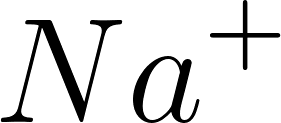

Subscribe to view the
full solution
full solution
Title
Chemistry 11
Author
Raymond Chang
ISBN
9780073402680
Solved: The standard enthalpy of atomization of an element
Chapter 8 textbook questions
-
Chapter : Problem 4 Chemistry 11
-
Chapter : Problem 4 Chemistry 11
(a) Which of the following atoms should have a larger first ionization energy: N or P? (b) Which of the following atoms should have a smaller second ionization energy: Na or Mg?
Read more -
Chapter : Problem 4 Chemistry 11
Label the plots shown here for the first, second, and third ionization energies for Mg, AI, and K.
Read more -
Chapter : Problem 8 Chemistry 11
What is a representative element? Give names and symbols of four representative elements.
Read more -
Chapter : Problem 9 Chemistry 11
Without referring to a periodic table, write the name and give the symbol for an element in each of the following groups: 1A, 2A, 3A, 4A, 5A, 6A, 7A, 8A, transition metals.
Read more -
Chapter : Problem 10 Chemistry 11
Indicate whether the following elements exist as atomic species, molecular species, or extensive three-dimensional structures in their most stable states at \(25^\circ \mathrm C\) and 1 atm and write the molecular or empirical formula for each one: phosphorus, iodine, magnesium, neon, carbon, sulfur, cesium, and oxygen.
Read more -
Chapter : Problem 18 Chemistry 11
Problem 17P What is wrong with the statement "The atoms of element 17 are isoelectronic with the atoms of element Y"? Problem 17P What is wrong with the statement "The atoms of element 17 are isoelectronic with the atoms of element Y"?
Read more -
Chapter : Problem 19 Chemistry 11
In the periodic table, the element hydrogen is sometimes grouped with the alkali metals (as in this book) and sometimes with the halogens. Explain why hydrogen can resemble the Group 1A and the Group 7A elements.
Read more -
Chapter : Problem 20 Chemistry 11
A neutral atom of a certain element has 17 electrons. Without consulting a periodic table, (a) write the ground-state electron configuration of the element, (b) classify the element, (c) determine whether this element is diamagnetic or paramagnetic.
Read more -
Chapter : Problem 27 Chemistry 11
Write the ground-state electron configurations of the following ions: (a) \(\mathrm {Li}^+\) (b) \(\mathrm{H}^-\) (c) \(\mathrm{N}^{3-}\) (d) \(\mathrm{F}^{-}\) (e) \(\mathrm{S}^{2-}\) (f) \(\mathrm{Al}^{3+}\) (g) \(\mathrm{Se}^{2-}\) (h) \(\mathrm{Br}^{-}\) (i) \(\mathrm{Rb}^{+}\) (j) \(\mathrm{Sr}^{2+}\) (k) \(\mathrm{Sn}^{2+}\) (l) \(\mathrm{Te}^{2-}\) (m) \(\mathrm{Ba}^{2+}\) (n) \(\mathrm{Pb}^{2+}\) (o) \(\mathrm{In}^{3+}\) (p) \(\mathrm{Tl}^{+}\) (q) \(\mathrm{Tl}^{3+}\)
Read more -
Chapter : Problem 28 Chemistry 11
Write the ground-state electron configurations of the following ions, which play important roles in biochemical processes in our bodies: (a) \(\mathrm{Na}^{+}\) (b) \(\mathrm{Mg}^{2+}\) (c) \(\mathrm{Cl}^{-}\) (d) \(\mathrm{K}^{+}\) (e) \(\mathrm{Ca}^{2+}\) (f) \(\mathrm{Fe}^{2+}\) (g) \(\mathrm{Cu}^{2+}\) (h) \(\mathrm{Zn}^{2+}\)
Read more -
Chapter : Problem 29 Chemistry 11
Write the ground-state electron configurations of the following transition metal ions: (a) \(\mathrm{Sc}^{3+}\) (b) \(\mathrm{Ti}^{4+}\) (c) \(\mathrm{V}^{5+}\) (d) \(\mathrm{Cr}^{3+}\) (e) \(\mathrm{Mn}^{2+}\) (f) \(\mathrm{Fe}^{2+}\) (g) \(\mathrm{Fe}^{3+}\) (h) \(\mathrm{Co}^{2+}\) (i) \(\mathrm{Ni}^{2+}\) (j) \(\mathrm{Cu}^{+}\) (k) \(\mathrm{Cu}^{2+}\) (l) \(\mathrm{Ag}^{+}\) (m) \(\mathrm{Au}^{+}\) (n) \(\mathrm{Au}^{3+}\) (o) \(\mathrm{Pt}^{2+}\)
Read more -
-
-
Chapter : Problem 41 Chemistry 11
Why is the radius of the lithium atom considerably larger than the radius of the hydrogen atom?
Read more -
Chapter : Problem 51 Chemistry 11
Arrange the following in order of increasing first ionization energy: Na, Cl, Al, S, and Cs.
Read more -
Chapter : Problem 52 Chemistry 11
Arrange the following in order of increasing first ionization energy: F, K, P, Ca, and Ne.
Read more -
Chapter : Problem 53 Chemistry 11
Use the third period of the periodic table as an example to illustrate the change in first ionization energies of the elements as we move from left to right. Explain the trend.
Read more -
Chapter : Problem 60 Chemistry 11
Explain the trends in electron affinity from aluminum to chlorine (see Table 8.3).
Read more -
Chapter : Problem 61 Chemistry 11
Arrange the elements in each of the following groups in increasing order of the most positive electron affinity: (a) Li, Na, K (b) F, Cl, Br, I (c) O, Si, P, Ca, Ba
Read more -
Chapter : Problem 62 Chemistry 11
Specify which of the following elements you would expect to have the greatest electron affinity and which would have the least: He, K, Co, S, Cl.
Read more -
Chapter : Problem 69 Chemistry 11
As a group, the noble gases are very stable chemically (only Kr and Xe are known to form compounds). Use the concepts of shielding and the effective nuclear charge to explain why the noble gases tend to neither give up electrons nor accept additional electrons.
Read more -
Chapter : Problem 70 Chemistry 11
Why are Group 1B elements more stable than Group 1A elements even though they seem to have the same outer electron configuration, \(ns^1\) where n is the principal quantum number of the outermost shell?
Read more -
Chapter : Problem 71 Chemistry 11
How do the chemical properties of oxides change from left to right across a period? From top to bottom within a particular group?
Read more -
Chapter : Problem 81 Chemistry 11
Match each of the elements on the right with its description on the left: (a) A dark-red liquid Calcium (Ca) (b) A colorless gas that burns Gold (Au) in oxygen gas (c) A reactive metal that attacks water Hydrogen \(\mathrm {H_2}\) (d) A shiny metal that is used in jewelry Argon (Ar) (e) An inert gas Bromine (\(\mathrm Br_2)\)
Read more -
Chapter : Problem 82 Chemistry 11
Arrange the following species in isoelectronic pairs: \(\mathrm {O^+}\), Ar, \(\mathrm {S^{2-}}\), Ne, Zn, \(\mathrm {Cs^{+}}\), \(\mathrm {N^{3-}}\), \(\mathrm {As^{3+}}\), N, Xe.
Read more -
Chapter : Problem 83 Chemistry 11
In which of the following are the species written in decreasing order by size of radius? (a) Be, Mg, Ba (b) \(\mathrm {N^{3+}}\), \(\mathrm {O^{2-}}\), \(\mathrm {F^{-}}\) (c) \(\mathrm {Tl^{3+}}\), \(\mathrm {Tl^{2+}}\), \(\mathrm {Tl^{+}}\)
Read more -
Chapter : Problem 93 Chemistry 11
Predict the products of the following oxides with water: \(\mathrm {Na_2O}\), BaO, \(\mathrm {CO_2}\), \(\mathrm {N_2O_5}\). \(\mathrm {P_4O_{10}}\), \(\mathrm {SO_3}\). Write an equation for each of the reactions. Specify whether the oxides are acidic, basic, or amphoteric.
Read more -
Chapter : Problem 94 Chemistry 11
Write the formulas and names of the oxides of the second-period elements (Li to N). Identify the oxides as acidic, basic, or amphoteric.
Read more -
Chapter : Problem 95 Chemistry 11
State whether each of the following elements is a gas, a liquid, or a solid under atmospheric conditions. Also state whether it exists in the elemental form as atoms, as molecules, or as a three-dimensional network: Mg, Cl, Si, Kr, O, I, Hg, Br.
Read more -
Chapter : Problem 106 Chemistry 11
A student is given samples of three elements, X, Y, and Z, which could be an alkali metal, a member of Group 4A, and a member of Group 5A. She makes the following observations: Element X has a metallic luster and conducts electricity. It reacts slowly with hydrochloric acid to produce hydrogen gas. Element Y is a light-yellow solid that does not conduct electricity. Element Z has a metallic luster and conducts electricity. When exposed to air, it slowly forms a white powder. A solution of the white powder in water is basic. What can you conclude about the elements from these observations?
Read more -
Chapter : Problem 105 Chemistry 11
An element X reacts with hydrogen gas at \(200^\circ \mathrm C\) to form compound Y. When Y is heated to a higher temperature, it decomposes to the element X and hydrogen gas in the ratio of 559 mL of \(\mathrm H_2\) (measured at STP) for 1.00 g of X reacted. X also combines with chlorine to form a compound Z, which contains 63.89 percent by mass of chlorine. Deduce the identity of X.
Read more -
Chapter : Problem 107 Chemistry 11
Identify the ions whose orbital diagrams for the valence electrons are shown on p. 367. The charges of the ions are: (a) 1+, (b) 3+, (c) 4+, (d) 2+.
Read more -
Chapter : Problem 117 Chemistry 11
Write a balanced equation for the preparation of (a) molecular oxygen, (b) ammonia, (c) carbon dioxide, (d) molecular hydrogen, (e) calcium oxide. Indicate the physical state of the reactants and products in each equation.
Read more -
Chapter : Problem 119 Chemistry 11
Most transition metal ions are colored. For example, a solution of \(\mathrm{CuSO_4}\) is blue. How would you show that the blue color is due to the hydrated \(\mathrm{Cu^{2+}}\) ions and not the \(\mathrm{SO_{4}^{2-}}\) ions?
Read more -
Chapter : Problem 129 Chemistry 11
Why do elements that have high ionization energies also have more positive electron affinities? Which group of elements would be an exception to this generalization?
Read more -
Chapter : Problem 118 Chemistry 11
Write chemical formulas for oxides of nitrogen with the following oxidation numbers: +1, +2, +3, +4, +5. (Hint: There are two oxides of nitrogen with +4 oxidation number.)
Read more -
Chapter : Problem 130 Chemistry 11
The first four ionization energies of an element are approximately 579 kJ/mol, 1980 kJ/mol, 2963 kJ/mol, and 6180 kJ/mol. To which periodic group does this element belong?
Read more -
Chapter : Problem 131 Chemistry 11
Some chemists think that helium should properly be called "helon." Why? What does the ending in helium (?ium) suggest?
Read more -
Chapter : Problem 141 Chemistry 11
Use your knowledge of thermochemistry to calculate the \(\Delta H\) for the following processes: (a) \(\mathrm{Cl^-}(g) \longrightarrow \mathrm{Cl^+}(g)+2e^-\) and (b) \(\mathrm{K^+}(g)+2e^- \longrightarrow \mathrm{K^-}(g)\).
Read more -
Chapter : Problem 142 Chemistry 11
Referring to Table 8.2, explain why the first ionization energy of helium is less than twice the ionization energy of hydrogen, but the second ionization energy of helium is greater than twice the ionization energy of hydrogen. [Hint: According to Coulomb's law, the energy between two charges \(Q_1\) and \(Q_2\) separated by distance r is proportional to \((Q_1Q_2/r)\).]
Read more -
Chapter : Problem 143 Chemistry 11
As mentioned in Chapter 3 (p. 105), ammonium nitrate \(\mathrm{(NH_4NO_3)}\) is the most important nitrogen-containing fertilizer in the world. Describe how you would prepare this compound, given only air and water as the starting materials. You may have any device at your disposal for this task.
Read more -
Chapter : Problem 153 Chemistry 11
The energy gap between the 6s and 5d levels in gold is \(4.32 \times 10^{?19}~\mathrm J\). Based on this information, predict the perceived color of gold vapor. (Hint: You need to be familiar with the notion of complementary color; see Figure 23.18.) Figure 23.18 A color wheel with appropriate wavelengths. A compound that absorbs in the green region will appear red, the complementary color of green.
Read more -
Chapter : Problem 154 Chemistry 11
Calculate the volume of 1 mole of K atoms (see Figure 8.5) and compare the result by using the density of \(\mathrm {K~(0.856~ g/cm^3)}\). Account for the difference.
Read more -
-
Chapter : Problem 3 Chemistry 11
Select the smaller ion in each of the following pairs: (a) \(\mathrm{K^+,~Li^+}\); (b) \(\mathrm {Au^+,~Au^{3+}}\); (c) \(\mathrm{P^{3-},~ N^{3+}}\)
Read more -
Chapter : Problem 3 Chemistry 11
Identify the sphere shown here with each of the following: \(\mathrm{S^{2-}}\), \(\mathrm {Mg^{2+}}\), \(\mathrm F^-\), \(\mathrm {Na}^+\).
Read more -
Chapter : Problem 6 Chemistry 11
Compare the physical and chemical properties of metals and nonmetals.
Read more -
Chapter : Problem 6 Chemistry 11
Classify the following oxides as acidic, basic, or amphoteric: (a) ZnO (b) \(\mathrm {P_4O_10 }\) (c) CaO
Read more -
Chapter : Problem 7 Chemistry 11
Draw a rough sketch of a periodic table (no details are required). Indicate regions where metals, nonmetals, and metalloids are located.
Read more -
Chapter : Problem 14 Chemistry 11
Use the first-row transition metals (Sc to Cu) as an example to illustrate the characteristics of the electron configurations of transition metals.
Read more -
Chapter : Problem 15 Chemistry 11
The electron configurations of ions derived from representative elements follow a common pattern. What is the pattern, and how does it relate to the stability of these ions?
Read more -
Chapter : Problem 17 Chemistry 11
What is wrong with the statement “The atoms of element X are isoelectronic with the atoms of element Y”?
Read more -
Chapter : Problem 36 Chemistry 11
Explain why, for isoelectronic ions, the anions are larger than the cations.
Read more -
Chapter : Problem 37 Chemistry 11
On the basis of their positions in the periodic table, select the atom with the larger atomic radius in each of the following pairs: (a) Na, Cs (b) Be, Ba (c) N, Sb (d) F, Br (e) Ne, Xe
Read more -
Chapter : Problem 38 Chemistry 11
Arrange the following atoms in order of decreasing atomic radius: Na, Al, P, Cl, Mg.
Read more -
Chapter : Problem 49 Chemistry 11
Define ionization energy. Ionization energy measurements are usually made when atoms are in the gaseous state. Why? Why is the second ionization energy always greater than the first ionization energy for any element?
Read more -
Chapter : Problem 48 Chemistry 11
Both \(\mathrm{H^-}\) and He contain two Is electrons. Which species is larger? Explain your choice.
Read more -
Chapter : Problem 50 Chemistry 11
Sketch the outline of the periodic table and show group and period trends in the first ionization energy of the elements. What types of elements have the highest ionization energies and what types the lowest ionization energies?
Read more -
Chapter : Problem 57 Chemistry 11
A hydrogenlike ion is an ion containing only one electron. The energies of the electron in a hydrogenlike ion are given by \(E_{n}=-\left(2.18 \times 10^{-18} \mathrm{~J}\right) Z^{2}\left(\frac{1}{n^{2}}\right)\) where n is the principal quantum number and Z is the atomic number of the element. Calculate the ionization energy (in kJ/mol) of the \(\mathrm{He}^+\) ion.
Read more -
Chapter : Problem 58 Chemistry 11
Plasma is a state of matter consisting of positive gaseous ions and electrons. In the plasma state a mercury atom could be stripped of its 80 electrons and therefore would exist as \(\mathrm{Hg}^{80+}\). Use the equation in Problem 8.57 to calculate the energy required for the last ionization step, that is, \(\mathrm{Hg}^{79+}(g) \longrightarrow \mathrm{Hg}^{80+}(g)+e^{-}\)
Read more -
Chapter : Problem 59 Chemistry 11
(a) Define electron affinity. (b) Electron affinity measurements are made with gaseous atoms. Why? (c) Ionization energy is always a positive quantity, whereas electron affinity may be either positive or negative. Explain.
Read more -
Chapter : Problem 66 Chemistry 11
Which elements are more likely to form acidic oxides? Basic oxides? Amphoteric oxides?
Read more -
Chapter : Problem 67 Chemistry 11
Use the alkali metals and alkaline earth metals as examples to show how we can predict the chemical properties of elements simply from their electron configurations.
Read more -
Chapter : Problem 68 Chemistry 11
Based on your knowledge of the chemistry of the alkali metals, predict some of the chemical properties of francium, the last member of the group.
Read more -
Chapter : Problem 78 Chemistry 11
List all the common ions of representative elements and transition metals that are isoelectronic with Ar.
Read more -
Chapter : Problem 79 Chemistry 11
Write the empirical (or molecular) formulas of compounds that the elements in the third period (sodium to chlorine) should form with (a) molecular oxygen and (b) molecular chlorine. In each case indicate whether you would expect the compound to be ionic or molecular in character.
Read more -
Chapter : Problem 80 Chemistry 11
Element M is a shiny and highly reactive metal (melting point \(\mathrm {63^\circ C}\)), and element X is a highly reactive nonmetal (melting point \(\mathrm {-7.2^\circ C}\)). They react to form a compound with the empirical formula MX, a colorless, brittle white solid that melts at \(\mathrm {734^\circ C}\). When dissolved in water or when in the molten state, the substance conducts electricity. When chlorine gas is bubbled through an aqueous solution containing MX, a reddish-brown liquid appears and \(\mathrm {Cl^-}\) ions are formed. From these observations, identify M and X. (You may need to consult a handbook of chemistry for the melting-point values.)
Read more -
Chapter : Problem 90 Chemistry 11
Name the element that forms compounds, under appropriate conditions, with every other element in the periodic table except He, Ne, and Ar.
Read more -
Chapter : Problem 91 Chemistry 11
Explain why the first electron affinity of sulfur is 200 kJ/mol but the second electron affinity is ?649 kJ/mol.
Read more -
Chapter : Problem 92 Chemistry 11
The \(\mathrm H^-\) ion and the He atom have two 1s electrons each. Which of the two species is larger? Explain.
Read more -
Chapter : Problem 103 Chemistry 11
Referring to the Chemistry in Action essay on p. 360, answer the following questions, (a) Why did it take so long to discover the first noble gas (argon) on Earth? (b) Once argon had been discovered, why did it take relatively little time to discover the rest of the noble gases? (c) Why was helium not isolated by the fractional distillation of liquid air?
Read more -
Chapter : Problem 102 Chemistry 11
A technique called photoelectron spectroscopy is used to measure the ionization energy of atoms. A sample is irradiated with UV light, and electrons are ejected from the valence shell. The kinetic energies of the ejected electrons are measured. Because the energy of the UV photon and the kinetic energy of the ejected electron are known, we can write \(hv=I E+\frac{1}{2} m u^{2}\) where v is the frequency of the UV light, and m and u are the mass and velocity of the electron, respectively. In one experiment the kinetic energy of the ejected electron from potassium is found to be \(5.34 \times 10^{-19}~\mathrm J\) using a UV source of wavelength 162 nm. Calculate the ionization energy of potassium. How can you be sure that this ionization energy corresponds to the electron in the valence shell (that is, the most loosely held electron)?
Read more -
Chapter : Problem 104 Chemistry 11
The energy needed for the following process is \(1.96 \times 10^4~\mathrm {kJ/mol}\): \(\mathrm{Li}(g) \longrightarrow \mathrm{Li}^{3+}(g)+3 e^{-}\) If the first ionization energy of lithium is 520 kJ/mol. calculate the second ionization energy of lithium, that is, the energy required for the process \(\mathrm{Li}^{+}(g) \longrightarrow \mathrm{Li}^{2+}(g)+e^{-}\) (Hint: You need the equation in Problem 8.57.)
Read more -
Chapter : Problem 114 Chemistry 11
Based on knowledge of the electronic configuration of titanium, state which of the following compounds of titanium is unlikely to exist: \(\mathrm{K_3TiF_6}\) \(\mathrm{K_2Ti_2O_5}\) \(\mathrm{TiCl_3}\) \(\mathrm{K_2TiO_4}\) \(\mathrm{K_2TiF_6}\)
Read more -
Chapter : Problem 115 Chemistry 11
Name an element in Group 1A or Group 2A that is an important constituent of each of the following substances: (a) remedy for acid indigestion, (b) coolant in nuclear reactors, (c) Epsom salt, (d) baking powder, (e) gunpowder, (f) a light alloy, (g) fertilizer that also neutralizes acid rain, (h) cement, and (i) grit for icy roads. You may need to ask your instructor about some of the items.
Read more -
Chapter : Problem 116 Chemistry 11
In halogen displacement reactions a halogen element can be generated by oxidizing its anions with a halogen element that lies above it in the periodic table. This means that there is no way to prepare elemental fluorine, because it is the first member of Group 7A. Indeed, for years the only way to prepare elemental fluorine was to oxidize \(\mathrm{F^-}\) ions by electrolytic means. Then, in 1986, a chemist reported that by reacting potassium hexafluoromanganate(IV) \((\mathrm{K_2MnF_6})\) with antimony pentafluoride \((\mathrm{SbF_5})\) at \(\mathrm{150^\circ C}\), he had generated elemental fluorine. Balance the following equation representing the reaction: \(\mathrm{K}_{2} \mathrm{MnF}_{6}+\mathrm{SbF}_{5} \longrightarrow \mathrm{KSbF}_{6}+\mathrm{MnF}_{3}+\mathrm{F}_{2}\)
Read more -
Chapter : Problem 126 Chemistry 11
As discussed in the chapter, the atomic mass of argon is greater than that of potassium. This observation created a problem in the early development of the periodic table because it meant that argon should be placed after potassium. (a) How was this difficulty resolved? (b) From the following data, calculate the average atomic masses of argon and potassium: Ar-36 (35.9675 amu; 0.337 percent), Ar-38 (37.9627 amu; 0.063 percent), Ar-40 (39.9624 amu; 99.60 percent); K-39 (38.9637 amu: 93.258 percent), K-40 (39.9640 amu; 0.0117 percent), K-41 (40.9618 amu; 6.730 percent).
Read more -
Chapter : Problem 127 Chemistry 11
Calculate the maximum wavelength of light (in nanometers) required to ionize a single sodium atom.
Read more -
Chapter : Problem 128 Chemistry 11
Predict the atomic number and ground-state electron configuration of the next member of the alkali metals after francium.
Read more -
Chapter : Problem 138 Chemistry 11
One allotropic form of an element X is a colorless crystalline solid. The reaction of X with an excess amount of oxygen produces a colorless gas. This gas dissolves in water to yield an acidic solution. Choose one of the following elements that matches X: (a) sulfur (b) phosphorus (c) carbon (d) boron (e) silicon
Read more -
Chapter : Problem 139 Chemistry 11
When magnesium metal is burned in air, it forms two products A and B. A reacts with water to form a basic solution. B reacts with water to form a similar solution as that of A plus a gas with a pungent odor. Identify A and B and write equations for the reactions. (Hint: See Chemistry in Action on p. 360.)
Read more -
Chapter : Problem 140 Chemistry 11
The ionization energy of a certain element is 412 kJ/mol. When the atoms of this element are in the first excited state, however, the ionization energy is only 126 kJ/mol. Based on this information, calculate the wavelength of light emitted in a transition from the first excited state to the ground state.
Read more -
Chapter : Problem 150 Chemistry 11
Arsenic (As) is not an essential element for the human body. (a) Based on its position in the period table, suggest a reason for its toxicity. (b) When arsenic enters a person's body, it quickly shows up in the follicle of the growing hair. This action has enabled detectives to solve many murder mysteries by analyzing a victim's hair. Where else might one look for the accumulation of the element if arsenic poisoning is suspected?
Read more -
Chapter : Problem 151 Chemistry 11
The boiling points of neon and krypton are \(-245.9^\circ \mathrm C\) and \(-152.9^\circ \mathrm C\), respectively. Using these data, estimate the boiling point of argon.
Read more -
Chapter : Problem 152 Chemistry 11
Using the following boiling-point data, estimate the boiling point of francium:
Read more -
Chapter : Problem 2 Chemistry 11
What is Moseley's contribution to the modern periodic table?
Read more -
Chapter : Problem 2 Chemistry 11
Arrange the following atoms in order of decreasing radius: C, Li, Be.
Read more -
Chapter : Problem 2 Chemistry 11
Compare the size of each pair of atoms listed here: (a) Be, Ba; (b) AI, S; (c) \({}^{12}\mathrm C\), \({}^{13}\mathrm C\).
Read more -
Chapter : Problem 5 Chemistry 11
Which of the following elements are metals, nonmetals, or metalloids? As, Xe, Fe, Li, B, Cl, Ba, P, I, Si.
Read more -
Chapter : Problem 5 Chemistry 11
Is it likely that Ar will form the anion \(\mathrm {Ar^-}\)?
Read more -
Chapter : Problem 5 Chemistry 11
Why is it possible to measure the successive ionization energies of an atom until all the electrons are removed, but it becomes increasingly difficult and often impossible to measure the electron affinity of an atom beyond the first stage?
Read more -
Chapter : Problem 24 Chemistry 11
Specify the group of the periodic table in which each of the following elements is found: (a) \(\mathrm {[Ne]}3s^1\), (b) \(\mathrm {[Ne]}3s^2 3p^3\), (c) \(\mathrm {[Ne]}3s^2 3p^6\), (d) \(\mathrm {[Ar]}4s^2 3d^8\).
Read more -
Chapter : Problem 25 Chemistry 11
A \(\mathrm{M}^{2+}\) ion derived from a metal in the first transition metal series has four electrons in the 3d subshell. What element might M be?
Read more -
Chapter : Problem 26 Chemistry 11
A metal ion with a net +3 charge has five electrons in the 3d subshell. Identify the metal.
Read more -
Chapter : Problem 33 Chemistry 11
Define atomic radius. Does the size of an atom have a precise meaning?
Read more -
Chapter : Problem 34 Chemistry 11
How does atomic radius change (a) from left to right across a period and (b) from top to bottom in a group?
Read more -
Chapter : Problem 35 Chemistry 11
Define ionic radius. How does the size of an atom change when it is converted to (a) an anion and (b) a cation?
Read more -
Chapter : Problem 45 Chemistry 11
Explain which of the following cations is larger, and why: \(\mathrm{Cu}^{+}\) or \(\mathrm{Cu}^{2+}\).
Read more -
Chapter : Problem 46 Chemistry 11
Explain which of the following anions is larger, and why: \(\mathrm{Se}^{2-}\) or \(\mathrm{Te}^{2-}\).
Read more -
Chapter : Problem 47 Chemistry 11
Give the physical states (gas, liquid, or solid) of the representative elements in the fourth period (K. Ca, Ga. Ge, As, Se, Br) at 1 atm and \(\mathrm{25^\circ C}\).
Read more -
Chapter : Problem 54 Chemistry 11
In general, ionization energy increases from left to right across a given period. Aluminum, however, has a lower ionization energy than magnesium. Explain.
Read more -
Chapter : Problem 55 Chemistry 11
The first and second ionization energies of K are 419 kJ/mol and 3052 kJ/mol, and those of Ca are 590 kJ/mol and 1145 kJ/mol, respectively. Compare their values and comment on the differences.
Read more -
Chapter : Problem 56 Chemistry 11
Two atoms have the electron configurations \(1s^2 2s^2 2p^6\) and \(1s^2 2s^2 2p^6 3s^1\). The first ionization energy of one is 2080 kJ/mol, and that of the other is 496 kJ/mol. Match each ionization energy with one of the given electron configurations. Justify your choice.
Read more -
Chapter : Problem 75 Chemistry 11
State whether each of the following properties of the representative elements generally increases or decreases (a) from left to right across a period and (b) from top to bottom within a group: metallic character, atomic size, ionization energy, acidity of oxides.
Read more -
Chapter : Problem 76 Chemistry 11
With reference to the periodic table, name (a) a halogen element in the fourth period, (b) an element similar to phosphorus in chemical properties, (c) the most reactive metal in the fifth period, (d) an element that has an atomic number smaller than 20 and is similar to strontium.
Read more -
Chapter : Problem 77 Chemistry 11
Write equations representing the following processes: (a) The electron affinity of \(\mathrm {S^-}\). (b) The third ionization energy of titanium. (c) The electron affinity of \(\mathrm {Mg^{2+}}\). (d) The ionization energy of \(\mathrm {O^{2-}}\).
Read more -
Chapter : Problem 87 Chemistry 11
Calculate the change in energy for the following processes: (a) \(\mathrm{Na}(g)+\mathrm{Cl}(g) \longrightarrow \mathrm{Na}^{+}(g)+\mathrm{Cl}^{-}(g)\) (b) \(\mathrm{Ca}(g)+2 \mathrm{Br}(g) \longrightarrow \mathrm{Ca}^{2+}(g)+2 \mathrm{Br}^{-}(g)\)
Read more -
Chapter : Problem 88 Chemistry 11
Calculate the change in energy for the following processes: (a) \(\mathrm{Mg}(g)+2 \mathrm{~F}(g) \longrightarrow \mathrm{Mg}^{2+}(g)+2 \mathrm{~F}^{-}(g)\) (b) \(2 \mathrm{Al}(g)+3 \mathrm{O}(g) \longrightarrow 2 \mathrm{Al}^{3+}(g)+3 \mathrm{O}^{2-}(g)\) The electron affinity of \(\mathrm O^-\) is ?844 kJ/mol.
Read more -
Chapter : Problem 99 Chemistry 11
Why do noble gases have negative electron affinity values?
Read more -
Chapter : Problem 100 Chemistry 11
The atomic radius of K is 227 pm and that of \(\mathrm{K^+}\) is 133 pm. Calculate the percent decrease in volume that occurs when K(g) is converted to \(\mathrm{K^+}g\). [The volume of a sphere is \(\left(\frac{4}{3}\right)\pi r^3\), where r is the radius of the sphere.]
Read more -
Chapter : Problem 101 Chemistry 11
The atomic radius of F is 72 pm and that of \(\mathrm {F}^{-}\) is 133 pm. Calculate the percent increase in volume that occurs when F(g) is converted to \(\mathrm {F}^{-}(g)\). (See Problem 8.100 for the volume of a sphere.)
Read more -
Chapter : Problem 111 Chemistry 11
Explain, in terms of their electron configurations, why \(\mathrm{Fe}^{2+}\) is more easily oxidized to \(\mathrm{Fe}^{3+}\) than Mn to \(\mathrm{Mn}^{3+}\).
Read more -
Chapter : Problem 112 Chemistry 11
The standard enthalpy of atomization of an element is the energy required to convert one mole of an element in its most stable form at \(\mathrm{25^{\circ}C}\) to one mole of monatomic gas. Given that the standard enthalpy of atomization for sodium is 108.4 kJ/mol, calculate the energy in kilojoules required to convert one mole of sodium metal at \(\mathrm{25^{\circ}C}\) to one mole of gaseous \(\mathrm{Na}^{+}\) ions.
Read more -
Chapter : Problem 113 Chemistry 11
Write the formulas and names of the hydrides of the following second-period elements: Li, C, N, O, F. Predict their reactions with water.
Read more -
Chapter : Problem 123 Chemistry 11
Write a balanced equation that predicts the reaction of rubidium (Rb) with (a) \(\mathrm{H_2O}(l)\) (b) \(\mathrm{Cl_2}(g)\) (c) \(\mathrm{H_2}(g)\)
Read more -
Chapter : Problem 124 Chemistry 11
The successive IE of the first four electrons of a representative element are 738.1 kJ/mol, 1450 kJ/mol, 7730 kJ/mol, and 10,500 kJ/mol. Characterize the element according to the periodic group.
Read more -
Chapter : Problem 135 Chemistry 11
Match each of the elements on the right with its description on the left: (a) A pale yellow gas that reacts with water. Nitrogen\(\mathrm {(N_2)}\) (b) A soft metal that reacts with water to produce hydrogen. Boron(B) (c) A metalloid that is hard and has a high melting point. Aluminum(Al) (d) A colorless, odorless gas. Fluorine\(\mathrm {(F_2)}\) (e) A metal that is more reactive than iron, but does not corrode in air. Sodium(Na)
Read more -
Chapter : Problem 125 Chemistry 11
Little is known of the chemistry of astatine, the last member of Group 7A. Describe the physical characteristics that you would expect this halogen to have.Predict the products of the reaction between sodium astatide (NaAt) and sulfuric acid. (Hint: Sulfuric acid is an oxidizing agent.)
Read more -
Chapter : Problem 136 Chemistry 11
Write an account on the importance of the periodic table. Pay particular attention to the significance of the position of an element in the table and how the position relates to the chemical and physical properties of the element.
Read more -
Chapter : Problem 137 Chemistry 11
On the same graph, plot the effective nuclear charge (see p. 336) and atomic radius (see Figure 8.5) versus atomic number for the second period elements Li to Ne. Comment on the trends.
Read more -
Chapter : Problem 147 Chemistry 11
Consider the first 18 elements from hydrogen to argon. Would you expect the atoms of half of them to be diamagnetic and half of them to be paramagnetic? Explain.
Read more -
Chapter : Problem 148 Chemistry 11
Compare the work function for cesium (206 kJ/mol) with its first ionization energy (376 kJ/mol). Explain the difference.
Read more -
Chapter : Problem 149 Chemistry 11
The only confirmed compound of radon is radon difluoride, \(\mathrm{RnF_2}\). One reason that it is difficult to study the chemistry of radon is that all isotopes of radon are radioactive so it is dangerous to handle the substance. Can you suggest another reason why there are so few known radon compounds? (Hint: Radioactive decays are exothermic processes.)
Read more -
Chapter : Problem 1 Chemistry 11
Briefly describe the significance of Mendeleev's periodic table.
Read more -
Chapter : Problem 1 Chemistry 11
An atom of a certain element has 20 electrons. (a) Write the ground-state electron configuration of the element, (b) classify the element, (c)determine whether the element is diamagnetic or paramagnetic.
Read more -
Chapter : Problem 1 Chemistry 11
Identify the elements that fit the following descriptions: (a) An alkaline earth metal ion that is isoelectronic with Kr. (b) An anion with a –3 charge that is lscelectrcnic with \(\mathrm {K^+}\). (c) An ion with a +2 charge that is isoelectronic with \(\mathrm{Co^{3+}}\).
Read more -
Chapter : Problem 11 Chemistry 11
You are given a dark shiny solid and asked to determine whether it is iodine or a metallic element. Suggest a nondestructive test that would enable you to arrive at the correct answer.
Read more -
Chapter : Problem 12 Chemistry 11
What are valence electrons? For representative elements, the number of valence electrons of an element is equal to its group number. Show that this is true for the following elements: Al, Sr, K, Br, P, S, C.
Read more -
Chapter : Problem 13 Chemistry 11
Write the outer electron configurations for the (a) alkali metals, (b) alkaline earth metals, (c) halogens, (d) noble gases.
Read more -
Chapter : Problem 21 Chemistry 11
Group the following electron configurations in pairs that would represent similar chemical properties of their atoms: (a) \(1s^22s^22p^63s^2\) (b) \(1s^22s^22p^3\) (c) \(1s^22s^22p^63s^23p^64s^23d^{10}4p^6\) (d) \(1s^2 2s^2\) (e) \(1s^2 2s^2 2p^6\) (f) \(1s^2 2s^2 2p^6 3s^2 3p^6\)
Read more -
Chapter : Problem 22 Chemistry 11
Group the following electron configurations in pairs that would represent similar chemical properties of their atoms: (a) \(1s^2 2s^2 2p^5\) (b) \(1s^1 2s^1\) (c) \(1s^2 2s^2 2p^6\) (d) \(1s^2 2s^2 2p^6 3s^2 3p^5\) (e) \(1s^2 2s^2 2p^6 3s^2 3p^6 4s^1\) (f) \(1s^2 2s^2 2p^6 3s^2 3p^6 4s^2 3d^{10} 4p^6\)
Read more -
Chapter : Problem 23 Chemistry 11
Without referring to a periodic table, write the electron configuration of elements with the following atomic numbers: (a) 9, (b) 20, (c) 26, (d) 33. Classify the elements.
Read more -
Chapter : Problem 30 Chemistry 11
Name the ions with +3 charges that have the following electron configurations: (a) \(\mathrm{[Ar]}3d^{3}\) (b) [Ar] (c) \(\mathrm{[Kr]}4d^{6}\) (d) \(\mathrm{[Xe]}4f^{14}5d^6\)
Read more -
Chapter : Problem 31 Chemistry 11
Which of the following species are isoelectronic with each other? C \(\mathrm{Cl}^{-}\) \(\mathrm{Mn}^{2+}\) \(\mathrm{B}^{-}\) Ar Zn \(\mathrm{Fe}^{3+}\) \(\mathrm{Ge}^{2+}\)
Read more -
Chapter : Problem 32 Chemistry 11
Group the species that are isoelectronic: \(\mathrm{Be}^{2+}\), \(\mathrm{F}^{-}\), \(\mathrm{Fe}^{2+}\), \(\mathrm{N}^{3-}\), He, \(\mathrm{S}^{2-}\), \(\mathrm{Co}^{3+}\), Ar.
Read more -
Chapter : Problem 42 Chemistry 11
Use the second period of the periodic table as an example to show that the size of atoms decreases as we move from left to right. Explain the trend.
Read more -
Chapter : Problem 43 Chemistry 11
Indicate which one of the two species in each of the following pairs is smaller: (a) Cl or \(\mathrm{Cl}^{-}\) (b) Na or \(\mathrm{Na}^{+}\) (c) \(\mathrm{O}^{2-}\) or \(\mathrm{S}^{2-}\) (d) \(\mathrm{Mg}^{2+}\) or \(\mathrm{Al}^{3+}\) (e) \(\mathrm{Au}^{+}\) or \(\mathrm{Au}^{3+}\)
Read more -
Chapter : Problem 44 Chemistry 11
List the following ions in order of increasing ionic radius: \(\mathrm{N}^{3-}\), \(\mathrm{Na}^{+}\), \(\mathrm{F}^{-}\), \(\mathrm{Mg}^{2+}\), \(\mathrm{O}^{2-}\).
Read more -
Chapter : Problem 63 Chemistry 11
Considering their electron affinities, do you think it is possible for the alkali metals to form an anion like \(\mathrm {M^?}\), where M represents an alkali metal?
Read more -
Chapter : Problem 64 Chemistry 11
Explain why alkali metals have a greater affinity for electrons than alkaline earth metals.
Read more -
Chapter : Problem 65 Chemistry 11
What is meant by the diagonal relationship? Name two pairs of elements that show this relationship.
Read more -
Chapter : Problem 72 Chemistry 11
Write balanced equations for the reactions between each of the following oxides and water: (a) \(\mathrm {Li_2O}\) (b) CaO (c) \(\mathrm {SO_3}\)
Read more -
Chapter : Problem 73 Chemistry 11
Write formulas for and name the binary hydrogen compounds of the second-period elements (Li to F). Describe how the physical and chemical properties of these compounds change from left to right across the period.
Read more -
-
Chapter : Problem 84 Chemistry 11
Which of the following properties show a clear periodic variation? (a) first ionization energy (b) molar mass of the elements (c) number of isotopes of an element (d) atomic radius
Read more -
Chapter : Problem 85 Chemistry 11
When carbon dioxide is bubbled through a clear calcium hydroxide solution, the solution appears milky. Write an equation for the reaction and explain how this reaction illustrates that \(\mathrm {CO_{2}}\) is an acidic oxide.
Read more -
Chapter : Problem 86 Chemistry 11
You are given four substances: a fuming red liquid, a dark metallic-looking solid, a pale-yellow gas, and a yellow-green gas that attacks glass. You are told that these substances are the first four members of Group 7A, the halogens. Name each one.
Read more -
-
Chapter : Problem 97 Chemistry 11
The air in a manned spacecraft or submarine needs to be purified of exhaled carbon dioxide. Write equations for the reactions between carbon dioxide and (a) lithium oxide \(\mathrm {(Li_2O)}\), (b) sodium peroxide \(\mathrm {(Na_2O_2)}\), and (c) potassium superoxide \(\mathrm {(KO_2)}\).
Read more -
Chapter : Problem 98 Chemistry 11
The formula for calculating the energies of an electron in a hydrogenlike ion is given in Problem 8.57. This equation cannot be applied to many-electron atoms. One way to modify it for the more complex atoms is to replace Z with \((Z-\sigma)\), where Z is the atomic number and ? is a positive dimensionless quantity called the shielding constant. Consider the helium atom as an example. The physical significance of ? is that it represents the extent of shielding that the two 1s electrons exert on each other. Thus, the quantity \((Z-\sigma)\) is appropriately called the "effective nuclear charge." Calculate the value of a if the first ionization energy of helium is \(3.94\times10^{-18}~ \mathrm J\) per atom. (Ignore the minus sign in the given equation in your calculation.)
Read more -
Chapter : Problem 108 Chemistry 11
What is the electron affinity of the \(\mathrm {Na}^+\) ion?
Read more -
Chapter : Problem 109 Chemistry 11
The ionization energies of sodium (in kJ/mol), starting with the first and ending with the eleventh, are 495.9, 4560, 6900, 9540, 13,400, 16,600, 20,120, 25,490, 28,930, 141,360, 170,000. Plot the log of ionization energy (y axis) versus the number of ionization (x axis); for example, log 495.9 is plotted versus 1 (labeled \(IE_1\) the first ionization energy), log 4560 is plotted versus 2 (labeled \(IE_2\), the second ionization energy), and so on. (a) Label \(IE_1\) through \(IE_{11}\) with the electrons in orbitals such as 1s, 2s, 2p, and 3s. (b) What can you deduce about electron shells from the breaks in the curve?
Read more -
Chapter : Problem 110 Chemistry 11
Experimentally, the electron affinity of an element can be determined by using a laser light to ionize the anion of the element in the gas phase: \(\mathrm{X}^{-}(g)+h v \longrightarrow \mathrm{X}(g)+e^{-}\) Referring to Table 8.3, calculate the photon wavelength (in nanometers) corresponding to the electron affinity for chlorine. In what region of the electromagnetic spectrum does this wavelength fall?
Read more -
Chapter : Problem 120 Chemistry 11
In general, atomic radius and ionization energy have opposite periodic trends. Why?
Read more -
Chapter : Problem 121 Chemistry 11
Explain why the electron affinity of nitrogen is approximately zero, while the elements on either side, carbon and oxygen, have substantial positive electron affinities.
Read more -
Chapter : Problem 122 Chemistry 11
Consider the halogens chlorine, bromine, and iodine. The melting point and boiling point of chlorine are \(\mathrm{-101.0^\circ C}\) and \(\mathrm{-34.6^\circ C}\) while those of iodine are \(\mathrm{113.5^\circ C}\) and \(\mathrm{184.4^\circ C}\), respectively. Thus, chlorine is a gas and iodine is a solid under room conditions. Estimate the melting point and boiling point of bromine. Compare your values with those from a handbook of chemistry.
Read more -
Chapter : Problem 132 Chemistry 11
(a) The formula of the simplest hydrocarbon is \(\mathrm{CH_4}\) (methane). Predict the formulas of the simplest compounds formed between hydrogen and the following elements: silicon, germanium, tin, and lead. (b) Sodium hydride (NaH) is an ionic compound. Would you expect rubidium hydride (RbH) to be more or less ionic than NaH? (c) Predict the reaction between radium (Ra) and water, (d) When exposed to air, aluminum forms a tenacious oxide \(\mathrm{(Al_2O_3)}\) coating that protects the metal from corrosion. Which metal in Group 2A would you expect to exhibit similar properties? Why?
Read more -
Chapter : Problem 133 Chemistry 11
Give equations to show that molecular hydrogen can act both as a reducing agent and an oxidizing agent.
Read more -
Chapter : Problem 134 Chemistry 11
Both \(\mathrm{Mg}^{2+}\) and \(\mathrm{Ca}^{2+}\) are important biological ions. One of their functions is to bind to the phosphate groups of ATP molecules or amino acids of proteins. For Group 2A metals in general, the tendency for binding to the anions increases in the order \(\mathrm{Ba}^{2+}<\mathrm{Sr}^{2+}<\mathrm{Ca}^{2+}<\mathrm{Mg}^{2+}\). Explain the trend.
Read more -
Chapter : Problem 144 Chemistry 11
One way to estimate the effective charge \((Z_\mathrm{eff})\) of a many-electron atom is to use the equation \(IE_1 = (1312~\mathrm{ kJ/mol})(Z^2_{eff}/n^2)\), where \(IE_1\) is the first ionization energy and n is the principal quantum number of the shell in which the electron resides. Use this equation to calculate the effective charges of Li, Na, and K. Also calculate \(Z_\mathrm {eff}/n\) for each metal. Comment on your results.
Read more -
Chapter : Problem 145 Chemistry 11
To prevent the formation of oxides, peroxides, and superoxides, alkali metals are sometimes stored in an inert atmosphere. Which of the following gases should not be used for lithium: Ne, Ar, \(\mathrm N_2\), Kr? Explain. (Hint: As mentioned in the chapter, Li and Mg exhibit a diagonal relationship. Compare the common compounds of these two elements.)
Read more -
Chapter : Problem 146 Chemistry 11
Describe the biological role of the elements in the human body shown in the following periodic table. (You may need to do research at websites such as www.webelements.com.)
Read more -
Chapter : Problem 89 Chemistry 11
For each pair of elements listed, give three properties that show their chemical similarity: (a) sodium and potassium and (b) chlorine and bromine.
Read more -
Chapter 8: Problem 16 Chemistry 11
What do we mean when we say that two ions or an atom and an ion are isoelectronic?
Read more