


Solar energy reaching the earth is about \(1350 \mathrm{~W} / \mathrm{m}^{2}\) outside the earth's atmosphere, and \(950 \mathrm{~W} / \mathrm{m}^{2}\) on earth's surface normal to the sun on a clear day. Someone is marketing \(2 \mathrm{~m} \times 3 \mathrm{~m}\) photovoltaic cell panels with the claim that a single panel can meet the electricity needs of a house. How do you evaluate this claim? Photovoltaic cells have a conversion efficiency of about 15 percent. Equation Transcription: Text Transcription: 1350 W/m^2 50 W/m^2 2 m times 3 m
Read moreTable of Contents
1
Introduction and Basic Concepts
2
Energy, Energy Transfer, and General Energy Analysis
3
Properties of Pure Substances
4
Energy Analysis of Closed Systems
5
Mass and Energy Analysis of Control Volumes
6
The Second Law of Thermodynamics
7
Entropy
8
Exergy
9
Gas Power Cycles
10
Vapor and Combined Power Cycles
11
Refrigeration Cycles
12
Thermodynamic Property Relations
13
Gas Mixtures
14
Gas-Vapor Mixtures and Air-Conditioning
15
Chemical Reactions
16
Chemical and Phase Equilibrium
17
Compressible Flow
Textbook Solutions for Thermodynamics: An Engineering Approach
Chapter 2 Problem 214
Question
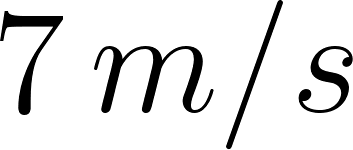
Two sites are being considered for wind power generation. In the first site, the wind blows steadily at for per year, whereas in the second site the wind blows at for 1500 hours per year. Assuming the wind velocity is negligible at other times for simplicity, determine which is a better site for wind power generation. Hint: Note that the mass flow rate of air is proportional to wind velocity.
Solution
Step 1 of 4
Two sites with specified wind data are being considered for wind power generation. The site better suited for wind power generation is to be determined.
Assumptions are
1. The wind is blowing steadily at specified velocity during specified times.
2. The wind power generation is negligible during other times.
We take the density of air to be 
Subscribe to view the
full solution
full solution
Title
Thermodynamics: An Engineering Approach 8
Author
Yunus A. Cengel, Michael A. Boles
ISBN
9780073398174
Solved: Two sites are being considered for wind power
Chapter 2 textbook questions
-
Chapter 2: Problem 143 Thermodynamics: An Engineering Approach 8
-
Chapter 2: Problem 1 Thermodynamics: An Engineering Approach 8
Problem 1P What is total energy? Identify the different forms of energy that constitute the total energy.
Read more -
Chapter 2: Problem 4 Thermodynamics: An Engineering Approach 8
Problem 4P What is mechanical energy? How does it differ from thermal energy? What are the forms of mechanical energy of a fluid stream?
Read more -
Chapter 2: Problem 3 Thermodynamics: An Engineering Approach 8
Problem 3P How are heat, internal energy, and thermal energy related to each other?
Read more -
Chapter 2: Problem 2 Thermodynamics: An Engineering Approach 8
Problem 2P List the forms of energy that contribute to the internal energy of a system.
Read more -
Chapter 2: Problem 5 Thermodynamics: An Engineering Approach 8
Problem 5P Natural gas, which is mostly methane CH4, is a fuel and a major energy source. Can we say the same about hydrogen gas, H2?
Read more -
Chapter 2: Problem 6 Thermodynamics: An Engineering Approach 8
Portable electric heaters are commonly used to heat small rooms. Explain the energy transformation involved during this heating process.
Read more -
Chapter 2: Problem 7 Thermodynamics: An Engineering Approach 8
Problem 7P Consider the process of heating water on top of an electric range. What are the forms of energy involved during this process? What are the energy transformations that take place?
Read more -
Chapter 2: Problem 8 Thermodynamics: An Engineering Approach 8
Problem 8P Calculate the total kinetic energy, in Btu, of an object with a mass of 10 lbm when its velocity is 50 ft/s.
Read more -
Chapter 2: Problem 9 Thermodynamics: An Engineering Approach 8
Problem 9P Calculate the total potential energy, in Btu, of an object with a mass of 200 lbm when it is 10 ft above a datum level at a location where standard gravitational acceleration exists.
Read more -
Chapter 2: Problem 12 Thermodynamics: An Engineering Approach 8
Problem 12P At a certain location, wind is blowing steadily at 10 m/s. Determine the mechanical energy of air per unit mass and the power generation potential of a wind turbine with 60-m-diameter blades at that location. Take the air density to be 1.25 kg/m3.
Read more -
Chapter 2: Problem 10 Thermodynamics: An Engineering Approach 8
Problem 10P A person gets into an elevator at the lobby level of a hotel together with his 30-kg suitcase, and gets out at the 10th floor 35 m above. Determine the amount of energy consumed by the motor of the elevator that is now stored in the suitcase
Read more -
Chapter 2: Problem 13 Thermodynamics: An Engineering Approach 8
Problem 130P Electric power is to be generated in a hydroelectric power plant that receives water at a rate of 70 m3/s from an elevation of 65 m using a turbine-generator with an efficiency of 85 percent. When frictional losses in piping are disregarded, the electric power output of this plant is (a)3.9MW (b)38MW (c)45MW (d)53MW (e) 65 MW
Read more -
Chapter 2: Problem 14 Thermodynamics: An Engineering Approach 8
Problem 14P Two sites are being considered for wind power generation. In the first site, the wind blows steadily at 7 m/s for 3000 hours per year, whereas in the second site the wind blows at 10 m/s for 1500 hours per year. Assuming the wind velocity is negligible at other times for simplicity, determine which is a better site for wind power generation. Hint: Note that the mass flow rate of air is proportional to wind velocity.
Read more -
Chapter 2: Problem 11 Thermodynamics: An Engineering Approach 8
Problem 11P Electric power is to be generated by installing a hydraulic turbine–generator at a site 120 m below the free surface of a large water reservoir that can supply water at a rate of 2400 kg/s steadily. Determine the power generation potential.
Read more -
Chapter 2: Problem 15 Thermodynamics: An Engineering Approach 8
Problem 15P A river flowing steadily at a rate of 175 m3/s is considered for hydroelectric power generation. It is determined that a dam can be built to collect water and release it from an elevation difference of 80 m to generate power. Determine how much power can be generated from this river water after the dam is filled.
Read more -
Chapter 2: Problem 16 Thermodynamics: An Engineering Approach 8
Consider a river flowing toward a lake at an average velocity of \(3 \mathrm{~m} / \mathrm{s}\) at a rate of \(500 \mathrm{~m}^{3} / \mathrm{s}\) at a location \(90 \mathrm{~m}\) ahove the lake surface. Determine the total mechanical energy of the river water per unit mass and the power generation potential of the entire river at that location. FIGURE P2–16 Equation Transcription: Text Transcription: 3 m/s 500 m^3/s 90 m
Read more -
Chapter 2: Problem 18 Thermodynamics: An Engineering Approach 8
Problem 18P Consider an automobile traveling at a constant speed along a road. Determine the direction of the heat and work interactions, taking the following as the system: (a) the car radiator, (b) the car engine, (c) the car wheels, (d) the road, and (e) the air surrounding the car.
Read more -
Chapter 2: Problem 17 Thermodynamics: An Engineering Approach 8
Problem 17P When is the energy crossing the boundaries of a closed system heat and when is it work?
Read more -
Chapter 2: Problem 19 Thermodynamics: An Engineering Approach 8
Consider an electric refrigerator located in a room. Determine the direction of the work and heat interactions (in or out) when the following are taken as the system:(a) the contents of the refrigerator, (b) all parts of the refrigerator including the contents, and (c) everything contained within the room during a winter day. FIGURE P2–19C
Read more -
Chapter 2: Problem 21 Thermodynamics: An Engineering Approach 8
Problem 21P A room is heated by an iron that is left plugged in. Is this a heat or work interaction? Take the entire room, including the iron, as the system.
Read more -
Chapter 2: Problem 20 Thermodynamics: An Engineering Approach 8
Problem 20P A gas in a piston-cylinder device is compressed, and as a result its temperature rises. Is this a heat or work interaction?
Read more -
Chapter 2: Problem 22 Thermodynamics: An Engineering Approach 8
Problem 22P A room is heated as a result of solar radiation coming in through the windows. Is this a heat or work interaction for the room?
Read more -
Chapter 2: Problem 23 Thermodynamics: An Engineering Approach 8
An insulated room is heated by burning candles. Is this a heat or work interaction? Take the entire room, including the candles, as the system.
Read more -
Chapter 2: Problem 24 Thermodynamics: An Engineering Approach 8
Problem 24P A small electrical motor produces 5 W of mechanical power. What is this power in (a) N, m, and s units; and (b) kg, m, and s units?
Read more -
Chapter 2: Problem 25 Thermodynamics: An Engineering Approach 8
Problem 25P A model aircraft internal-combustion engine produces 10 W of power. How much power is this in (a) lbf -ft/s and (b) hp?
Read more -
Chapter 2: Problem 26 Thermodynamics: An Engineering Approach 8
Problem 26P Lifting a weight to a height of 20 m takes 20 s for one crane and 10 s for another. Is there any difference in the amount of work done on the weight by each crane?
Read more -
Chapter 2: Problem 27 Thermodynamics: An Engineering Approach 8
Problem 27P A construction crane lifts a prestressed concrete beam weighing 3 short tons from the ground to the top of piers that are 36 ft above the ground. Determine the amount of work done considering (a) the beam and (b) the crane as the system. Express your answers in both lbf·ft and Btu.
Read more -
Chapter 2: Problem 28 Thermodynamics: An Engineering Approach 8
A man weighing \(180 \mathrm{lbf}\) is pushing a cart that weighs \(100 \mathrm{lbf}\) with its contents up a ramp that is inclined at an angle of \(10^{\circ}\) from the horizontal. Determine the work needed to move along this ramp a distance of \(100 \mathrm{ft}\) considering \((a)\) the man and \((b)\) the cart and its contents as the system. Express your answers in both lbf-ft and Btu. FIGURE P2–28E Equation Transcription: Text Transcription: 100 lbf 180 lbf 100 ft lbf dot ft Btu
Read more -
Chapter 2: Problem 30 Thermodynamics: An Engineering Approach 8
Problem 30P Determine the energy required to accelerate a 1300-kg car from 10 to 60 km/h on an uphill road with a vertical rise of 40 m.
Read more -
Chapter 2: Problem 32 Thermodynamics: An Engineering Approach 8
Problem 32P A spherical soap bubble with a surface-tension of 0.005 lbf/ft is expanded from a diameter of 0.5 in to 3.0 in. How much work, in Btu, is required to expand this bubble?
Read more -
Chapter 2: Problem 31 Thermodynamics: An Engineering Approach 8
Problem 31P Determine the torque applied to the shaft of a car that transmits 450 hp and rotates at a rate of 3000 rpm.
Read more -
Chapter 2: Problem 33 Thermodynamics: An Engineering Approach 8
Problem 33P Determine the work required to deflect a linear spring with a spring constant of 70 kN/m by 20 cm from its rest position.
Read more -
Chapter 2: Problem 29 Thermodynamics: An Engineering Approach 8
The force \(F\) required to compress a spring a distance \(x\) is given by \(F-F_{0}=k x\) where \(k\) is the spring constant and \(F_{0}\) is the preload. Determine the work required to compress a spring whose spring constant is \(k=200 \mathrm{lbf} /) in a distance of one inch starting from its free length where \(F_{0}=0 \mathrm{lbf}\). Express your answer in both \(\mathrm{lbf} \cdot \mathrm{ft}\) and Btu. FIGURE P2–29E Equation Transcription: Text Transcription: F F-F_0=kx F_0 k= 200 lbf/in F_0= 0 F_0= 0 lbf
Read more -
Chapter 2: Problem 34 Thermodynamics: An Engineering Approach 8
Problem 34P A ski lift has a one-way length of 1 km and a vertical rise of 200 m. The chairs are spaced 20 m apart, and each chair can seat three people. The lift is operating at a steady speed of 10 km/h. Neglecting friction and air drag and assuming that the average mass of each loaded chair is 250 kg, determine the power required to operate this ski lift. Also estimate the power required to accelerate this ski lift in 5 s to its operating speed when it is first turned on.
Read more -
Chapter 2: Problem 35 Thermodynamics: An Engineering Approach 8
Problem 35P The engine of a 1500-kg automobile has a power rating of 75 kW. Determine the time required to accelerate this car from rest to a speed of 100 km/h at full power on a level road. Is your answer realistic?
Read more -
Chapter 2: Problem 37 Thermodynamics: An Engineering Approach 8
Problem 37P What are the different mechanisms for transferring energy to or from a control volume?
Read more -
Chapter 2: Problem 39 Thermodynamics: An Engineering Approach 8
Water is being heated in a closed pan on top of a range while being stirred by a paddle wheel. During the process, \(30 \mathrm{~kJ}\) of heat is transferred to the water, and \(5 \mathrm{~kJ}\) of heat is lost to the surrounding air. The paddle-wheel work amounts to \(500 \mathrm{~N} \cdot \mathrm{m}\). Determine the final energy of the system if its initial energy is \(10 \mathrm{~kJ}\). FIGURE P2–39 Equation Transcription: Text Transcription: 30 kJ 5 kJ 500 N dot m 10 kJ
Read more -
Chapter 2: Problem 38 Thermodynamics: An Engineering Approach 8
Problem 38P On a hot summer day, a student turns his fan on when he leaves his room in the morning. When he returns in the-evening, will the room be warmer or cooler than the neighboring rooms? Why? Assume all the doors and windows are kept closed.
Read more -
Chapter 2: Problem 36 Thermodynamics: An Engineering Approach 8
Determine the power required for a \(1150-\mathrm{kg}\) car to climb a 100-m-long uphill road with a slope of \(30^{\circ}\) (from horizontal) in \(12 \mathrm{~s}(a)\) at a constant velocity, \((b)\) from rest to a final velocity of \(30 \mathrm{~m} / \mathrm{s}\), and \((c)\) from \(35 \mathrm{~m} / \mathrm{s}\) to a final velocity of \(5 \mathrm{~m} / \mathrm{s}\). Disregard friction, air drag, and rolling resistance. FIGURE P2–36 Equation Transcription: 1150-kg 30° Text Transcription: 1150-kg 30 degree 30 m/s 35 m/s 5 m/s
Read more -
Chapter 2: Problem 40 Thermodynamics: An Engineering Approach 8
Problem 40P A vertical piston-cylinder device contains water and is being heated on top of a range. During the process, 65 Btu of heat is transferred to the water, and heat losses from the side walls amount to 8 Btu. The piston rises as a result of evaporation, and 5 Btu of work is done by the vapor. Determine the change in the energy of the water for this process.
Read more -
Chapter 2: Problem 41 Thermodynamics: An Engineering Approach 8
Problem 41P At winter design conditions, a house is projected to lose heat at a rate of 60,000 Btu/h. The internal heat gain from people, lights, and appliances is estimated to be 6000 Btu/h. If this house is to be heated by electric resistance heaters, determine the required rated power of these heaters in kW to maintain the house at constant temperature.
Read more -
Chapter 2: Problem 42 Thermodynamics: An Engineering Approach 8
Problem 42P A water pump increases the water pressure from 15 psia to 70 psia. Determine the power input required, in hp, to pump 0.8 ft3/s of water. Does the water temperature at the inlet have any significant effect on the required flow power?
Read more -
Chapter 2: Problem 43 Thermodynamics: An Engineering Approach 8
Problem 43P A water pump that consumes 2 kW of electric power when operating is claimed to take in water from a lake and pump it to a pool whose free surface is 30 m above the free surface of the lake at a rate of 50 L/s. Determine if this claim is reasonable.
Read more -
Chapter 2: Problem 45 Thermodynamics: An Engineering Approach 8
Problem 45P A university campus has 200 classrooms and 400 faculty offices. The classrooms are equipped with 12 fluorescent tubes, each consuming 110 W, including the electricity used by the ballasts. The faculty offices, on average, have half as many tubes. The campus is open 240 days a year. The classrooms and faculty offices are not occupied an average of 4 h a day, but the lights are kept on. If the unit cost of electricity is $0.11/kWh, determine how much the campus will save a year if the lights in the classrooms and faculty offices are turned off during unoccupied periods.
Read more -
Chapter 2: Problem 44 Thermodynamics: An Engineering Approach 8
Problem 44P A classroom that normally contains 40 people is to be air-conditioned with window air-conditioning units of 5-kW cooling capacity. A person at rest may be assumed to dissipate heat at a rate of about 360 kJ/h. There are 10 light-bulbs in the room, each with a rating of 100 W. The rate of heat transfer to the classroom through the walls and the windows is estimated to be 15,000 kJ/h. If the room air is to be maintained ata constant temperature of 21°C, determine the number of window avr-conditioning units required.
Read more -
Chapter 2: Problem 46 Thermodynamics: An Engineering Approach 8
Problem 46P The lighting requirements of an industrial facility are being met by 700 40-W standard fluorescent lamps. The lamps are close to completing their service life and are to be replaced by their 34-W high-efficiency counterparts that operate on the existing standard ballasts. The standard and high-efficiency fluorescent lamps can be purchased in quantity at a cost of $1.77 and $2.26 each, respectively. The facility operates 2800 hours a year, and all of the lamps are kept on during operating hours. Taking the unit cost of electricity to be $0.105/kWh and the ballast factor to be 1.1 (i.e., ballasts consume 10 percent of the rated power of the lamps), determine how much energy and money will be saved per year as a result of switching to the high-efficiency fluorescent lamps. Also, determine the simple payback period.
Read more -
Chapter 2: Problem 47 Thermodynamics: An Engineering Approach 8
Problem 47P Consider a room that is initially at the outdoor temperature of 208C. The room contains a 40-W lightbulb, a 110-W TV set, a 300-W refrigerator, and a 1200-W iron. Assuming no heat transfer through the walls, determine the rate of increase of the energy content of the room when all of these electric devices are on.
Read more -
Chapter 2: Problem 48 Thermodynamics: An Engineering Approach 8
Problem 48P Consider a fan located in a 3 ft × 3 ft square duct. Velocities at various points at the outlet are measured, and the average flow velocity is determined to be 22 ft/s. Taking the air density to 0.075 lbm/ft3, estimate the minimum electric power consumption of the fan motor.
Read more -
Chapter 2: Problem 49 Thermodynamics: An Engineering Approach 8
Problem 49P The 60-W fan of a central heating system is to circulate air through the ducts. The analysis of the flow shows that the fan needs to raise the pressure of air by 50 Pa to maintain flow. The fan is located in a horizontal flow section whose diameter is 30 cm at both the inlet and the outlet. Determine the highest possible average flow velocity in the duct.
Read more -
Chapter 2: Problem 51 Thermodynamics: An Engineering Approach 8
Problem 51P An escalator in a shopping center is designed to move 50 people, 75 kg each, at a constant speed of 0.6 m/s at 45° slope. Determine the minimum power input needed to drive this escalator. What would your answer be if the escalator velocity were to be doubled?
Read more -
Chapter 2: Problem 52 Thermodynamics: An Engineering Approach 8
Problem 52P Consider a 1400-kg car cruising at constant speed of 70 km/s. Now the car starts to pass another car, by accelerating to 110 km/h in 5 s. Determine the additional power needed to achieve this acceleration. What would your answer be if the total mass of the car were only 700 kg?
Read more -
Chapter 2: Problem 50 Thermodynamics: An Engineering Approach 8
The driving force for fluid flow is the pressure difference, and a pump operates by raising the pressure of a fluid (by converting the mechanical shaft work to flow energy). A gasoline pump is measured to consume \(3.8 \mathrm{kW}\) of electric power when operating. If the pressure differential between the outlet and inlet of the pump is measured to be \(7 \mathrm{kPa}\) and the changes in velocity and elevation are negligible, determine the maximum possible volume flow rate of gasoline. FIGURE P2–50 Equation Transcription: Text Transcription: 3.8 kW 7 kPa
Read more -
Chapter 2: Problem 53 Thermodynamics: An Engineering Approach 8
Problem 53P How is the combined pump-motor efficiency of a pump and motor system defined? Can. the combined pump-motor efficiency be greater than either the pump or the motor efficiency?
Read more -
Chapter 2: Problem 54 Thermodynamics: An Engineering Approach 8
Problem 54P Define turbine efficiency, generator efficiency, and combined turbine-generator efficiency.
Read more -
Chapter 2: Problem 55 Thermodynamics: An Engineering Approach 8
Problem 55P Can the combined turbine-generator efficiency be greater than either the turbine efficiency or the generator efficiency? Explain.
Read more -
Chapter 2: Problem 57 Thermodynamics: An Engineering Approach 8
Problem 57P A 75-hp (shaft output) motor that has an efficiency of 91.0 percent is worn out and is to be replaced by a high efficiency motor that has an efficiency of 95.4 percent. The motor operates 4368 hours a year at a load factor of 0.75. Taking the cost of electricity to be $0.12/kWh, determine the amount of energy and money saved as a result of installing the high-efficiency motor instead of the standard motor. Also, determine the simple payback period if the purchase prices of the standard and high-efficiency motors are $5449 and $5520, respectively.
Read more -
Chapter 2: Problem 56 Thermodynamics: An Engineering Approach 8
Problem 56P Consider a 24-kW hooded electric open burner in an area where the unit costs of electricity and natural gas are $0.10/kWh and $1.20/therm (1 therm = 105,500 kJ), respectively. The efficiency of open burners can be taken to be 73 percent for electric burners and 38 percent for gas burners. Determine the rate of energy consumption and the unit cost of utilized energy for both electric and gas burners.
Read more -
Chapter 2: Problem 59 Thermodynamics: An Engineering Approach 8
Problem 59P The steam requirements of a manufacturing facility are being met by a boiler whose rated heat input is 5.5 X 10⁶ Btu/h. The combustion efficiency of the boiler is measured to be 0.7 by a handheld flue gas analyzer. After tuning up the boiler, the combustion efficiency rises to 0.8. The boiler operates 4200 hours a year intermittently. Taking the unit cost of energy to be $4.35/106 Btu, determine the annual energy and cost savings as a result of tuning up the boiler.
Read more -
Chapter 2: Problem 60 Thermodynamics: An Engineering Approach 8
Reconsider Prob. 2–59E. Using \(\mathrm{EES}\) (or other) software, study the effects of the unit cost of energy, the new combustion efficiency on the annual energy, and cost savings. Let the efficiency vary from 0.7 to 0.9, and the unit cost to vary from $4 to $6 per million Btu. Plot the annual energy and cost savings against the efficiency for unit costs of $4, $5, and $6 per million Btu, and discuss the results. Equation Transcription: Text Transcription: EES
Read more -
Chapter 2: Problem 58 Thermodynamics: An Engineering Approach 8
Problem 58P Consider an electric motor with a shaft power output of 20 kW and an efficiency of 88 percent. Determine the rate at which the motor dissipates heat to the room it is in when the motor operates at full load. In winter, this room is normally heated by a 2-kW resistance heater. Determine if it is necessary to turn the heater on when the motor runs at full load.
Read more -
Chapter 2: Problem 61 Thermodynamics: An Engineering Approach 8
A geothermal pump is used to pump brine whose density is \(1050 \mathrm{~kg} / \mathrm{m}^{3}\) at a rate of \(0.3 \mathrm{~m}^{3} / \mathrm{s}\) from a depth of \(200 \mathrm{~m}\). For a pump efficiency of 74 percent, determine the required power input to the pump. Disregard frictional losses in the pipes, and assume the geothermal water at \(200 \mathrm{~m}\) depth to be exposed to the atmosphere. Equation Transcription: Text Transcription: 050 kg/m^3 0.3 m^3/s 200 m
Read more -
Chapter 2: Problem 62 Thermodynamics: An Engineering Approach 8
Problem 62P An exercise room has 6 weight-lifting machines that have no motors and 7 treadmills each equipped with a 2.5-hp (shaft output) motor. The motors operate at an average load factor of 0.7, at which their efficiency is 0.77. During peak evening hours, all 12 pieces of exercising equipment are used continuously, and there are also two people doing light exercises while waiting in line for one piece of the equipment. Assuming the average rate of heat dissipation from people in an exercise room is 600 W, determine the rate of heat gain of the exercise room from people and the equipment at peak load conditions.
Read more -
Chapter 2: Problem 63 Thermodynamics: An Engineering Approach 8
Problem 63P A room is cooled by circulating chilled water through a heat exchanger located in a room. The air is circulated through the heat exchanger by a 0.25-hp (shaft output) fan. Typical efficiency of small electric motors driving 0.25-hp equipment is 54 percent. Determine the rate of heat supply by the fan-motor assembly to the room.
Read more -
Chapter 2: Problem 66 Thermodynamics: An Engineering Approach 8
Problem 66P At a certain location, wind is blowing steadily at 7 m/s. Determine the mechanical energy of air per unit mass and the power generation potential of a wind turbine with 80-m-diameter blades at that location. Also determine the actual electric power generation assuming an overall efficiency of 30 percent. Take the air density to be 1.25 kg/m3.
Read more -
Chapter 2: Problem 64 Thermodynamics: An Engineering Approach 8
Problem 64P The water in a large lake is to be used to generate electricity by the installation of a hydraulic turbine-generator at a location where the depth of the water is 50 m (Fig. 2–62). Water is to be supplied at a rate of 5000 kg/s. If the electric power generated is measured to be 1862 kW and the generator efficiency is 95 percent, determine (a) the overall efficiency of the turbine—generator, (b) the mechanical efficiency of the turbine, and (c) the shaft power supplied by he turbine to the generator.
Read more -
Chapter 2: Problem 65 Thermodynamics: An Engineering Approach 8
Problem 65P A 7-hp (shaft) pump is used to raise water to an elevation of 15 m. If the mechanical efficiency of the pump is 82 percent, determine the maximum volume flow rate of water.
Read more -
Chapter 2: Problem 67 Thermodynamics: An Engineering Approach 8
Reconsider Prob. 2–66. Using EES (or other) software, investigate the effect of wind velocity and the blade span diameter on wind power generation. Let the velocity vary from 5 to \(20 m/s\) in increments of \(5 m/s\), and the diameter vary from 20 to \(120 m\) in increments of \(20 m\). Tabulate the results, and discuss their significance. Equation Transcription: Text Transcription: 20 m/s 5 m/s 120 m 20 m
Read more -
Chapter 2: Problem 68 Thermodynamics: An Engineering Approach 8
Water is pumped from a lake to a storage tank \(15\ m\) above at a rate of \(70\ L/s\) while consuming \(15.4\ kW\) of electric power. Disregarding any frictional losses in the pipes and any changes in kinetic energy, determine (a) the overall efficiency of the pump–motor unit and (b) the pressure difference between the inlet and the exit of the pump. FIGURE P2–68 Equation Transcription: Text Transcription: 15 m 70 L/s 15.4 kW
Read more -
Chapter 2: Problem 69 Thermodynamics: An Engineering Approach 8
Problem 69P Large wind turbines with blade span diameters of over 100 m are available for electric power generation. Consider a wind turbine with a blade span diameter of 100 m installed at a site subjected to steady winds at 8 m/s. Taking the overall efficiency of the wind turbine to be 32 percent and the air density to be 1.25 kg/m3, determine the electric power generated by this wind turbine. Also, assuming steady winds of 8 m/s during a 24-hour period, determine the amount of electric energy and the revenue generated per day for a unit price of $0.06/kWh for electricity.
Read more -
Chapter 2: Problem 70 Thermodynamics: An Engineering Approach 8
A hydraulic turbine has 85 m of elevation difference available at a flow rate of 0.25 m³/s, and its overall turbine–generator efficiency is 91 percent. Determine the electric power output of this turbine.
Read more -
Chapter 2: Problem 71 Thermodynamics: An Engineering Approach 8
Problem 71P A water pump delivers 6 hp of shaft power when operating. If the pressure differential between the outlet and the inlet of the pump is measured to be 1.2 psi when the flow rate is 15 ft3/s and the changes in velocity and elevation are negligible, determine the mechanical efficiency of this pump.
Read more -
Chapter 2: Problem 73 Thermodynamics: An Engineering Approach 8
The water behind Hoover Dam in Nevada is \(206\ m\) higher than the Colorado River below it. At what rate must water pass through the hydraulic turbines of this dam to produce \(100\ MW\) of power if the turbines are 100 percent efficient? FIGURE P2–73 Equation Transcription: Text Transcription: 206 m 100 MW
Read more -
Chapter 2: Problem 72 Thermodynamics: An Engineering Approach 8
Water is pumped from a lower reservoir to a higher reservoir by a pump that provides \(20 \mathrm{~kW}\) of shaft power. The free surface of the upper reservoir is \(45 \mathrm{~m}\) higher than that of the lower reservoir. If the flow rate of water is measured to be \(0.03 \mathrm{~m}^{3} / \mathrm{s}\), determine mechanical power that is converted to thermal energy during this process due to frictional effects. FIGURE P2–72 Equation Transcription: Text Transcription: 20 kW 45 m 0.03 m^3/s
Read more -
Chapter 2: Problem 74 Thermodynamics: An Engineering Approach 8
An oil pump is drawing \(44 \mathrm{~kW}\) of electric power while pumping oil with \(\rho=860 \mathrm{~kg} / \mathrm{m}^{3}\) at a rate of \(0.1 \mathrm{~m}^{3} / \mathrm{s}\). The inlet and outlet diameters of the pipe are \(8 \mathrm{~cm}\) and \(12 \mathrm{~cm}\), respectively. If the pressure rise of oil in the pump is measured to be \(500 \mathrm{kPa}\) and the motor efficiency is 90 percent, determine the mechanical efficiency of the pump FIGURE P2–74 Equation Transcription: Text Transcription: 44 kW rho=860 kg/m^3 0.1 m3/s 8 cm 12 cm 500 kPa
Read more -
Chapter 2: Problem 75 Thermodynamics: An Engineering Approach 8
Problem 75P How does energy conversion affect the environment? What are the primary chemicals that pollute the air? What is the primary source of these pollutants?
Read more -
Chapter 2: Problem 76 Thermodynamics: An Engineering Approach 8
Problem 76P What is acid rain? Why is it called a “rain”? How do the acids form in the atmosphere? What are the adverse effects of acid rain on the environment?
Read more -
Chapter 2: Problem 77 Thermodynamics: An Engineering Approach 8
Problem 77P Why is carbon monoxide a dangerous air pollutant? How does it affect human health at low and at high levels?
Read more -
Chapter 2: Problem 79 Thermodynamics: An Engineering Approach 8
Problem 79P What is smog? What does it consist of? How does ground-level ozone form? What are the adverse effects of ozone on human health?
Read more -
Chapter 2: Problem 80 Thermodynamics: An Engineering Approach 8
A Ford Taurus driven 12,000 miles a year will use about 650 gallons of gasoline compared to a Ford Explorer that would use 850 gallons. About \(19.7 \mathrm{lbm}\) of \(\mathrm{CO}_{2}\), which causes global warming, is released to the atmosphere when a gallon of gasoline is burned. Determine the extra amount of \(\mathrm{CO}_{2}\) production a man is responsible for during a 5-year period if he trades his Taurus for an Explorer. Equation Transcription: Text Transcription: 19.7 lbm 850 gallons CO_2
Read more -
Chapter 2: Problem 81 Thermodynamics: An Engineering Approach 8
Consider a household that uses \(14,000 \mathrm{kWh}\) of electricity per year and 900 gallons of fuel oil during a heating season. The average amount of \(\mathrm{CO}_{2}\) produced is \(26.4 \mathrm{lbm} /\) gallon of fuel oil and \(1.54 \mathrm{lbm} / \mathrm{kWh}\) of electricity. If this household reduces its oil and electricity usage by 15 percent as a result of implementing some energy conservation measures, determine the reduction in the amount of \(\mathrm{CO}_{2}\) emissions by that household per year. Equation Transcription: Text Transcription: 14,000 kWh 26.4 lbm/gallon 1.54 lbm/kW CO_2
Read more -
Chapter 2: Problem 78 Thermodynamics: An Engineering Approach 8
Problem 78P What is the greenhouse effect? How does the excess CO2 gas in the atmosphere cause the greenhouse effect? What are the potential long-term consequences of greenhouse effect? How can we combat this problem?
Read more -
Chapter 2: Problem 82 Thermodynamics: An Engineering Approach 8
Problem 82P When a hydrocarbon fuel is burned, almost all of the carbon in the fuel burns completely to form CO2 (carbon dioxide), which is the principal gas causing the greenhouse effect and thus global climate change. On average, 0.59 kg of CO2 is produced for each kWh of electricity generated from a power plant that burns natural gas. A typical new household refrigerator uses about 700 kWh of electricity per year. Determine the amount of CO2 production that is due to the refrigerators in a city with 300,000 households.
Read more -
Chapter 2: Problem 83 Thermodynamics: An Engineering Approach 8
Problem 83P Repeat Prob. 2–85 assuming the electricity is produced by a power plant that burns coal. The average production of C02 in this case is 1.1 kg per kWh.
Read more -
Chapter 2: Problem 85 Thermodynamics: An Engineering Approach 8
Problem 85P What are the mechanisms of heat transfer?
Read more -
Chapter 2: Problem 86 Thermodynamics: An Engineering Approach 8
Problem 86P Which is a better heat conductor, diamond or silver?
Read more -
Chapter 2: Problem 87 Thermodynamics: An Engineering Approach 8
Problem 87P How does forced convection differ from natural convection?
Read more -
Chapter 2: Problem 88 Thermodynamics: An Engineering Approach 8
Problem 88P What is blackbody? How do real bodies differ from a blackbody?
Read more -
Chapter 2: Problem 84 Thermodynamics: An Engineering Approach 8
A typical car driven 20,000 \(\mathrm{km}\) a year emits to the atmosphere about \(11 \mathrm{~kg}\) per year of \(\mathrm{NO}_{\mathrm{x}}\) (nitrogen oxides), which cause smog in major population areas. Natural gas burned in the furnace emits about \(4.3 \mathrm{~g}\) of \(\mathrm{NO}_{x}\) per therm \((1 \mathrm{therm}=105,500 \mathrm{~kJ})\), and the electric power plants emit about \(7.1 \mathrm{~g}\) of \(\mathrm{NO}_{x}\) per kWh of electricity produced. Consider a household that has two cars and consumes \(9000 \mathrm{kWh}\) of electricity and 1200 therms of natural gas. Determine the amount of \(\mathrm{NO}_{x}\) emission to the atmosphere per year for which this household is responsible. FIGURE P2–84 Equation Transcription: Text Transcription: 20,000 km 11 kg NO_x 4.3 g 7.1 g
Read more -
Chapter 2: Problem 89 Thermodynamics: An Engineering Approach 8
Problem 89P Define emissivity and absorptivity. What is Kirchhoff's law of radiation?
Read more -
Chapter 2: Problem 90 Thermodynamics: An Engineering Approach 8
Problem 90P Does any of the energy of the sun reach the earth by conduction or convection?
Read more -
Chapter 2: Problem 91 Thermodynamics: An Engineering Approach 8
The inner and outer surfaces of a \(5-\mathrm{m} \times 6-\mathrm{m}\) brick wall of thickness \(30 \mathrm{~cm}\) and thermal conductivity \(0.69 \mathrm{~W} / \mathrm{m} \cdot{ }^{\circ} \mathrm{C}\) are maintained at temperatures of \(20^{\circ} \mathrm{C}\) and \(5^{\circ} \mathrm{C}\), respectively. Determine the rate of heat transfer through the wall, in W. FIGURE P2–91 Equation Transcription: ? 58? Text Transcription: 5-m times 6-m 0.69 W/m dot degree celsius 208 degree celsius 58 degree celsius
Read more -
Chapter 2: Problem 93 Thermodynamics: An Engineering Approach 8
Reconsider Prob. 2–92. Using EES (or other) software, investigate the effect of glass thickness on heat loss for the specified glass surface temperatures. Let the glass thickness vary from 0.2 to \(2\ cm\). Plot the heat loss versus the glass thickness, and discuss the results. Equation Transcription: Text Transcription: 2 cm
Read more -
Chapter 2: Problem 94 Thermodynamics: An Engineering Approach 8
Problem 94P An aluminum pan whose thermal conductivity is 237 W/m·°C has a flat bottom whose diameter is 20 cm and thickness 0.6 cm. Heat is transferred steadily to boiling water in the pan through its bottom at a rate of 700 W. If the inner surface of the bottom of the pan is 105°C, determine the temperature of the outer surface of the bottom of the pan.
Read more -
Chapter 2: Problem 92 Thermodynamics: An Engineering Approach 8
Problem 92P The inner and outer surfaces of a 0.5-cm-thick 2-m × 2-m window glass in winter are 15°C and 6°C, respectively. If the thermal conductivity of the glass is 0.78 W/m-°C, determine the amount of heat loss, in kJ, through the glass over a period of 10 h. What would your answer be if the glass were 1-cm thick?
Read more -
Chapter 2: Problem 95 Thermodynamics: An Engineering Approach 8
Problem 95P The inner and outer glasses of a 2-m×2-m double pane window are at 18°C and 6°C, respectively. If the 1-cm space between the two glasses is filled with still air, determine the rate of heat transfer through the air layer by conduction, in kW.
Read more -
Chapter 2: Problem 96 Thermodynamics: An Engineering Approach 8
Problem 96P Two surfaces of a 2-cm-thick plate are maintained at 0°C and 100°C, respectively. If it is determined that heat is transferred through the plate at a rate of 500 W/m2, determine its thermal conductivity.
Read more -
Chapter 2: Problem 97 Thermodynamics: An Engineering Approach 8
Problem 97P Hot air at 80°C is blown over a 2-m × 4-m flat surface at 30°C. If the convection heat transfer coefficient is 55 W/m2-°C, determine the rate of heat transfer from the air to the plate, in kW.
Read more -
Chapter 2: Problem 98 Thermodynamics: An Engineering Approach 8
Problem 98P For heat transfer purposes, a standing man can be modeled as a 30-cm diameter, 175-cm long vertical cylinder with both the top and bottom surfaces insulated and with the side surface at an average temperature of 34°C. For a convection heat transfer coefficient of 10 W/m2·°C, determine the rate of heat loss from this man by convection in an environment at 20°C.
Read more -
Chapter 2: Problem 100 Thermodynamics: An Engineering Approach 8
Reconsider Prob. 2-99. Using EES (or other) software, investigate the effect of the convection heat transfer coefficient and surface emissivity on the heat transfer rate from the ball. Let the heat transfer coefficient vary from 5 to \(30 \mathrm{~W} / \mathrm{m}^{2} \cdot{ }^{\circ} \mathrm{C}\). Plot the rate of heat transfer against the convection heat transfer coefficient for the surface emissivities of \(0.1,0.5,0.8\), and 1 , and discuss the results. Equation Transcription: ? Text Transcription: 30 W/m^2 degree celsius
Read more -
Chapter 2: Problem 99 Thermodynamics: An Engineering Approach 8
Problem 99P A 9-cm-diameter spherical ball whose surface is maintained at a temperature of 110°C is suspended in the middle of a room at 20°C. If the convection heat transfer coefficient is 15 W/m2-C and the emissivity of the surface is 0.8, determine the total rate of heat transfer from the ball.
Read more -
Chapter 2: Problem 101 Thermodynamics: An Engineering Approach 8
A 1000-W iron is left on the ironing board with its base exposed to the air at \(23^{\circ} \mathrm{C}\). The convection heat transfer coefficient between the base surface and the surrounding air is \(20 \mathrm{~W} / \mathrm{m}^{2} \cdot{ }^{\circ} \mathrm{C}\). If the base has an emissivity of \(0.4\) and a surface area of \(0.02 \mathrm{~m}^{2}\), determine the temperature of the base of the iron. FIGURE P2–101 Equation Transcription: 23? ? Text Transcription: 1000-W 23 degree celsius 20 W/m^2 degree celsius 0.02 m^2
Read more -
Chapter 2: Problem 102 Thermodynamics: An Engineering Approach 8
A 7-cm-external-diameter, 18-m-long hot-water pipe at \(80^{\circ} \mathrm{C}\) is losing heat to the surrounding air at \(5^{\circ} \mathrm{C}\) by natural convection with a heat transfer coefficient of \(25 \mathrm{~W} / \mathrm{m}^{2} \cdot{ }^{\circ} \mathrm{C}\). Determine the rate of heat loss from the pipe by natural convection, in \(\mathrm{kW}\). Equation Transcription: 80? 58? ? Text Transcription: 18-m 80 degree celsius 58 degree celsius 25 W/m^2 dot degree celsius
Read more -
Chapter 2: Problem 103 Thermodynamics: An Engineering Approach 8
A thin metal plate is insulated on the back and exposed to solar radiation on the front surface. The exposed surface of the plate has an absorptivity of \(0.8\) for solar radiation. If solar radiation is incident on the plate at a rate of \(450 \mathrm{~W} / \mathrm{m}^{2}\) and the surrounding air temperature is \(25^{\circ} \mathrm{C}\), determine the surface temperature of the plate when the heat loss by convection equals the solar energy absorbed by the plate. Assume the convection heat transfer coefficient to be \(50 \mathrm{~W} / \mathrm{m}^{2} \cdot{ }^{\circ} \mathrm{C}\), and disregard heat loss by radiation. FIGURE P2–103 Equation Transcription: 25? ? Text Transcription: 450 W/m^2 25 degree celsius 0 W/m^2 dot degree celsius
Read more -
Chapter 2: Problem 104 Thermodynamics: An Engineering Approach 8
Reconsider Prob. 2-103. Using EES (or other) software, investigate the effect of the convection heat transfer coefficient on the surface temperature of the plate. Let the heat transfer coefficient vary from 10 to \(90 \mathrm{~W} / \mathrm{m}^{2} \cdot{ }^{\circ} \mathrm{C}\). Plot the surface temperature against the convection heat transfer coefficient, and discuss the results. Equation Transcription: ? Text Transcription: 90 W/m^2 dot degree celsius
Read more -
Chapter 2: Problem 105 Thermodynamics: An Engineering Approach 8
Problem 105P The outer surface of a spacecraft in space has an emissivity of 0.6 and an absorptivity of 0.2 for solar radiation. If solar radiation is incident on the spacecraft at a rate of 1000 W/m2, determine the surface temperature of the spacecraft when the radiation emitted equals the solar energy absorbed.
Read more -
Chapter 2: Problem 106 Thermodynamics: An Engineering Approach 8
Reconsider Prob. 2–105. Using EES (or other) software, investigate the effect of the surface emissivity and absorptivity of the spacecraft on the equilibrium surface temperature. Plot the surface temperature against emissivity for solar absorptivities of \(0.1, 0.5, 0.8\), and 1, and discuss the results. Equation Transcription: Text Transcription: 0.1, 0.5, 0.8
Read more -
Chapter 2: Problem 107 Thermodynamics: An Engineering Approach 8
Problem 107P A hollow spherical iron container whose outer diameter is 40 cm and thickness is 0.4 cm is filled with iced water at 0°C. If the outer surface temperature is 3°C, determine the approximate rate of heat loss from the sphere, and the rate at which ice melts in the container.
Read more -
Chapter 2: Problem 108 Thermodynamics: An Engineering Approach 8
Problem 108P Consider a vertical elevator whose cabin has a total mass of 800 kg when fully loaded and 150 kg when empty. The weight of the elevator cabin is partially balanced by a 400-kg counterweight that is connected to the top of the cabin by cables that pass through a pulley located on top of the elevator well. Neglecting the weight of the cables and assuming the guide rails and the pulleys to be frictionless, determine (a) the power required while the fully loaded cabin is rising at a constant speed of 1.2 m/s and (b) the power required while the empty cabin is descending at a constant speed of 1.2 m/s. What would your answer be to (a) if no counterweight were used? What would your answer be to (b) if a friction force of 800 N has developed between the cabin and the guide rails?
Read more -
Chapter 2: Problem 109 Thermodynamics: An Engineering Approach 8
Problem 109P Consider a homeowner who .is replacing his 25-year-old.natural gas furnace that has an efficiency of 55 percent. The homeowner is considering a conventional furnace that has an efficiency of 82 percent and costs $1600 and a high-efficiency furnace that has an efficiency of 95 percent and costs $2700. The homeowner would like to buy the high-efficiency furnace if the savings from the natural gas pay for the additional cost in less than 8 years. If the homeowner presently pays $1200 a year for heating, determine if he should buy the conventional or high-efficiency model.
Read more -
Chapter 2: Problem 110 Thermodynamics: An Engineering Approach 8
The energy contents, unit costs, and typical conversion efficiencies of various energy sources for use in water heaters are given as follows: \(1025 \mathrm{Btu} / \mathrm{ft}^{3}\), \(\$ 0.012 / \mathrm{ft}^{3}\), and 85 percent for natural gas; \(138,700 \mathrm{Btu} / \mathrm{gal}\), \(\$ 2.2 /\) gal, and 75 percent for heating oil; and \(1 \mathrm{kWh} / \mathrm{kWh}\), \(\$ 0.11 / \mathrm{kWh}\), and 90 percent for electric heaters, respectively. Determine the lowest-cost energy source for water heaters. Equation Transcription: Text Transcription: 025 Btu/ft^3, $0.012/ft^3 138,700 Btu/gal, $2.2/gal 1 kWh/kWh, $0.11/kWh
Read more -
Chapter 2: Problem 111 Thermodynamics: An Engineering Approach 8
Problem 111P A homeowner is considering these heating systems for heating his house: Electric resistance heating with $0.12/ kWh and 1 kWh = 3600 kJ, gas heating with $1.24/therm and 1 therm = 105,500 kJ, and oil heating with $2.3/gal and 1 gal of oil = 138,500 kJ. Assuming efficiencies of 100 percent for the electric furnace and 87 percent for the gas and oil furnaces, determine the heating system with the lowest energy cost.
Read more -
Chapter 2: Problem 112 Thermodynamics: An Engineering Approach 8
The U.S. Department of Energy estimates that 570,000 barrels of oil would be saved per day if every household in the United States lowered the thermostat setting in winter by \(6^{\circ} \mathrm{F}\left(3.3^{\circ} \mathrm{C}\right)\). Assuming the average heating season to be 180 days and the cost of oil to be \(\$ 110 /\) barrel, determine how much money would be saved per year. Equation Transcription: Text Transcription: 6 degree fahrenheit (3.3 degree celsius) $110/barrel
Read more -
Chapter 2: Problem 113 Thermodynamics: An Engineering Approach 8
Problem 113P The U.S. Department of Energy estimates that up to 10 percent of the energy use of a house can be saved by caulking and weather stripping doors and windows to reduce air leaks at a cost of about $90 for materials for an average home with 12 windows and 2 doors. Caulking and weather stripping every gas-heated home properly would save enough energy to heat about 4 million homes. The savings can be increased by installing storm windows. Determine how long it will take for the caulking and weather stripping to pay for itself from the energy they save for a house whose annual energy use is $1500.
Read more -
Chapter 2: Problem 115 Thermodynamics: An Engineering Approach 8
Problem 115P A man weighing 180 lbf pushes a block weighing 100 lbf along a horizontal plane. The dynamic coefficient of friction between the block and plane is 0.2. Assuming that the block is moving at constant speed, calculate the work required to move the block a distance of 100 ft considering (a) the man and (b) the block as the system. Express your answers in both lbf.ft and Btu.
Read more -
Chapter 2: Problem 116 Thermodynamics: An Engineering Approach 8
Problem 116P A diesel engine with an engine volume of 4.0 L and an engine speed of 2500 rpm operates on an air-fuel ratio of 18 kg air/kg fuel. The engine uses light diesel fuel that contains 750 ppm (parts per million) of sulfur by mass. All of this sulfur is exhausted to the environment where the sulfur is converted to sulfurous acid (H2 S03). If the rate of the air entering the engine is 336 kg/h, determine the mass flow rate of sulfur in the exhaust. Also, determine the mass flow rate of sulfurous acid added to the environment if for each kmol of sulfur in the exhaust, one kmol sulfurous acid will be added to the environment.
Read more -
Chapter 2: Problem 117 Thermodynamics: An Engineering Approach 8
Problem 117P Leaded gasoline contains lead that ends up in the engine exhaust. Lead is a very toxic engine emission. The use of leaded gasoline in the United States has been unlawful for most vehicles since the 1980s. However, leaded gasoline is still used in some parts of the world. Consider a city with 70,000 cars using leaded gasoline. The gasoline contains 0.15 g/L of lead and 50 percent of lead is exhausted to the environment. Assuming that an average car travels 15,000 km per year with a gasoline consumption of 8.5 L/100 km, determine the amount of lead put into the atmosphere per year in that city.
Read more -
Chapter 2: Problem 114 Thermodynamics: An Engineering Approach 8
The force required to compress the gas in a gas spring a distance \(x\) is given by \(F=\frac{\text { Constant }}{x^{k}}\) where the constant is determined by the geometry of this device and \(k\) is determined by the gas used in the device. One such device has a constant of \(200 \mathrm{lbf} \cdot \mathrm{in}^{1.4}\) and \(k=1.4\). Determine the work, in Btu, required to compress this device from 2 in to 7 in. Equation Transcription: Text Transcription: F= Constant/x^k 200 lbf dot in^1.4 k=1.4
Read more -
Chapter 2: Problem 118 Thermodynamics: An Engineering Approach 8
Problem 118P Consider a TV set that consumes 120 W of electric power when it is on and is kept on for an average of 6 hours per day. For a unit electricity cost of 12 cents per kWh, determine the cost of electricity this TV consumes per month (30 days).
Read more -
Chapter 2: Problem 119 Thermodynamics: An Engineering Approach 8
Problem 119P Water is pumped from a 200-ft-deep well into a 100-ft-high storage tank. Determine the power, in kW, that would be required to pump 200 gallons per minute.
Read more -
Chapter 2: Problem 120 Thermodynamics: An Engineering Approach 8
Problem 120P A grist mill of the 1800s employed a water wheel that was 14 m high; 320 liters per minute of water flowed on to the wheel near the top. How much power, in kW, could this water wheel have produced?
Read more -
Chapter 2: Problem 122 Thermodynamics: An Engineering Approach 8
The demand for electric power is usually much higher during the day than it is at night, and utility companies often sell power at night at much lower prices to encourage consumers to use the available power generation capacity and to avoid building new expensive power plants that will be used only a short time during peak periods. Utilities are also willing to purchase power produced during the day from private parties at a high price. Suppose a utility company is selling electric power for \(\$ 0.05 / \mathrm{kWh}\) at night and is willing to pay \(\$ 0.12 / \mathrm{kWh}\) for power produced during the day. To take advantage of this opportunity, an entrepreneur is considering building a large reservoir \(40 \mathrm{~m}\) above the lake level, pumping water from the lake to the reservoir at night using cheap power, and letting the water flow from the reservoir back to the lake during the day, producing power as the pump-motor operates as a turbine-generator during reverse flow. Preliminary analysis shows that a water flow rate of \(2 \mathrm{~m}^{2} / \mathrm{s}\) can be used in either direction. The combined pump-motor and turbine-generator efficiencies are expected to be 75 percent each. Disregarding the frictional losses in piping and assuming the system operates for \(10 \mathrm{~h}\) each in the pump and turbine modes during a typical day, determine the potential revenue this pump-turbine system can generate per year. FIGURE P2–123 Equation Transcription: Text Transcription: $0.05/kWh $0.12/kWh 2 m^3/s
Read more -
Chapter 2: Problem 121 Thermodynamics: An Engineering Approach 8
Windmills slow the air and cause it to fill a larger channel as it passes through the blades. Consider a circular windmill with a \(7 -m\)-diameter rotor in a \(8 \mathrm{~m} / \mathrm{s}\) wind on a day when the atmospheric pressure is \(100 \mathrm{kPa}\) and the temperature is \(20^{\circ} \mathrm{C}\). The wind speed behind the windmill is measured at \(6.5 \mathrm{~m} / \mathrm{s}\). Determine the diameter of the wind channel downstream from the rotor and the power produced by this windmill, presuming that the air is incompressible. FIGURE P2–121 Equation Transcription: Text Transcription: 7-m 8 m/s 20 degree celsius 6.5 m/s 100 kPa
Read more -
Chapter 2: Problem 123 Thermodynamics: An Engineering Approach 8
In a hydroelectric power plant, \(65 \mathrm{~m}^{3} / \mathrm{s}\) of water flows from an elevation of \(90 \mathrm{~m}\) to a turbine, where electric power is generated. The overall efficiency of the turbine-generator is 84 percent. Disregarding frictional losses in piping, estimate the electric power output of this plant. FIGURE P2–122 Equation Transcription: Text Transcription: 65 m^3/s 90 m
Read more -
Chapter 2: Problem 124 Thermodynamics: An Engineering Approach 8
Problem 124P The pump of a water distribution system is powered by a 15-kW electric motor whose efficiency is 90 percent. The water flow rate through the pump is 50 L/s. The diameters of the inlet and outlet pipes are the same, and the elevation difference across the pump is negligible. If the pressures at the inlet and outlet of the pump are measured to be 100 kPa and 300 kPa (absolute), respectively, determine the mechanical efficiency of the pump.
Read more -
Chapter 2: Problem 125 Thermodynamics: An Engineering Approach 8
Problem 125P On a hot summer day, the air in a well-sealed room is circulated by a 0.50-hp fan driven by a 65 percent efficient motor. (Note that the motor delivers 0.50 hp of net shaft power to the fan.) The rate of energy supply from the fan-motor assembly to the room is (a)0.769 kJ/s (b) 0.325 kJ/s (c) 0.574 kJ/s (d) 0.373 kJ/s (e) 0.242 kJ/s
Read more -
Chapter 2: Problem 126 Thermodynamics: An Engineering Approach 8
Problem 126P A fan is to accelerate quiescent air to a velocity to 12 m/s at a rate of 3 m3/min. If the density of air is 1.15 kg/m3, the minimum power that must be supplied to the fan is (a)248 W (b)72 W (c)497 W (d)216 W (e) 162 W
Read more -
Chapter 2: Problem 128 Thermodynamics: An Engineering Approach 8
Problem 128P A 900-kg car cruising at a constant speed of 60 km/s is to accelerate to 100 km/h in 4 s. The additional power needed to achieve this acceleration is (a)56 kW (b)222 kW (c)2.5 kW (d)62 kW (e)90 kW
Read more -
Chapter 2: Problem 127 Thermodynamics: An Engineering Approach 8
Problem 127P A 2-kW electric resistance heater in a room is turned on and kept on for 50 min. The amount of energy transferred to the room by the heater is (a)2 kJ (b)100 kJ (c)3000 kJ (d)6000 kJ (e) 12,000 kJ
Read more -
Chapter 2: Problem 130 Thermodynamics: An Engineering Approach 8
Problem 130P Electric power is to be generated in a hydroelectric power plant that receives water at a rate of 70 m3/s from an elevation of 65 m using a turbine-generator with an efficiency of 85 percent. When frictional losses in piping are disregarded, the electric power output of this plant is (?a?)3.9MW (?b?)38MW (?c?)45MW (?d?)53MW (?e?) 65 MW
Read more -
Chapter 2: Problem 129 Thermodynamics: An Engineering Approach 8
Problem 129P The elevator of a large building is to raise a net mass of 400 kg at a constant speed of 12 m/s using an electric motor. Minimum power rating of the motor should be (a)0 kW (b)4.8 kW (c)47 kW (d)12 kW (e)36 kW
Read more -
Chapter 2: Problem 131 Thermodynamics: An Engineering Approach 8
Problem 131P Consider a refrigerator that consumes 320 W of electric power when it is running. If the refrigerator runs only one quarter of the time and the unit cost of electricity is $0.09/kWh, the electricity cost of this refrigerator per month (30 days) is (a) $3.56 (b) $5.18 (c) $8.54 (d)$9.28 (e) $20.74
Read more -
Chapter 2: Problem 133 Thermodynamics: An Engineering Approach 8
Problem 133P A glycerin pump is powered by a 5-kW electric motor. The pressure differential between the outlet and the inlet of the pump at full load is measured to be 211 kPa. If the flow rate through the pump is 18 L/s and the changes in elevation and the flow velocity across the pump are negligible, the overall efficiency of the pump is (a) 69 percent (b) 72 percent (c) 76 percent (d) 79 percent (e) 82 percent
Read more -
Chapter 2: Problem 135 Thermodynamics: An Engineering Approach 8
Problem 135P A 10-cm high and 20-cm wide circuit board houses on its surface 100 closely spaced chips, each generating heat at a rate of 0.08 W and transferring it by convection to the surrounding air at 25°C. Heat transfer from the back surface of the board is negligible. If the convection heat transfer coefficient on the surface of the board is 10 W/m2?°C and radiation heat transfer is negligible, the average surface temperature of the chips is (a) 26°C (b) 45°C (c) 15°C (d) 80°C (e)65°C
Read more -
Chapter 2: Problem 132 Thermodynamics: An Engineering Approach 8
Problem 132P A 2-kW pump is used to pump kerosene (? = 0.820 kg/L) from a tank on the ground to a tank at a higher elevation. Both tanks are open to the atmosphere, and the elevation difference between the free surfaces of the tanks is 30 m. The maximum volume flow rate of kerosene is (a)8.3L/s (b)7.2L/s (c) 6.8IVs (d) 12.1 Us(e) 17.8 Us
Read more -
Chapter 2: Problem 136 Thermodynamics: An Engineering Approach 8
Problem 136P A 50-cm-long, 0.2-cm-diameter electric resistance wire submerged in water is used to determine the boiling heat transfer coefficient in water at 1 atm experimentally. The surface temperature of the wire is measured to be 130°C when a wattmeter indicates the electric power consumption to be 4.1 kW. Then the heat transfer coefficient is (a) 43,500 W/m2-°C (b) 137 W/m2-°C (c) 68,330 W/m2-°C (d) 10,038 W/nf°C (e) 37,540 W/m2-°C
Read more -
Chapter 2: Problem 134 Thermodynamics: An Engineering Approach 8
Problem 134P A 75-hp compressor in a facility that operates at full load for 2500 h a year is powered by an electric motor that has an efficiency of 93 percent. If the unit cost of electricity is $0.06/kWh, the annual electricity cost of this compressor is (a) $7802 (b) $9021 (c) $12,100 (d) $8389 (e) $10,460
Read more -
Chapter 2: Problem 137 Thermodynamics: An Engineering Approach 8
Problem 137P A 3-m2 hot black surface at 80°C is losing heat to the surrounding air at 25°C by convection with a convection heat transfer coefficient of 12 W/m2?°C, and by radiation to the surrounding suifaces at 15°C. The total rate of heat loss from the surface is (a) 1987 W (b) 2239W (c) 2348W (rf)3451 W (e) 3811W
Read more -
Chapter 2: Problem 138 Thermodynamics: An Engineering Approach 8
Problem 138P Heat is transferred steadily through a 0.2-m thick 8 m × 4 m wall at a rate of 2.4 kW. The inner and outer surface temperatures of the wall are measured to be 15°C and 5°C. The average thermal conductivity of the wall is (a) 0.002 W/m-°C (b) 0.75 W/m-°C (c) 1.0 W/nv°C (d)1.5W/m?°C (e)3.0W/m-°C
Read more -
Chapter 2: Problem 139 Thermodynamics: An Engineering Approach 8
Problem 139P The roof of an electrically heated house is 7-m long, 10-m wide, and 0.25-m thick. It is made of a flat layer of concrete whose thermal conductivity is 0.92 W/m-°C. During a certain winter night, the temperatures of the inner and outer surfaces of the roof are measured to be 15°C and 4°C, respectively. The average rate of heat loss through the roof that night was (a)41W (b) 177 W (c)4894W (d) 5567W (e) 2834 W
Read more -
Chapter : Problem 79 Thermodynamics: An Engineering Approach 8
Problem 79P What is smog? What does it consist of? How does ground-level ozone form? What are the adverse effects of ozone on human health?
Read more -
Chapter : Problem 107 Thermodynamics: An Engineering Approach 8
A hollow spherical iron container whose outer diameter is \(40 \mathrm{~cm}\) and thickness is \(0.4 \mathrm{~cm}\) is filled with iced water at \(0^{\circ} \mathrm{C}\). If the outer surface temperature is \(3^{\circ} \mathrm{C}\), determine the approximate rate of heat loss from the sphere, and the rate at which ice melts in the container. Equation Transcription: Text Transcription: 40 cm 0.04 cm 0^circC 3^circC
Read more -
Chapter 2: Problem 21 Thermodynamics: An Engineering Approach 8
Problem 2.21C A room is heated by an iron that is left plugged in. Is this a heat or work interaction? Take the entire room, including the iron, as the system.
Read more -
Chapter 2: Problem 22 Thermodynamics: An Engineering Approach 8
Problem 2.22C A room is heated as a result of solar radiation coming through the windows. Is this a heat or work interaction for the room?
Read more -
Chapter 2: Problem 23 Thermodynamics: An Engineering Approach 8
An insulated room is heated by burning candles. Is this a heat or work interaction? Take the entire room, including the candles, as the system.
Read more -
Chapter 2: Problem 24 Thermodynamics: An Engineering Approach 8
A small electrical motor produces of mechanical power. What is this power in (a) N, m, and s units; and (b) kg, m, and s units?
Read more -
Chapter 2: Problem 25 Thermodynamics: An Engineering Approach 8
A model aircraft internal-combustion engine produces of power . how much power is this in (a) and (b) hp?
Read more -
Chapter 2: Problem 26 Thermodynamics: An Engineering Approach 8
Lifting a weight a height of 20 m takes 20s for one crane and 10 s for another. Is there any difference in the amount of work done on the weight by each crane?
Read more -
Chapter 2: Problem 27 Thermodynamics: An Engineering Approach 8
A construction crane lifts a prestressed concrete beam weighing 3 short tons from the ground to the top of piers that are 36 ft above the ground. Determine the amount of work done considering (a) the beam and (b) the crane as the system. Express your answers in both and Btu.
Read more -
Chapter 2: Problem 28 Thermodynamics: An Engineering Approach 8
A man weighing 18 lbf is pushing a cart that weighs 100 lbf with its continents up a ramp that is inclined at an angle of from the horizontal . Determine the work needed to move along this ramp a distance of 100 ft considering (a) the man and (b) the cart and its contents as the system. Express your answers in both lbf-ft and Btu.
Read more -
Chapter 2: Problem 29 Thermodynamics: An Engineering Approach 8
The force F required to compress a spring a distance x is given by where k is the spring constant and is the preload. Determine the work required to compress a spring whose spring constant is in a distance of one inch starting from its free length where Express your answer in both and Btu.
Read more -
Chapter 2: Problem 210 Thermodynamics: An Engineering Approach 8
A person gets into an elevator at the lobby level of a hotel together with his suitcase, and gets out at the 10th floor above. Determine the amount of energy consumed by the motor of the elevator that is now stored in the suitcase.
Read more -
Chapter 2: Problem 211 Thermodynamics: An Engineering Approach 8
Electric power is to be generated by installing a hydraulic turbine-generator at a site below the free surface of a large water reservoir that can supply water at a rate of steadily. Determine the power generation potential.
Read more -
Chapter 2: Problem 212 Thermodynamics: An Engineering Approach 8
At a certain location, wind is blowing steadily at . Determine the mechanical energy of air per unit mass and the power generation potential of a wind turbine with 60-m-diameter blades at that location. Take the air density to be .
Read more -
Chapter 2: Problem 213 Thermodynamics: An Engineering Approach 8
A water jet that leaves a nozzle at at a flow rate of is to be used to generate power by striking the buckets located on the perimeter of a wheel. Determine the power generation potential of this water jet.
Read more -
Chapter 2: Problem 214 Thermodynamics: An Engineering Approach 8
Two sites are being considered for wind power generation. In the first site, the wind blows steadily at for per year, whereas in the second site the wind blows at for 1500 hours per year. Assuming the wind velocity is negligible at other times for simplicity, determine which is a better site for wind power generation. Hint: Note that the mass flow rate of air is proportional to wind velocity.
Read more -
Chapter 2: Problem 215 Thermodynamics: An Engineering Approach 8
A river flowing steadily at a rate of is considered for hydroelectric power generation. It is determined that a dam can be built to collect water and release it from an elevation difference of to generate power. Determine how much power can be generated from this river water after the dam is filled.
Read more -
Chapter 2: Problem 216 Thermodynamics: An Engineering Approach 8
Consider a river flowing toward a lake at an average velocity of at a rate of at a location above the lake surface. Determine the total mechanical energy of the river water per unit mass and the power generation potential of the entire river at that location.
Read more -
Chapter 2: Problem 217 Thermodynamics: An Engineering Approach 8
When is the energy crossing the boundaries of a closed system heat and when does it work?
Read more -
Chapter 2: Problem 218 Thermodynamics: An Engineering Approach 8
Consider an automobile traveling at a constant speed along a road. Determine the direction of the heat and work interactions, taking the following as the system: (a) the car radiator, (b) the car engine, (c) the car wheels, (d ) the road, and (e) the air surrounding the car.
Read more -
Chapter 2: Problem 219 Thermodynamics: An Engineering Approach 8
Consider an electric refrigerator located in a room. Determine the direction of the work and heat interactions (in or out) when the following are taken as the system: (a) the contents of the refrigerator, (b) all parts of the refrigerator including the contents, and (c) everything contained within the room during a winter day.
Read more -
Chapter 2: Problem 220 Thermodynamics: An Engineering Approach 8
A gas in a piston-cylinder device is compressed, and as a result its temperature rises. Is this a heat or work interaction?
Read more -
Chapter 2: Problem 221 Thermodynamics: An Engineering Approach 8
A room is heated by an iron that is left plugged in. Is this a heat or work interaction? Take the entire room, including the iron, as the system.
Read more -
Chapter 2: Problem 222 Thermodynamics: An Engineering Approach 8
A room is heated as a result of solar radiation coming in through the windows. Is this a heat or work interaction for the room?
Read more -
Chapter 2: Problem 223 Thermodynamics: An Engineering Approach 8
An insulated room is heated by burning candles. Is this a heat or work interaction? Take the entire room, including the candles, as the system.
Read more -
Chapter 2: Problem 224 Thermodynamics: An Engineering Approach 8
A small electrical motor produces 5 W of mechanical power. What is this power in (a) N, m, and s units; and (b) kg, m, and s units?
Read more -
Chapter 2: Problem 225 Thermodynamics: An Engineering Approach 8
A model aircraft internal-combustion engine produces 10 W of power. How much power is this in (a) lbfft/s and (b) hp?
Read more -
Chapter 2: Problem 226 Thermodynamics: An Engineering Approach 8
Lifting a weight to a height of 20 m takes 20 s for one crane and 10 s for another. Is there any difference in the amount of work done on the weight by each crane?
Read more -
Chapter 2: Problem 227 Thermodynamics: An Engineering Approach 8
A construction crane lifts a prestressed concrete beam weighing 3 short tons from the ground to the top of piers that are 36 ft above the ground. Determine the amount of work done considering (a) the beam and (b) the crane as the system. Express your answers in both lbfft and Btu.
Read more -
Chapter 2: Problem 228 Thermodynamics: An Engineering Approach 8
A man weighing 180 lbf is pushing a cart that weighs 100 lbf with its contents up a ramp that is inclined at an angle of 108 from the horizontal. Determine the work needed to move along this ramp a distance of 100 ft considering (a) the man and (b) the cart and its contents as the system. Express your answers in both lbfft and Btu.
Read more -
Chapter 2: Problem 229 Thermodynamics: An Engineering Approach 8
The force F required to compress a spring a distance x is given by F 2 F0 5 kx where k is the spring constant and F0 is the preload. Determine the work required to compress a spring whose spring constant is k 5 200 lbf/in a distance of one inch starting from its free length where F0 5 0 lbf. Express your answer in both lbfft and Btu.
Read more -
Chapter 2: Problem 230 Thermodynamics: An Engineering Approach 8
Determine the energy required to accelerate a 1300-kg car from 10 to 60 km/h on an uphill road with a vertical rise of 40 m.
Read more -
Chapter 2: Problem 231 Thermodynamics: An Engineering Approach 8
Determine the torque applied to the shaft of a car that transmits 450 hp and rotates at a rate of 3000 rpm.
Read more -
Chapter 2: Problem 232 Thermodynamics: An Engineering Approach 8
A spherical soap bubble with a surface-tension of 0.005 lbf/ft is expanded from a diameter of 0.5 in to 3.0 in. How much work, in Btu, is required to expand this bubble?
Read more -
Chapter 2: Problem 233 Thermodynamics: An Engineering Approach 8
Determine the work required to deflect a linear spring with a spring constant of 70 kN/m by 20 cm from its rest position.
Read more -
Chapter 2: Problem 234 Thermodynamics: An Engineering Approach 8
A ski lift has a one-way length of 1 km and a vertical rise of 200 m. The chairs are spaced 20 m apart, and each chair can seat three people. The lift is operating at a steady speed of 10 km/h. Neglecting friction and air drag and assuming that the average mass of each loaded chair is 250 kg, determine the power required to operate this ski lift. Also estimate the power required to accelerate this ski lift in 5 s to its operating speed when it is first turned on.
Read more -
Chapter 2: Problem 235 Thermodynamics: An Engineering Approach 8
The engine of a 1500-kg automobile has a power rating of 75 kW. Determine the time required to accelerate this car from rest to a speed of 100 km/h at full power on a level road. Is your answer realistic?
Read more -
Chapter 2: Problem 236 Thermodynamics: An Engineering Approach 8
Determine the power required for a 1150-kg car to climb a 100-m-long uphill road with a slope of 308 (from horizontal) in 12 s (a) at a constant velocity, (b) from rest to a final velocity of 30 m/s, and (c) from 35 m/s to a final velocity of 5 m/s. Disregard friction, air drag, and rolling resistance.
Read more -
Chapter 2: Problem 237 Thermodynamics: An Engineering Approach 8
What are the different mechanisms for transferring energy to or from a control volume?
Read more -
Chapter 2: Problem 238 Thermodynamics: An Engineering Approach 8
On a hot summer day, a student turns his fan on when he leaves his room in the morning. When he returns in the evening, will the room be warmer or cooler than the neighboring rooms? Why? Assume all the doors and windows are kept closed.
Read more -
Chapter 2: Problem 239 Thermodynamics: An Engineering Approach 8
Water is being heated in a closed pan on top of a range while being stirred by a paddle wheel. During the process, 30 kJ of heat is transferred to the water, and 5 kJ of heat is lost to the surrounding air. The paddle-wheel work amounts to 500 N m. Determine the final energy of the system if its initial energy is 10 kJ.
Read more -
Chapter 2: Problem 240 Thermodynamics: An Engineering Approach 8
A vertical piston-cylinder device contains water and is being heated on top of a range. During the process, 65 Btu of heat is transferred to the water, and heat losses from the side walls amount to 8 Btu. The piston rises as a result of evaporation, and 5 Btu of work is done by the vapor. Determine the change in the energy of the water for this process.
Read more -
Chapter 2: Problem 241 Thermodynamics: An Engineering Approach 8
At winter design conditions, a house is projected to lose heat at a rate of 60,000 Btu/h. The internal heat gain from people, lights, and appliances is estimated to be 6000 Btu/h. If this house is to be heated by electric resistance heaters, determine the required rated power of these heaters in kW to maintain the house at constant temperature.
Read more -
Chapter 2: Problem 242 Thermodynamics: An Engineering Approach 8
A water pump increases the water pressure from 15 psia to 70 psia. Determine the power input required, in hp, to pump 0.8 ft3 /s of water. Does the water temperature at the inlet have any significant effect on the required flow power?
Read more -
Chapter 2: Problem 243 Thermodynamics: An Engineering Approach 8
A water pump that consumes 2 kW of electric power when operating is claimed to take in water from a lake and pump it to a pool whose free surface is 30 m above the free surface of the lake at a rate of 50 L/s. Determine if this claim is reasonable.
Read more -
Chapter 2: Problem 244 Thermodynamics: An Engineering Approach 8
A classroom that normally contains 40 people is to be air-conditioned with window air-conditioning units of 5-kW cooling capacity. A person at rest may be assumed to dissipate heat at a rate of about 360 kJ/h. There are 10 lightbulbs in the room, each with a rating of 100 W. The rate of heat transfer to the classroom through the walls and the windows is estimated to be 15,000 kJ/h. If the room air is to be maintained at a constant temperature of 218C, determine the number of window air-conditioning units required.
Read more -
Chapter 2: Problem 245 Thermodynamics: An Engineering Approach 8
A university campus has 200 classrooms and 400 faculty offices. The classrooms are equipped with 12 fluorescent tubes, each consuming 110 W, including the electricity used by the ballasts. The faculty offices, on average, have half as many tubes. The campus is open 240 days a year. The classrooms and faculty offices are not occupied an average of 4 h a day, but the lights are kept on. If the unit cost of electricity is $0.11/kWh, determine how much the campus will save a year if the lights in the classrooms and faculty offices are turned off during unoccupied periods.
Read more -
Chapter 2: Problem 246 Thermodynamics: An Engineering Approach 8
The lighting requirements of an industrial facility are being met by 700 40-W standard fluorescent lamps. The lamps are close to completing their service life and are to be replaced by their 34-W high-efficiency counterparts that operate on the existing standard ballasts. The standard and high-efficiency fluorescent lamps can be purchased in quantity at a cost of $1.77 and $2.26 each, respectively. The facility operates 2800 hours a year, and all of the lamps are kept on during operating hours. Taking the unit cost of electricity to be $0.105/kWh and the ballast factor to be 1.1 (i.e., ballasts consume 10 percent of the rated power of the lamps), determine how much energy and money will be saved per year as a result of switching to the high-efficiency fluorescent lamps. Also, determine the simple payback period.
Read more -
Chapter 2: Problem 247 Thermodynamics: An Engineering Approach 8
Consider a room that is initially at the outdoor temperature of 208C. The room contains a 40-W lightbulb, a 110-W TV set, a 300-W refrigerator, and a 1200-W iron. Assuming no heat transfer through the walls, determine the rate of increase of the energy content of the room when all of these electric devices are on.
Read more -
Chapter 2: Problem 248 Thermodynamics: An Engineering Approach 8
Consider a fan located in a 3 ft 3 3 ft square duct. Velocities at various points at the outlet are measured, and the average flow velocity is determined to be 22 ft/s. Taking the air density to 0.075 lbm/ft3 , estimate the minimum electric power consumption of the fan motor.
Read more -
Chapter 2: Problem 249 Thermodynamics: An Engineering Approach 8
The 60-W fan of a central heating system is to circulate air through the ducts. The analysis of the flow shows that the fan needs to raise the pressure of air by 50 Pa to maintain flow. The fan is located in a horizontal flow section whose diameter is 30 cm at both the inlet and the outlet. Determine the highest possible average flow velocity in the duct.
Read more -
Chapter 2: Problem 250 Thermodynamics: An Engineering Approach 8
The driving force for fluid flow is the pressure difference, and a pump operates by raising the pressure of a fluid (by converting the mechanical shaft work to flow energy). A gasoline pump is measured to consume 3.8 kW of electric power when operating. If the pressure differential between the outlet and inlet of the pump is measured to be 7 kPa and the changes in velocity and elevation are negligible, determine the maximum possible volume flow rate of gasoline.
Read more -
Chapter 2: Problem 251 Thermodynamics: An Engineering Approach 8
An escalator in a shopping center is designed to move 50 people, 75 kg each, at a constant speed of 0.6 m/s at 458 slope. Determine the minimum power input needed to drive this escalator. What would your answer be if the escalator velocity were to be doubled?
Read more -
Chapter 2: Problem 252 Thermodynamics: An Engineering Approach 8
Consider a 1400-kg car cruising at constant speed of 70 km/s. Now the car starts to pass another car, by accelerating to 110 km/h in 5 s. Determine the additional power needed to achieve this acceleration. What would your answer be if the total mass of the car were only 700 kg?
Read more -
Chapter 2: Problem 253 Thermodynamics: An Engineering Approach 8
How is the combined pumpmotor efficiency of a pump and motor system defined? Can the combined pump motor efficiency be greater than either the pump or the motor efficiency?
Read more -
Chapter 2: Problem 254 Thermodynamics: An Engineering Approach 8
Define turbine efficiency, generator efficiency, and combined turbinegenerator efficiency.
Read more -
Chapter 2: Problem 255 Thermodynamics: An Engineering Approach 8
Can the combined turbine-generator efficiency be greater than either the turbine efficiency or the generator efficiency? Explain.
Read more -
Chapter 2: Problem 256 Thermodynamics: An Engineering Approach 8
Consider a 24-kW hooded electric open burner in an area where the unit costs of electricity and natural gas are $0.10/kWh and $1.20/therm (1 therm 5 105,500 kJ), respectively. The efficiency of open burners can be taken to be 73 percent for electric burners and 38 percent for gas burners. Determine the rate of energy consumption and the unit cost of utilized energy for both electric and gas burners.
Read more -
Chapter 2: Problem 257 Thermodynamics: An Engineering Approach 8
A 75-hp (shaft output) motor that has an efficiency of 91.0 percent is worn out and is to be replaced by a highefficiency motor that has an efficiency of 95.4 percent. The motor operates 4368 hours a year at a load factor of 0.75. Taking the cost of electricity to be $0.12/kWh, determine the amount of energy and money saved as a result of installing the high-efficiency motor instead of the standard motor. Also, determine the simple payback period if the purchase prices of the standard and high-efficiency motors are $5449 and $5520, respectively.
Read more -
Chapter 2: Problem 258 Thermodynamics: An Engineering Approach 8
Consider an electric motor with a shaft power output of 20 kW and an efficiency of 88 percent. Determine the rate at which the motor dissipates heat to the room it is in when the motor operates at full load. In winter, this room is normally heated by a 2-kW resistance heater. Determine if it is necessary to turn the heater on when the motor runs at full load
Read more -
Chapter 2: Problem 259 Thermodynamics: An Engineering Approach 8
The steam requirements of a manufacturing facility are being met by a boiler whose rated heat input is 5.5 3 106 Btu/h. The combustion efficiency of the boiler is measured to be 0.7 by a hand-held flue gas analyzer. After tuning up the boiler, the combustion efficiency rises to 0.8. The boiler operates 4200 hours a year intermittently. Taking the unit cost of energy to be $4.35/106 Btu, determine the annual energy and cost savings as a result of tuning up the boiler.
Read more -
Chapter 2: Problem 260 Thermodynamics: An Engineering Approach 8
Reconsider Prob. 259E. Using EES (or other) software, study the effects of the unit cost of energy, the new combustion efficiency on the annual energy, and cost savings. Let the efficiency vary from 0.7 to 0.9, and the unit cost to vary from $4 to $6 per million Btu. Plot the annual energy and cost savings against the efficiency for unit costs of $4, $5, and $6 per million Btu, and discuss the results.
Read more -
Chapter 2: Problem 261 Thermodynamics: An Engineering Approach 8
A geothermal pump is used to pump brine whose density is 1050 kg/m3 at a rate of 0.3 m3 /s from a depth of 200 m. For a pump efficiency of 74 percent, determine the required power input to the pump. Disregard frictional losses in the pipes, and assume the geo ther mal water at 200 m depth to be exposed to the atmosphere.
Read more -
Chapter 2: Problem 262 Thermodynamics: An Engineering Approach 8
An exercise room has 6 weight-lifting machines that have no motors and 7 treadmills each equipped with a 2.5-hp (shaft output) motor. The motors operate at an average load factor of 0.7, at which their efficiency is 0.77. During peak evening hours, all 12 pieces of exercising equipment are used continuously, and there are also two people doing light exercises while waiting in line for one piece of the equipment. Assuming the average rate of heat dissipation from people in an exercise room is 600 W, determine the rate of heat gain of the exercise room from people and the equipment at peak load conditions.
Read more -
Chapter 2: Problem 263 Thermodynamics: An Engineering Approach 8
A room is cooled by circulating chilled water through a heat exchanger located in a room. The air is circulated through the heat exchanger by a 0.25-hp (shaft output) fan. Typical efficiency of small electric motors driving 0.25-hp equipment is 54 percent. Determine the rate of heat supply by the fanmotor assembly to the room.
Read more -
Chapter 2: Problem 264 Thermodynamics: An Engineering Approach 8
The water in a large lake is to be used to generate electricity by the installation of a hydraulic turbine-generator at a location where the depth of the water is 50 m. Water is to be supplied at a rate of 5000 kg/s. If the electric power generated is measured to be 1862 kW and the generator efficiency is 95 percent, determine (a) the overall efficiency of the turbinegenerator, (b) the mechanical efficiency of the turbine, and (c) the shaft power supplied by he turbine to the generator.
Read more -
Chapter 2: Problem 265 Thermodynamics: An Engineering Approach 8
A 7-hp (shaft) pump is used to raise water to an elevation of 15 m. If the mechanical efficiency of the pump is 82 percent, determine the maximum volume flow rate of water
Read more -
Chapter 2: Problem 266 Thermodynamics: An Engineering Approach 8
At a certain location, wind is blowing steadily at 7 m/s. Determine the mechanical energy of air per unit mass and the power generation potential of a wind turbine with 80-m-diameter blades at that location. Also determine the actual electric power generation assuming an overall efficiency of 30 percent. Take the air density to be 1.25 kg/m3 .
Read more -
Chapter 2: Problem 267 Thermodynamics: An Engineering Approach 8
Reconsider Prob. 266. Using EES (or other) software, investigate the effect of wind velocity and the blade span diameter on wind power generation. Let the velocity vary from 5 to 20 m/s in increments of 5 m/s, and the diameter vary from 20 to 120 m in increments of 20 m. Tabulate the results, and discuss their significance.
Read more -
Chapter 2: Problem 268 Thermodynamics: An Engineering Approach 8
Water is pumped from a lake to a storage tank 15 m above at a rate of 70 L/s while consuming 15.4 kW of electric power. Disregarding any frictional losses in the pipes and any changes in kinetic energy, determine (a) the overall efficiency of the pumpmotor unit and (b) the pressure difference between the inlet and the exit of the pump.
Read more -
Chapter 2: Problem 269 Thermodynamics: An Engineering Approach 8
Large wind turbines with blade span diameters of over 100 m are available for electric power generation. Consider a wind turbine with a blade span diameter of 100 m installed at a site subjected to steady winds at 8 m/s. Taking the overall efficiency of the wind turbine to be 32 percent and the air density to be 1.25 kg/m3 , determine the electric power generated by this wind turbine. Also, assuming steady winds of 8 m/s during a 24-hour period, determine the amount of electric energy and the revenue generated per day for a unit price of $0.09/kWh for electricity.
Read more -
Chapter 2: Problem 270 Thermodynamics: An Engineering Approach 8
A hydraulic turbine has 85 m of elevation difference available at a flow rate of 0.25 m3 /s, and its overall turbinegenerator efficiency is 91 percent. Determine the electric power output of this turbine.
Read more -
Chapter 2: Problem 271 Thermodynamics: An Engineering Approach 8
A water pump delivers 6 hp of shaft power when operating. If the pressure differential between the outlet and the inlet of the pump is measured to be 1.2 psi when the flow rate is 15 ft3 /s and the changes in velocity and elevation are negligible, determine the mechanical efficiency of this pump.
Read more -
Chapter 2: Problem 272 Thermodynamics: An Engineering Approach 8
Water is pumped from a lower reservoir to a higher reservoir by a pump that provides 20 kW of shaft power. The free surface of the upper reservoir is 45 m higher than that of the lower reservoir. If the flow rate of water is measured to be 0.03 m3 /s, determine mechanical power that is converted to thermal energy during this process due to frictional effects.
Read more -
Chapter 2: Problem 273 Thermodynamics: An Engineering Approach 8
The water behind Hoover Dam in Nevada is 206 m higher than the Colorado River below it. At what rate must water pass through the hydraulic turbines of this dam to produce 100 MW of power if the turbines are 100 percent efficient?
Read more -
Chapter 2: Problem 274 Thermodynamics: An Engineering Approach 8
An oil pump is drawing 44 kW of electric power while pumping oil with r 5 860 kg/m3 at a rate of 0.1 m3 /s. The inlet and outlet diameters of the pipe are 8 cm and 12 cm, respectively. If the pressure rise of oil in the pump is measured to be 500 kPa and the motor efficiency is 90 percent, determine the mechanical efficiency of the pump.
Read more -
Chapter 2: Problem 275 Thermodynamics: An Engineering Approach 8
How does energy conversion affect the environment? What are the primary chemicals that pollute the air? What is the primary source of these pollutants?
Read more -
Chapter 2: Problem 276 Thermodynamics: An Engineering Approach 8
What is acid rain? Why is it called a rain? How do the acids form in the atmosphere? What are the adverse effects of acid rain on the environment?
Read more -
Chapter 2: Problem 277 Thermodynamics: An Engineering Approach 8
Why is carbon monoxide a dangerous air pollutant? How does it affect human health at low and at high levels?
Read more -
Chapter 2: Problem 278 Thermodynamics: An Engineering Approach 8
What is the greenhouse effect? How does the excess CO2 gas in the atmosphere cause the greenhouse effect? What are the potential long-term consequences of greenhouse effect? How can we combat this problem?
Read more -
Chapter 2: Problem 279 Thermodynamics: An Engineering Approach 8
What is smog? What does it consist of? How does ground-level ozone form? What are the adverse effects of ozone on human health?
Read more -
Chapter 2: Problem 280 Thermodynamics: An Engineering Approach 8
A Ford Taurus driven 12,000 miles a year will use about 650 gallons of gasoline compared to a Ford Explorer that would use 850 gallons. About 19.7 lbm of CO2, which causes global warming, is released to the atmosphere when a gallon of gasoline is burned. Determine the extra amount of CO2 production a man is responsible for during a 5-year period if he trades his Taurus for an Explorer.
Read more -
Chapter 2: Problem 281 Thermodynamics: An Engineering Approach 8
Consider a household that uses 14,000 kWh of electricity per year and 900 gallons of fuel oil during a heating season. The average amount of CO2 produced is 26.4 lbm/ gallon of fuel oil and 1.54 lbm/kWh of electricity. If this household reduces its oil and electricity usage by 15 percent as a result of implementing some energy conservation measures, determine the reduction in the amount of CO2 emissions by that household per year.
Read more -
Chapter 2: Problem 282 Thermodynamics: An Engineering Approach 8
When a hydrocarbon fuel is burned, almost all of the carbon in the fuel burns completely to form CO2 (carbon dioxide), which is the principal gas causing the greenhouse effect and thus global climate change. On average, 0.59 kg of CO2 is produced for each kWh of electricity generated from a power plant that burns natural gas. A typical new household refrigerator uses about 700 kWh of electricity per year. Determine the amount of CO2 production that is due to the refrigerators in a city with 300,000 households.
Read more -
Chapter 2: Problem 283 Thermodynamics: An Engineering Approach 8
Repeat Prob. 282 assuming the electricity is produced by a power plant that burns coal. The average production of CO2 in this case is 1.1 kg per kWh.
Read more -
Chapter 2: Problem 284 Thermodynamics: An Engineering Approach 8
A typical car driven 20,000 km a year emits to the atmosphere about 11 kg per year of NOx (nitrogen oxides), which cause smog in major population areas. Natural gas burned in the furnace emits about 4.3 g of NOx per therm (1 therm 5 105,500 kJ), and the electric power plants emit about 7.1 g of NOx per kWh of electricity produced. Consider a household that has two cars and consumes 9000 kWh of electricity and 1200 therms of natural gas. Determine the amount of NOx emission to the atmosphere per year for which this household is responsible.
Read more -
Chapter 2: Problem 285 Thermodynamics: An Engineering Approach 8
What are the mechanisms of heat transfer?
Read more -
Chapter 2: Problem 286 Thermodynamics: An Engineering Approach 8
Which is a better heat conductor, diamond or silver?
Read more -
Chapter 2: Problem 287 Thermodynamics: An Engineering Approach 8
How does forced convection differ from natural convection?
Read more -
Chapter 2: Problem 288 Thermodynamics: An Engineering Approach 8
What is a blackbody? How do real bodies differ from a blackbody?
Read more -
Chapter 2: Problem 289 Thermodynamics: An Engineering Approach 8
Define emissivity and absorptivity. What is Kirchhoffs law of radiation?
Read more -
Chapter 2: Problem 290 Thermodynamics: An Engineering Approach 8
Does any of the energy of the sun reach the earth by conduction or convection?
Read more -
Chapter 2: Problem 291 Thermodynamics: An Engineering Approach 8
The inner and outer surfaces of a 5-m 3 6-m brick wall of thickness 30 cm and thermal conductivity 0.69 W/m8C are maintained at temperatures of 208C and 58C, respectively. Determine the rate of heat transfer through the wall, in W.
Read more -
Chapter 2: Problem 292 Thermodynamics: An Engineering Approach 8
The inner and outer surfaces of a 0.5-cm-thick 2-m 3 2-m window glass in winter are 158C and 68C, respectively. If the thermal conductivity of the glass is 0.78 W/m8C, determine the amount of heat loss, in kJ, through the glass over a period of 10 h. What would your answer be if the glass were 1-cm thick?
Read more -
Chapter 2: Problem 293 Thermodynamics: An Engineering Approach 8
Reconsider Prob. 292. Using EES (or other) software, investigate the effect of glass thickness on heat loss for the specified glass surface temperatures. Let the glass thickness vary from 0.2 to 2 cm. Plot the heat loss versus the glass thickness, and discuss the results.
Read more -
Chapter 2: Problem 294 Thermodynamics: An Engineering Approach 8
An aluminum pan whose thermal conductivity is 237 W/m8C has a flat bottom whose diameter is 20 cm and thickness 0.6 cm. Heat is transferred steadily to boiling water in the pan through its bottom at a rate of 700 W. If the inner surface of the bottom of the pan is 1058C, determine the temperature of the outer surface of the bottom of the pan.
Read more -
Chapter 2: Problem 295 Thermodynamics: An Engineering Approach 8
The inner and outer glasses of a 2-m 3 2-m double pane window are at 188C and 68C, respectively. If the 1-cm space between the two glasses is filled with still air, determine the rate of heat transfer through the air layer by conduction, in kW.
Read more -
Chapter 2: Problem 296 Thermodynamics: An Engineering Approach 8
Two surfaces of a 2-cm-thick plate are maintained at 08C and 1008C, respectively. If it is determined that heat is transferred through the plate at a rate of 500 W/m2 , determine its thermal conductivity.
Read more -
Chapter 2: Problem 297 Thermodynamics: An Engineering Approach 8
Hot air at 808C is blown over a 2-m 3 4-m flat surface at 308C. If the convection heat transfer coefficient is 55 W/m2 8C, determine the rate of heat transfer from the air to the plate, in kW.
Read more -
Chapter 2: Problem 298 Thermodynamics: An Engineering Approach 8
For heat transfer purposes, a standing man can be modeled as a 30-cm diameter, 175-cm long vertical cylinder with both the top and bottom surfaces insulated and with the side surface at an average temperature of 348C. For a convection heat transfer coefficient of 10 W/m2 8C, determine the rate of heat loss from this man by convection in an environment at 208C.
Read more -
Chapter 2: Problem 299 Thermodynamics: An Engineering Approach 8
A 9-cm-diameter spherical ball whose surface is maintained at a temperature of 1108C is suspended in the middle of a room at 208C. If the convection heat transfer coefficient is 15 W/m2 C and the emissivity of the surface is 0.8, determine the total rate of heat transfer from the ball.
Read more -
Chapter 2: Problem 2100 Thermodynamics: An Engineering Approach 8
Reconsider Prob. 299. Using EES (or other) software, investigate the effect of the convection heat transfer coefficient and surface emissivity on the heat transfer rate from the ball. Let the heat transfer coefficient vary from 5 to 30 W/m2 8C. Plot the rate of heat transfer against the convection heat transfer coefficient for the surface emissivities of 0.1, 0.5, 0.8, and 1, and discuss the results.
Read more -
Chapter 2: Problem 2101 Thermodynamics: An Engineering Approach 8
A 1000-W iron is left on the ironing board with its base exposed to the air at 238C. The convection heat transfer coefficient between the base surface and the surrounding air is 20 W/m2 8C. If the base has an emissivity of 0.4 and a surface area of 0.02 m2 , determine the temperature of the base of the iron.
Read more -
Chapter 2: Problem 2102 Thermodynamics: An Engineering Approach 8
A 7-cm-external-diameter, 18-m-long hot-water pipe at 808C is losing heat to the surrounding air at 58C by natural convection with a heat transfer coefficient of 25 W/m2 8C. Determine the rate of heat loss from the pipe by natural convection, in kW.
Read more -
Chapter 2: Problem 2103 Thermodynamics: An Engineering Approach 8
A thin metal plate is insulated on the back and exposed to solar radiation on the front surface. The exposed surface of the plate has an absorptivity of 0.8 for solar radiation. If solar radiation is incident on the plate at a rate of 450 W/m2 and the surrounding air temperature is 258C, determine the surface temperature of the plate when the heat loss by convection equals the solar energy absorbed by the plate. Assume the convection heat transfer coefficient to be 50 W/m2 8C, and disregard heat loss by radiation.
Read more -
Chapter 2: Problem 2104 Thermodynamics: An Engineering Approach 8
Reconsider Prob. 2103. Using EES (or other) software, investigate the effect of the convection heat transfer coefficient on the surface temperature of the plate. Let the heat transfer coefficient vary from 10 to 90 W/ m2 8C. Plot the surface temperature against the convection heat transfer coefficient, and discuss the results.
Read more -
Chapter 2: Problem 2105 Thermodynamics: An Engineering Approach 8
The outer surface of a spacecraft in space has an emissivity of 0.6 and an absorptivity of 0.2 for solar radiation. If solar radiation is incident on the spacecraft at a rate of 1000 W/m2 , determine the surface temperature of the spacecraft when the radiation emitted equals the solar energy absorbed.
Read more -
Chapter 2: Problem 2106 Thermodynamics: An Engineering Approach 8
Reconsider Prob. 2105. Using EES (or other) software, investigate the effect of the surface emissivity and absorptivity of the spacecraft on the equilibrium surface temperature. Plot the surface temperature against emissivity for solar absorptivities of 0.1, 0.5, 0.8, and 1, and discuss the results.
Read more -
Chapter 2: Problem 2107 Thermodynamics: An Engineering Approach 8
A hollow spherical iron container whose outer diameter is 40 cm and thickness is 0.4 cm is filled with iced water at 08C. If the outer surface temperature is 38C, determine the approximate rate of heat loss from the sphere, and the rate at which ice melts in the container.
Read more -
Chapter 2: Problem 2108 Thermodynamics: An Engineering Approach 8
Consider a vertical elevator whose cabin has a total mass of 800 kg when fully loaded and 150 kg when empty. The weight of the elevator cabin is partially balanced by a 400-kg counterweight that is connected to the top of the cabin by cables that pass through a pulley located on top of the elevator well. Neglecting the weight of the cables and assuming the guide rails and the pulleys to be frictionless, determine (a) the power required while the fully loaded cabin is rising at a constant speed of 1.2 m/s and (b) the power required while the empty cabin is descending at a constant speed of 1.2 m/s. What would your answer be to (a) if no counterweight were used? What would your answer be to (b) if a friction force of 800 N has developed between the cabin and the guide rails?
Read more -
Chapter 2: Problem 2109 Thermodynamics: An Engineering Approach 8
Consider a homeowner who is replacing his 25-yearold natural gas furnace that has an efficiency of 55 percent. The homeowner is considering a conventional furnace that has an efficiency of 82 percent and costs $1600 and a highefficiency furnace that has an efficiency of 95 percent and costs $2700. The homeowner would like to buy the high-efficiency furnace if the savings from the natural gas pay for the additional cost in less than 8 years. If the homeowner presently pays $1200 a year for heating, determine if he should buy the conventional or high-efficiency model.
Read more -
Chapter 2: Problem 2110 Thermodynamics: An Engineering Approach 8
The energy contents, unit costs, and typical conversion efficiencies of various energy sources for use in water heaters are given as follows: 1025 Btu/ft3 , $0.012/ft3 , and 85 percent for natural gas; 138,700 Btu/gal, $2.2/gal, and 75 percent for heating oil; and 1 kWh/kWh, $0.11/kWh, and 90 percent for electric heaters, respectively. Determine the lowest-cost energy source for water heaters.
Read more -
Chapter 2: Problem 2111 Thermodynamics: An Engineering Approach 8
A homeowner is considering these heating systems for heating his house: Electric resistance heating with $0.12/ kWh and 1 kWh 5 3600 kJ, gas heating with $1.24/therm and 1 therm 5 105,500 kJ, and oil heating with $2.3/gal and 1 gal of oil 5 138,500 kJ. Assuming efficiencies of 100 percent for the electric furnace and 87 percent for the gas and oil furnaces, determine the heating system with the lowest energy cost.
Read more -
Chapter 2: Problem 2112 Thermodynamics: An Engineering Approach 8
The U.S. Department of Energy estimates that 570,000 barrels of oil would be saved per day if every household in the United States lowered the thermostat setting in winter by 6 F (3.3C). Assuming the average heating season to be 180 days and the cost of oil to be $110/barrel, determine how much money would be saved per year.
Read more -
Chapter 2: Problem 2113 Thermodynamics: An Engineering Approach 8
The U.S. Department of Energy estimates that up to 10 percent of the energy use of a house can be saved by caulking and weatherstripping doors and windows to reduce air leaks at a cost of about $90 for materials for an average home with 12 windows and 2 doors. Caulking and weatherstripping every gas-heated home properly would save enough energy to heat about 4 million homes. The savings can be increased by installing storm windows. Determine how long it will take for the caulking and weatherstripping to pay for itself from the energy they save for a house whose annual energy use is $1500.
Read more -
Chapter 2: Problem 2114 Thermodynamics: An Engineering Approach 8
The force required to compress the gas in a gas spring a distance x is given by F 5 Constant x k where the constant is determined by the geometry of this device and k is determined by the gas used in the device. One such device has a constant of 200 lbfin1.4 and k 5 1.4. Determine the work, in Btu, required to compress this device from 2 in to 7 in.
Read more -
Chapter 2: Problem 2115 Thermodynamics: An Engineering Approach 8
A man weighing 180 lbf pushes a block weighing 100 lbf along a horizontal plane. The dynamic coefficient of friction between the block and plane is 0.2. Assuming that the block is moving at constant speed, calculate the work required to move the block a distance of 100 ft considering (a) the man and (b) the block as the system. Express your answers in both lbfft and Btu.
Read more -
Chapter 2: Problem 2116 Thermodynamics: An Engineering Approach 8
A diesel engine with an engine volume of 4.0 L and an engine speed of 2500 rpm operates on an airfuel ratio of 18 kg air/kg fuel. The engine uses light diesel fuel that contains 750 ppm (parts per million) of sulfur by mass. All of this sulfur is exhausted to the environment where the sulfur is converted to sulfurous acid (H2SO3). If the rate of the air entering the engine is 336 kg/h, determine the mass flow rate of sulfur in the exhaust. Also, determine the mass flow rate of sulfurous acid added to the environment if for each kmol of sulfur in the exhaust, one kmol sulfurous acid will be added to the environment.
Read more -
Chapter 2: Problem 2117 Thermodynamics: An Engineering Approach 8
Leaded gasoline contains lead that ends up in the engine exhaust. Lead is a very toxic engine emission. The use of leaded gasoline in the United States has been unlawful for most vehicles since the 1980s. However, leaded gasoline is still used in some parts of the world. Consider a city with 70,000 cars using leaded gasoline. The gasoline contains 0.15 g/L of lead and 50 percent of lead is exhausted to the environment. Assuming that an average car travels 15,000 km per year with a gasoline consumption of 8.5 L/100 km, determine the amount of lead put into the atmosphere per year in that city.
Read more -
Chapter 2: Problem 2118 Thermodynamics: An Engineering Approach 8
Consider a TV set that consumes 120 W of electric power when it is on and is kept on for an average of 6 hours per day. For a unit electricity cost of 12 cents per kWh, determine the cost of electricity this TV consumes per month (30 days).
Read more -
Chapter 2: Problem 2119 Thermodynamics: An Engineering Approach 8
Water is pumped from a 200-ft-deep well into a 100-ft-high storage tank. Determine the power, in kW, that would be required to pump 200 gallons per minute.
Read more -
Chapter 2: Problem 2120 Thermodynamics: An Engineering Approach 8
A grist mill of the 1800s employed a water wheel that was 14 m high; 320 liters per minute of water flowed on to the wheel near the top. How much power, in kW, could this water wheel have produced?
Read more -
Chapter 2: Problem 2121 Thermodynamics: An Engineering Approach 8
Windmills slow the air and cause it to fill a larger channel as it passes through the blades. Consider a circular windmill with a 7-m-diameter rotor in a 8 m/s wind on a day when the atmospheric pressure is 100 kPa and the temperature is 208C. The wind speed behind the windmill is measured at 6.5 m/s. Determine the diameter of the wind channel downstream from the rotor and the power produced by this windmill, presuming that the air is incompressible
Read more -
Chapter 2: Problem 2122 Thermodynamics: An Engineering Approach 8
In a hydroelectric power plant, 65 m3 /s of water flows from an elevation of 90 m to a turbine, where electric power is generated. The overall efficiency of the turbinegenerator is 84 percent. Disregarding frictional losses in piping, estimate the electric power output of this plant.
Read more -
Chapter 2: Problem 2123 Thermodynamics: An Engineering Approach 8
The demand for electric power is usually much higher during the day than it is at night, and utility companies often sell power at night at much lower prices to encourage consumers to use the available power generation capacity and to avoid building new expensive power plants that will be used only a short time during peak periods. Utilities are also willing to purchase power produced during the day from private parties at a high price. Suppose a utility company is selling electric power for $0.05/kWh at night and is willing to pay $0.12/kWh for power produced during the day. To take advantage of this opportunity, an entrepreneur is considering building a large reservoir 40 m above the lake level, pumping water from the lake to the reservoir at night using cheap power, and letting the water flow from the reservoir back to the lake during the day, producing power as the pumpmotor operates as a turbinegenerator during reverse flow. Preliminary analysis shows that a water flow rate of 2 m3 /s can be used in either direction. The combined pumpmotor and turbinegenerator efficiencies are expected to be 75 percent each. Disregarding the frictional losses in piping and assuming the system operates for 10 h each in the pump and turbine modes during a typical day, determine the potential revenue this pumpturbine system can generate per year.
Read more -
Chapter 2: Problem 2124 Thermodynamics: An Engineering Approach 8
The pump of a water distribution system is powered by a 15-kW electric motor whose efficiency is 90 percent. The water flow rate through the pump is 50 L/s. The diameters of the inlet and outlet pipes are the same, and the elevation difference across the pump is negligible. If the pressures at the inlet and outlet of the pump are measured to be 100 kPa and 300 kPa (absolute), respectively, determine the mechanical efficiency of the pump.
Read more -
Chapter 2: Problem 2125 Thermodynamics: An Engineering Approach 8
On a hot summer day, the air in a well-sealed room is circulated by a 0.50-hp fan driven by a 65 percent efficient motor. (Note that the motor delivers 0.50 hp of net shaft power to the fan.) The rate of energy supply from the fanmotor assembly to the room is (a) 0.769 kJ/s (b) 0.325 kJ/s (c) 0.574 kJ/s (d) 0.373 kJ/s (e) 0.242 kJ/s
Read more -
Chapter 2: Problem 2126 Thermodynamics: An Engineering Approach 8
A fan is to accelerate quiescent air to a velocity to 12 m/s at a rate of 3 m3 /s. If the density of air is 1.15 kg/m3 , the minimum power that must be supplied to the fan is (a) 248 W (b) 72 W (c) 497 W (d) 216 W (e) 162 W
Read more -
Chapter 2: Problem 2127 Thermodynamics: An Engineering Approach 8
A 2-kW electric resistance heater in a room is turned on and kept on for 50 min. The amount of energy transferred to the room by the heater is (a) 2 kJ (b) 100 kJ (c) 3000 kJ (d) 6000 kJ (e) 12,000 kJ
Read more -
Chapter 2: Problem 2128 Thermodynamics: An Engineering Approach 8
A 900-kg car cruising at a constant speed of 60 km/s is to accelerate to 100 km/h in 4 s. The additional power needed to achieve this acceleration is (a) 56 kW (b) 222 kW (c) 2.5 kW (d) 62 kW (e) 90 kW
Read more -
Chapter 2: Problem 2129 Thermodynamics: An Engineering Approach 8
The elevator of a large building is to raise a net mass of 400 kg at a constant speed of 12 m/s using an electric motor. Minimum power rating of the motor should be (a) 0 kW (b) 4.8 kW (c) 47 kW (d) 12 kW (e) 36 kW
Read more -
Chapter 2: Problem 2130 Thermodynamics: An Engineering Approach 8
Electric power is to be generated in a hydroelectric power plant that receives water at a rate of 70 m3 /s from an elevation of 65 m using a turbinegenerator with an efficiency of 85 percent. When frictional losses in piping are disregarded, the electric power output of this plant is (a) 3.9 MW (b) 38 MW (c) 45 MW (d) 53 MW (e) 65 MW
Read more -
Chapter 2: Problem 2131 Thermodynamics: An Engineering Approach 8
Consider a refrigerator that consumes 320 W of electric power when it is running. If the refrigerator runs only one quarter of the time and the unit cost of electricity is $0.09/kWh, the electricity cost of this refrigerator per month (30 days) is (a) $3.56 (b) $5.18 (c) $8.54 (d) $9.28 (e) $20.74
Read more -
Chapter 2: Problem 2132 Thermodynamics: An Engineering Approach 8
A 2-kW pump is used to pump kerosene ( r 5 0.820 kg/L) from a tank on the ground to a tank at a higher elevation. Both tanks are open to the atmosphere, and the elevation difference between the free surfaces of the tanks is 30 m. The maximum volume flow rate of kerosene is (a) 8.3 L/s (b) 7.2 L/s (c) 6.8 L/s (d) 12.1 L/s (e) 17.8 L/s
Read more -
Chapter 2: Problem 2133 Thermodynamics: An Engineering Approach 8
A glycerin pump is powered by a 5-kW electric motor. The pressure differential between the outlet and the inlet of the pump at full load is measured to be 211 kPa. If the flow rate through the pump is 18 L/s and the changes in elevation and the flow velocity across the pump are negligible, the overall efficiency of the pump is (a) 69 percent (b) 72 percent (c) 76 percent (d) 79 percent (e) 82 percent
Read more -
Chapter 2: Problem 2134 Thermodynamics: An Engineering Approach 8
A 75-hp compressor in a facility that operates at full load for 2500 h a year is powered by an electric motor that has an efficiency of 93 percent. If the unit cost of electricity is $0.06/kWh, the annual electricity cost of this compressor is (a) $7802 (b) $9021 (c) $12,100 (d) $8389 (e) $10,460
Read more -
Chapter 2: Problem 2135 Thermodynamics: An Engineering Approach 8
A 10-cm high and 20-cm wide circuit board houses on its surface 100 closely spaced chips, each generating heat at a rate of 0.08 W and transferring it by convection to the surrounding air at 258C. Heat transfer from the back surface of the board is negligible. If the convection heat transfer coefficient on the surface of the board is 10 W/m2 8C and radiation heat transfer is negligible, the average surface temperature of the chips is (a) 268C (b) 458C (c) 158C (d) 808C (e) 658C
Read more -
Chapter 2: Problem 2136 Thermodynamics: An Engineering Approach 8
A 50-cm-long, 0.2-cm-diameter electric resistance wire submerged in water is used to determine the boiling heat transfer coefficient in water at 1 atm experimentally. The surface temperature of the wire is measured to be 1308C when a wattmeter indicates the electric power consumption to be 4.1 kW. Then the heat transfer coefficient is (a) 43,500 W/m2 8C (b) 137 W/m2 8C (c) 68,330 W/m2 8C (d) 10,038 W/m2 8C (e) 37,540 W/m2 8C
Read more -
Chapter 2: Problem 2137 Thermodynamics: An Engineering Approach 8
A 3-m2 hot black surface at 808C is losing heat to the surrounding air at 258C by convection with a convection heat transfer coefficient of 12 W/m2 8C, and by radiation to the surrounding surfaces at 158C. The total rate of heat loss from the surface is (a) 1987 W (b) 2239 W (c) 2348 W (d) 3451 W (e) 3811 W
Read more -
Chapter 2: Problem 2138 Thermodynamics: An Engineering Approach 8
Heat is transferred steadily through a 0.2-m thick 8 m 3 4 m wall at a rate of 2.4 kW. The inner and outer surface temperatures of the wall are measured to be 158C and 58C. The average thermal conductivity of the wall is (a) 0.002 W/m8C (b) 0.75 W/m8C (c) 1.0 W/m8C (d) 1.5 W/m8C (e) 3.0 W/m8C
Read more -
Chapter 2: Problem 2139 Thermodynamics: An Engineering Approach 8
The roof of an electrically heated house is 7-m long, 10-m wide, and 0.25-m thick. It is made of a flat layer of concrete whose thermal conductivity is 0.92 W/m8C. During a certain winter night, the temperatures of the inner and outer surfaces of the roof are measured to be 158C and 48C, respectively. The average rate of heat loss through the roof that night was (a) 41 W (b) 177 W (c) 4894 W (d) 5567 W (e) 2834 W
Read more -
Chapter 2: Problem 2140 Thermodynamics: An Engineering Approach 8
Conduct a literature survey that reviews that concepts of thermal pollution and its current state of the art.
Read more -
Chapter 2: Problem 2141 Thermodynamics: An Engineering Approach 8
An average vehicle puts out nearly 20 lbm of carbon dioxide into the atmosphere for every gallon of gasoline it burns, and thus one thing we can do to reduce global warming is to buy a vehicle with higher fuel economy. A U.S. government publication states that a vehicle that gets 25 rather than 20 miles per gallon will prevent 10 tons of carbon dioxide from being released over the lifetime of the vehicle. Making reasonable assumptions, evaluate if this is a reasonable claim or a gross exaggeration.
Read more -
Chapter 2: Problem 2142 Thermodynamics: An Engineering Approach 8
Your neighbor lives in a 2500-square-foot (about 250 m2 ) older house heated by natural gas. The current gas heater was installed in the early 1980s and has an efficiency (called the Annual Fuel Utilization Efficiency rating, or AFUE) of 65 percent. It is time to replace the furnace, and the neighbor is trying to decide between a conventional furnace that has an efficiency of 80 percent and costs $1500 and a highefficiency furnace that has an efficiency of 95 percent and costs $2500. Your neighbor offered to pay you $100 if you help him make the right decision. Considering the weather data, typical heating loads, and the price of natural gas in your area, make a recommendation to your neighbor based on a convincing economic analysis.
Read more -
Chapter 2: Problem 2143 Thermodynamics: An Engineering Approach 8
Solar energy reaching the earth is about 1350 W/m2 outside the earths atmosphere, and 950 W/m2 on earths surface normal to the sun on a clear day. Someone is marketing 2 m 3 3 m photovoltaic cell panels with the claim that a single panel can meet the electricity needs of a house. How do you evaluate this claim? Photovoltaic cells have a conversion efficiency of about 15 percent.
Read more -
Chapter 2: Problem 2144 Thermodynamics: An Engineering Approach 8
Find out the prices of heating oil, natural gas, and electricity in your area, and determine the cost of each per kWh of energy supplied to the house as heat. Go through your utility bills and determine how much money you spent for heating last January. Also determine how much your January heating bill would be for each of the heating systems if you had the latest and most efficient system installed.
Read more -
Chapter 2: Problem 2145 Thermodynamics: An Engineering Approach 8
Prepare a report on the heating systems available in your area for residential buildings. Discuss the advantages and disadvantages of each system and compare their initial and operating costs. What are the important factors in the selection of a heating system? Give some guidelines. Identify the conditions under which each heating system would be the best choice in your area.
Read more -
Chapter 2: Problem 2146 Thermodynamics: An Engineering Approach 8
An electrical-generation utility sometimes pumps liquid water into an elevated reservoir during periods of low electrical consumption. This water is used to generate electricity during periods when the demand for electricity exceeds the utilitys ability to produce electricity. Discuss this energystorage scheme from a conversion efficiency perspective as compared to storing a compressed phase-changing substance.
Read more -
Chapter 2: Problem 2147 Thermodynamics: An Engineering Approach 8
The roofs of many homes in the United States are covered with photovoltaic (PV) solar cells that resemble roof tiles, generating electricity quietly from solar energy. An article stated that over its projected 30-year service life, a 4-kW roof PV system in California will reduce the production of CO2 that causes global warming by 433,000 lbm, sulfates that cause acid rain by 2900 lbm, and nitrates that cause smog by 1660 lbm. The article also claims that a PV roof will save 253,000 lbm of coal, 21,000 gallons of oil, and 27 million ft3 of natural gas. Making reasonable assumptions for incident solar radiation, efficiency, and emissions, evaluate these claims and make corrections if necessary.
Read more