


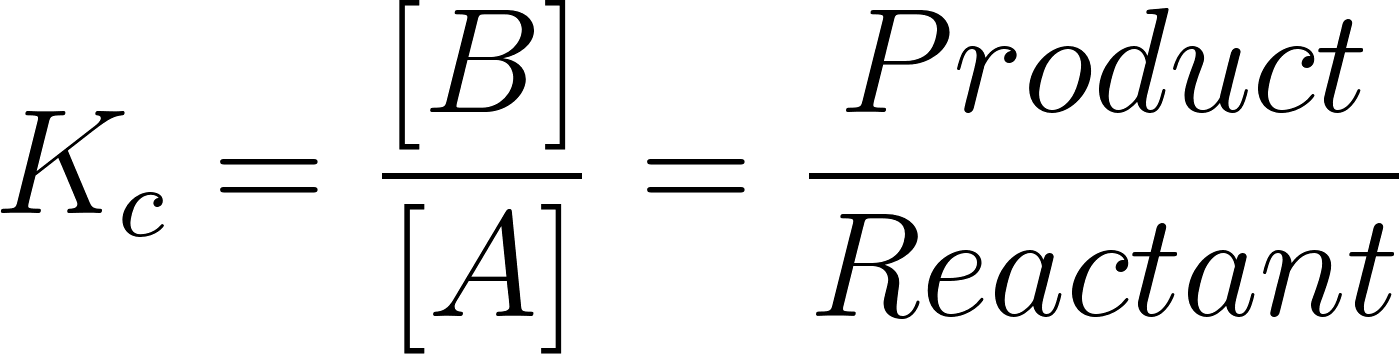
Define equilibrium. Give two examples of a dynamic equilibrium.
Read moreTable of Contents
1
Chemistry: The Study of Change
2
Atoms, Molecules, and Ions
3
Mass Relationships in Chemical Reactions
4
Reactions in Aqueous Solutions
5
Gases
6
Thermochemistry
7
Quantum Theory and the Electronic Structure of Atoms
8
Periodic Relationships Among the Elements
9
Chemical Bonding I: Basic Concepts
10
Chemical Bonding II: Molecular Geometry and Hybridization of Atomic Orbitals
11
Intermolecular Forces and Liquids and Solids
12
Physical Properties of Solutions
13
Chemical Kinetics
14
Chemical Equilibrium
15
Acids and Bases
16
Acid-Base Equilibria and Solubility Equilibria
17
Entropy, Free Energy, and Equilibrium
18
Electrochemistry
19
Nuclear Chemistry
20
Chemistry in the Atmosphere
21
Metallurgy and the Chemistry of Metals
22
Nonmetallic Elements and Their Compounds
23
Transition Metals Chemistry and Coordination Compounds
24
Organic Chemistry
25
Synthetic and Natural Organic Polymers
Textbook Solutions for Chemistry
Chapter 14 Problem 13P
Question
The equilibrium constant for the reaction \(A\ \leftrightharpoons\ B\) is \(K_{C}=10\) at a certain temperature. (1) Starting with only reactant A, which of the diagrams shown here best represents the system at equilibrium? (2) Which of the diagrams best represents the system at equilibrium if \(K_{C}=0.10\)? Explain why you can calculate \(K_{C}\) in each case without knowing the volume of the container. The gray spheres represent the A molecules and the green spheres represent the B molecules.
Solution
Step 1 of 2
The given reaction is as follows;
The equilibrium constant will be;
Subscribe to view the
full solution
full solution
Title
Chemistry 11
Author
Raymond Chang
ISBN
9780073402680
The equilibrium constant for the reaction A B is Kc = 10
Chapter 14 textbook questions
-
Chapter : Problem 1 Chemistry 11
-
Chapter : Problem 1 Chemistry 11
Write \(K_{c}\) and \(K_{p}\) for the decomposition of dinitrogen pentoxide: \(2 \mathrm{N}_{2} \mathrm{O}_{5}(g)\ \leftrightharpoons\ 4 \mathrm{NO}_{2}(g)+\mathrm{O}_{2}(g)\)
Read more -
Chapter : Problem 2 Chemistry 11
Explain the difference between physical equilibrium and chemical equilibrium. Give two examples of each.
Read more -
Chapter : Problem 2 Chemistry 11
Carbonyl chloride \(\left(\mathrm{COCl}_2\right)\), also called phosgene, was used in World War I as a poisonous gas. The equilibrium concentrations for the reaction between carbon monoxide and molecular chlorine to form carbonyl chloride \(\mathrm{CO}(\mathrm{g})+\mathrm{Cl}_2(\mathrm{~g}) \rightleftharpoons \mathrm{COCl}_2(\mathrm{~g})\) at \(74^{\circ} \mathrm{C}\) are \([\mathrm{CO}]=1.2 \times 10^{-2} M\), \(\left[\mathrm{Cl}_2\right]=0.054 \mathrm{M}\), and \(\left[\mathrm{COCl}_2\right]=0.14 \mathrm{M}\). Calculate the equilibrium constant \(\left(K_{\mathrm{c}}\right)\).
Read more -
Chapter : Problem 2 Chemistry 11
You are given the equilibrium constant for the reaction \(N_{2}(g)+O_{2}(g)\ \leftrightharpoons\ 2 N O(g)\) Suppose you want to calculate the equilibrium constant for the reaction \(\mathrm{N}_{2}(\mathrm{g})+2 \mathrm{O}_{2}(\mathrm{g})\ \leftrightharpoons\ 2 \mathrm{NO}_{2}(g)\) What additional equilibrium constant value (for another reaction) would you need for this calculation? Assume all the equilibria are studied at the same temperature.
Read more -
-
Chapter : Problem 3 Chemistry 11
The equilibrium constant \(K_{p}\) for the reaction \(2 \mathrm{NO}_{2}(g)\ \leftrightharpoons\ 2 \mathrm{NO}(g)+\mathrm{O}_{2}(g)\) Is 158 at 1000 K. Calculate \(P_{O_{2}}\) if \(P_{NO_{2}}=0.400\ \mathrm{atm}\) and \(P_{\mathrm{NO}}=0.270\ \mathrm{atm}\).
Read more -
Chapter : Problem 3 Chemistry 11
From the following equilibrium constant expression, write a balanced chemical equation for the gas-phase reaction. \(K_{c}=\frac{\left[\mathrm{NH}_{3}\right]^{2}\left[\mathrm{H}_{2} \mathrm{O}\right]^{4}}{\left[\mathrm{NO}_{2}\right]^{2}\left[\mathrm{H}_{2}\right]^{7}}\)
Read more -
Chapter : Problem 4 Chemistry 11
Briefly describe the importance of equilibrium in the study of chemical reactions.
Read more -
Chapter : Problem 4 Chemistry 11
The equilibrium constant \(\left(K_{c}\right)\) for reaction \(A\ \leftrightharpoons\ B+C\) is \(4.8 \times 10^{-2}\) at \(80^{\circ} \mathrm{C}\). If the forward rate constant is \(3.2 \times 10^{2}\ \mathrm{s}^{-1}\), calculate the reverse rate constant.
Read more -
Chapter : Problem 5 Chemistry 11
Define homogeneous equilibrium and heterogeneous equilibrium. Give two examples of each.
Read more -
Chapter : Problem 5 Chemistry 11
Write equilibrium constant expressions for \(K_{c}\) and \(K_{p}\) for the formation of nickel tetracarbonyl, which is used to separate nickel from other impurities: \(N i(s)+4 C O(g)\ \leftrightharpoons\ N i(C O)_{4}(g)\)
Read more -
Chapter : Problem 5 Chemistry 11
The equilibrium constant \(\left(K_{c}\right)\) for the \(A_{2}+B_{2}\ \leftrightharpoons\ 2 A B\) reaction is 3 at a certain temperature. Which of the diagrams shown here corresponds to the reaction at equilibrium? For those mixtures that are not at equilibrium, will the net reaction move in the forward or reverse direction to reach equilibrium?
Read more -
-
Chapter : Problem 6 Chemistry 11
Consider the following equilibrium at 395 K: \(\mathrm{NH}_{4} \mathrm{HS}(s)\ \leftrightharpoons\ \mathrm{NH}_{3}(g)+\mathrm{H}_{2} \mathrm{S}(g)\) The partial pressure of each gas is 0.265 atm. Calculate \(K_{p}\) and \(K_{c}\) for the reaction.
Read more -
Chapter : Problem 6 Chemistry 11
The diagram here shows the gaseous reaction \(2 A\ \leftrightharpoons\ A_{2}\) at equilibrium. If the pressure is decreased by increasing the volume at constant temperature, how would the concentrations of A and \(A_{2}\) change when a new equilibrium is established?
Read more -
Chapter : Problem 7 Chemistry 11
Write the expressions for the equilibrium constants \(K_{P}\) of the following thermal decomposition reactions: (a) \(2 \mathrm{NaHCO}_{3}(s)\ \leftrightharpoons\) \(\mathrm{Na}_{2} \mathrm{CO}_{3}(s)+\mathrm{CO}_{2}(g)+\mathrm{H}_{2} \mathrm{O}(\mathrm{g})\) (b) \(2 \mathrm{CaSO}_{4}(\mathrm{s})\ \leftrightharpoons\) \(2 \mathrm{CaO}(\mathrm{s})+2 \mathrm{SO}_{2}(g)+\mathrm{O}_{2}(g)\)
Read more -
Chapter : Problem 7 Chemistry 11
Problem 7RC Write the equilibrium expression (Kc) for each of the following reactions and show how they are related to each other ________________
Read more -
Chapter : Problem 8 Chemistry 11
Write equilibrium constant expressions for \(K_{C}\), and for \(K_{P}\), if applicable, for the following processes: (a) \(K_{P}2 \mathrm{CO}_{2}(g)\ \leftrightharpoons\ 2 \mathrm{CO}(g)+\mathrm{O}_{2}(g)\) (b) \(3 \mathrm{O}_{2}(\mathrm{g})\ \leftrightharpoons\ 2 \mathrm{O}_{3}(g)\) (c) \(\mathrm{CO}(g)+\mathrm{Cl}_{2}(g)\ \leftrightharpoons\ \mathrm{COCl}_{2}(g)\) (d) \(\mathrm{H}_{2} \mathrm{O}(g)+C(s)\ \leftrightharpoons\ C O(g)+\mathrm{H}_{2}(g)\) (e) \(\mathrm{HCOOH}(a q)\ \leftrightharpoons\ \mathrm{H}^{+}(a q)+\mathrm{HCOO}^{-}(a q)\) (f) \(2 \mathrm{HgO}(\mathrm{s})\ \leftrightharpoons\ 2 \mathrm{Hg}(\mathrm{l})+\mathrm{O}_{2}(g)\)
Read more -
Chapter : Problem 8 Chemistry 11
The equilibrium constant \(\left(K_{c}\right)\) for the formation of nitrosyl chloride, an orange-yellow compound, from nitric oxide and molecular chlorine \(2 N O(g)+C l_{2}(g)\ \leftrightharpoons\ 2 N O C l(g)\) is \(6.5 \times 10^{4}\) at \(35^{\circ} \mathrm{C}\). In a certain experiment, \(2.0 \times 10^{-2} \text { mole }\) of NO, \(8.3 \times 10^{-3} \text { mole }\) of \(\mathrm{Cl}_{2}\), and 6.8 moles of NOCI are mixed in a 2.0-L flask. In which direction will the system proceed to reach equilibrium?
Read more -
Chapter : Problem 9 Chemistry 11
Write the equilibrium constant expressions for \(K_{C}\) and \(K_{P}\), if applicable, for the following reactions: (a) \(2 \mathrm{NO}_{2}(g)+7 \mathrm{H}_{2}(g)\ \leftrightharpoons\ 2 \mathrm{NH}_{3}(g)+4 \mathrm{H}_{2} \mathrm{O}(\mathrm{l})\) (b) \(2 \mathrm{ZnS}(\mathrm{s})+3 \mathrm{O}_{2}(g)\ \leftrightharpoons\ 2 \mathrm{ZnO}(\mathrm{s})+2 \mathrm{SO}_{2}(g)\) (c) \(C(s)+\mathrm{CO}_{2}(g)\ \leftrightharpoons\ 2 \mathrm{CO}(g)\) (d) \(\mathrm{C}_{6} \mathrm{H}_{5} \mathrm{COOH}(a q)\ \leftrightharpoons\) \(\mathrm{C}_{6} \mathrm{H}_{5} \mathrm{COO}^{-}(a q)+\mathrm{H}^{+}(a q)\)
Read more -
Chapter : Problem 9 Chemistry 11
Consider the reaction in Example 14.9. Starting with a concentration of 0.040 M for HI, calculate the concentrations of HI, \(\mathrm{H}_{2}\), and \(I_{2}\) at equilibrium.
Read more -
Chapter : Problem 10 Chemistry 11
Write the equation relating \(K_{C}\) to \(K_{P}\), and define all the terms.
Read more -
Chapter : Problem 10 Chemistry 11
At \(1280^{\circ} \mathrm{C}\) the equilibrium constant \(\left(K_{c}\right)\) for the reaction \(B r_{2}(g)\ \leftrightharpoons\ 2 B r(g)\) is \(1.1 \times 10^{-3}\). If the initial concentrations are \(\left[B r_{2}\right]=6.3 \times 10^{-2}\ M\) and \([B r]=1.2 \times 10^{-2}\ M\), calculate the concentrations of these species at equilibrium.
Read more -
Chapter : Problem 11 Chemistry 11
What is the rule for writing the equilibrium constant for the overall reaction involving two or more reactions?
Read more -
Chapter : Problem 11 Chemistry 11
At \(430^{\circ} \mathrm{C}\), the equilibrium constant \(\left(K_{p}\right)\) for the reaction \(2 \mathrm{NO}(g)+\mathrm{O}_{2}(g)\ \leftrightharpoons\ 2 \mathrm{NO}_{2}(g)\) is \(1.5 \times 10^{5}\). In one experiment, the initial pressures of NO, \(O_{2}\), and \(\mathrm{NO}_{2}\) are \(2.1 \times 10^{-3}\ \mathrm{atm}\),\(1.1 \times 10^{-2}\ \mathrm{atm}\), and 0.14 atm, respectively. Calculate \(Q_{p}\) and predict the direction that the net reaction will shift to reach equilibrium.
Read more -
-
Chapter : Problem 12 Chemistry 11
Consider the equilibrium reaction involving nitrosyl chloride, nitric oxide, and molecular chlorine \(2 \mathrm{NOCl}(g)\ \leftrightharpoons\ 2 \mathrm{NO}(g)+\mathrm{Cl}_{2}(g)\) Predict the direction of the net reaction as a result of decreasing the pressure (increasing the volume) on the system at constant temperature.
Read more -
Chapter : Problem 13 Chemistry 11
The equilibrium constant for the reaction \(A\ \leftrightharpoons\ B\) is \(K_{C}=10\) at a certain temperature. (1) Starting with only reactant A, which of the diagrams shown here best represents the system at equilibrium? (2) Which of the diagrams best represents the system at equilibrium if \(K_{C}=0.10\)? Explain why you can calculate \(K_{C}\) in each case without knowing the volume of the container. The gray spheres represent the A molecules and the green spheres represent the B molecules.
Read more -
Chapter : Problem 13 Chemistry 11
Consider the equilibrium between molecular oxygen and ozone \(3 \mathrm{O}_{2}(\mathrm{g})\ \leftrightharpoons\ 2 \mathrm{O}_{3}(\mathrm{g})\) \(\Delta H^{\circ}=284\ \mathrm{kJ} / \mathrm{mol}\) What would be the effect of (a) increasing the pressure on the system by decreasing the volume, (b) adding \(\mathrm{O}_{2}\) to the system at constant volume, (c) decreasing the temperature, and (d) adding a catalyst?
Read more -
Chapter : Problem 14 Chemistry 11
The following diagrams represent the equilibrium state for three different reactions of the type \(A+X\ \leftrightharpoons\ A X\ (X=B, C, \text { or } D)\): (a) Which reaction has the largest equilibrium constant? (b) Which reaction has the smallest equilibrium constant?
Read more -
Chapter : Problem 15 Chemistry 11
The equilibrium constant \(\left(K_{c}\right)\) for the reaction \(2 \mathrm{HCl}(g)\ \leftrightharpoons\ \mathrm{H}_{2}(g)+\mathrm{Cl}_{2}(g)\) is \(4.17 \times 10^{-34}\) at \(25^{\circ} \mathrm{C}\). What is the equilibrium constant for the reaction \(\mathrm{H}_{2}(g)+\mathrm{Cl}_{2}(g)\ \leftrightharpoons\ 2 \mathrm{HCl}(g)\) at the same temperature?
Read more -
Chapter : Problem 16 Chemistry 11
Consider the following equilibrium process at \(700^{\circ} \mathrm{C}\): \(2 \mathrm{H}_{2}(g)+\mathrm{S}_{2}(g)\ \leftrightharpoons\ 2 \mathrm{H}_{2} \mathrm{S}(g)\) Analysis shows that there are 2.50 moles of \(H_{2}\), \(1.35 \times 10^{-5}\) mole of \(S_{2}\), and 8.70 moles of \(\mathrm{H}_{2} \mathrm{S}\) present in a 12.0-L flask. Calculate the equilibrium constant \(K_{c}\) for the reaction.
Read more -
Chapter : Problem 17 Chemistry 11
What is \(K_{P}\) at \(1273^{\circ} \mathrm{C}\) for the reaction \(2 \mathrm{CO}(g)+\mathrm{O}_{2}(g)\ \leftrightharpoons\ 2 \mathrm{CO}_{2}(g)\) if \(K_{C}\) is \(2.24 \times 10^{22}\) at the same temperature?
Read more -
Chapter : Problem 18 Chemistry 11
The equilibrium constant \(K_{P}\) for the reaction \(2 \mathrm{SO}_{3}(g)\ \leftrightharpoons\ 2 \mathrm{SO}_{2}(g)+\mathrm{O}_{2}(g)\) is \(1.8 \times 10^{-5}\) at \(350^{\circ} \mathrm{C}\). What is \(K_{C}\) for this reaction?
Read more -
Chapter : Problem 19 Chemistry 11
Consider the following reaction: \(N_{2}(g)+O_{2}(g)\ \leftrightharpoons\ 2 N O(g)\) If the equilibrium partial pressures of \(N_{2}\), \(\mathrm{O}_{2}\), and NO are 0.15 atm, 0.33 atm, and 0.050 atm, respectively, at \(2200^{\circ} \mathrm{C}\), what is \(K_{P}\)?
Read more -
Chapter : Problem 20 Chemistry 11
A reaction vessel contains \(\mathrm{NH}_{3},\ \mathrm{N}_{2}\), and \(\mathrm{H}_{2}\) at equilibrium at a certain temperature. The equilibrium concentrations are \(\left[N H_{3}\right]=0.25\ \mathrm{M}\), \(\left[N_{2}\right]=0.11\ M\), and \(\left[H_{2}\right]=1.91\ \mathrm{M}\). Calculate the equilibrium constant \(K_{C}\) for the synthesis of ammonia if the reaction is represented as (a) \(N_{2}(g)+3 H_{2}(g)\ \leftrightharpoons\ 2 N H H_{3}(g)\) (b) \(\frac{1}{2} N_{2}(g)+\frac{3}{2} H_{2}(g)\ \leftrightharpoons\ N H_{3}(g)\)
Read more -
Chapter : Problem 21 Chemistry 11
The equilibrium constant \(K_{C}\) for the reaction \(I_{2}(g)\ \leftrightharpoons\ 2 I(g)\) is \(3.8 \times 10^{-5}\) at \(727^{\circ} \mathrm{C}\). Calculate \(K_{C}\) and \(K_{P}\) for the equilibrium \(2 I(g)\ \leftrightharpoons\ I_{2}(g)\) at the same temperature.
Read more -
Chapter : Problem 22 Chemistry 11
At equilibrium, the pressure of the reacting mixture \(\mathrm{CaCO}_{3}(s)\ \leftrightharpoons\ \mathrm{CaO}(s)+\mathrm{CO}_{2}(g)\) is 0.105 atm at \(350^{\circ} \mathrm{C}\). Calculate \(K_{P}\) and \(K_{C}\) for this reaction.
Read more -
Chapter : Problem 23 Chemistry 11
The equilibrium constant \(K_{P}\) for the reaction \(P C l_{5}(g)\ \leftrightharpoons\ P C l_{3}(g)+C l_{2}(g)\) is 1.05 at \(250^{\circ} \mathrm{C}\). The reaction starts with a mixture of \(\mathrm{PCl}_{5}\), \(\mathrm{PCl}_{3}\), and \(\mathrm{Cl}_{2}\) at pressures 0.177 atm, 0.223 atm, and 0.111 atm, respectively, at \(250^{\circ} \mathrm{C}\). When the mixture comes to equilibrium at that temperature, which pressures will have decreased and which will have increased? Explain why.
Read more -
Chapter : Problem 24 Chemistry 11
Ammonium carbamate, \(\mathrm{NH}_{4} \mathrm{CO}_{2} \mathrm{NH}_{2}\), decomposes as follows: \(\mathrm{NH}_{4} \mathrm{CO}_{2} \mathrm{NH}_{2}(s)\ \leftrightharpoons\ 2 \mathrm{NH}_{3}(g)+\mathrm{CO}_{2}(g)\) Starting with only the solid, it is found that at \(40^{\circ} \mathrm{C}\) the total gas pressure (\(\mathrm{NH}_{3}\) and \(\mathrm{CO}_{2}\)) is 0.363 atm. Calculate the equilibrium constant \(K_{P}\).
Read more -
Chapter : Problem 25 Chemistry 11
Consider the following reaction at \(1600^{\circ} \mathrm{C}\). \(B r_{2}(g)\ \leftrightharpoons\ 2 B r(g)\) When 1.05 moles of \(B r_{2}\) are put in a 0.980-L flask, 1.20 percent of the \(B r_{2}\) undergoes dissociation. Calculate the equilibrium constant \(K_{C}\) for the reaction.
Read more -
Chapter : Problem 26 Chemistry 11
Pure phosgene gas \(\left(\mathrm{COCl}_{2}\right)\), \(3.00 \times 10^{-2}\) mol, was placed in a 1.50-L container. It was heated to 800 K, and at equilibrium the pressure of CO was found to be 0.497 atm. Calculate the equilibrium constant \(K_{P}\) for the reaction \(\mathrm{CO}(g)+\mathrm{Cl}_{2}(g)\ \leftrightharpoons\ \mathrm{COCl}_{2}(g)\)
Read more -
Chapter : Problem 27 Chemistry 11
Consider the equilibrium \(2 N O B r(g)\ \leftrightharpoons\ 2 N O(g)+B r_{2}(g)\) If nitrosyl bromide, NOBr, is 34 percent dissociated at \(25^{\circ} \mathrm{C}\) and the total pressure is 0.25 atm, calculate \(K_{P}\) and \(K_{C}\) for the dissociation at this temperature.
Read more -
Chapter : Problem 28 Chemistry 11
A 2.50-mole quantity of NOCI was initially in a 1.50-L reaction chamber at \(400^{\circ} \mathrm{C}\). After equilibrium was established, it was found that 28.0 percent of the NOCI had dissociated: \(2 \mathrm{NOCl}(g)\ \leftrightharpoons\ 2 N O(g)+\mathrm{Cl}_{2}(g)\) Calculate the equilibrium constant \(K_{C}\) for the reaction.
Read more -
Chapter : Problem 29 Chemistry 11
The following equilibrium constants have been determined for hydrosulfuric acid at \(25^{\circ} \mathrm{C}\): \(H_{2} S(a q)\ \leftrightharpoons\ H^{+}(a q)+H S^{-}(a q)\) \(K_{c}^{\prime}=9.5 \times 10^{-8}\) \(H S^{-}(a q)\ \leftrightharpoons\ H^{+}(a q)+S^{2-}(a q)\) \(K_{c}^{\prime \prime}=1.0 \times 10^{-19}\) Calculate the equilibrium constant for the following reaction at the same temperature: \(H_{2} S(a q)\ \leftrightharpoons\ 2 H^{+}(a q)+S^{2-}(a q)\)
Read more -
Chapter : Problem 30 Chemistry 11
The following equilibrium constants have been determined for oxalic acid at \(25^{\circ} \mathrm{C}\): \(\mathrm{H}_{2} \mathrm{C}_{2} \mathrm{O}_{4}(a q)\ \leftrightharpoons\ H^{+}(a q)+\mathrm{HC}_{2} \mathrm{O}_{4}^{-}(a q)\) \(K_{c}^{\prime}=6.5 \times 10^{-2}\) \(\mathrm{HC}_{2} \mathrm{O}_{4}^{-}(a q)\ \leftrightharpoons\ H^{+}(a q)+\mathrm{C}_{2} O_{4}^{2-}(a q)\) \(K_{c}^{\prime \prime}=6.1 \times 10^{-5}\) Calculate the equilibrium constant for the following reaction at the same temperature: \(\mathrm{H}_{2} \mathrm{C}_{2} \mathrm{O}_{4}(a q)\ \leftrightharpoons\ 2 \mathrm{H}^{+}(a q)+\mathrm{C}_{2} \mathrm{O}_{4}^{2-}(a q)\)
Read more -
Chapter : Problem 31 Chemistry 11
The following equilibrium constants were determined at 1123 K: \(C(s)+\mathrm{CO}_{2}(g)\ \leftrightharpoons\ 2 C O(g)\ \ \ \ \ \ \ \ \quad K_{p}^{\prime}=1.3 \times 10^{14}\) \(C O(g)+C_{2}(g)\ \leftrightharpoons\ C O C l_{2}(g)\ \ \ \ \ \ \ \ \ \ \ \quad K_{p}^{\prime \prime}=6.0 \times 10^{-3}\) Write the equilibrium constant expression \(K_{p}\), and calculate the equilibrium constant at 1123 K for \(C(s)+\mathrm{CO}_{2}(g)+2 \mathrm{Cl}_{2}(g)\ \leftrightharpoons\ 2 \mathrm{COCl}_{2}(g)\)
Read more -
Chapter : Problem 32 Chemistry 11
At a certain temperature the following reactions have the constants shown: \(S(s)+O_{2}(g)\ \leftrightharpoons\ S O_{2}(g)\ \ \ \ \ \ \ \ \ \ \quad K_{c}^{\prime}=4.2 \times 10^{52}\) \(2 S(s)+3 O_{2}(g)\ \leftrightharpoons\ 2 S O O_{3}(g)\ \ \ \ \ \ \ \ \ \ \ \ \quad K_{c}^{\prime \prime}=9.8 \times 10^{128}\) Calculate the equilibrium constant \(K_{c}\) for the following reaction at that temperature: \(2 \mathrm{SO}_{2}(g)+\mathrm{O}_{2}(g)\ \leftrightharpoons\ 2 \mathrm{SO}_{3}(g)\)
Read more -
Chapter : Problem 33 Chemistry 11
Based on rate constant considerations, explain why the equilibrium constant depends on temperature.
Read more -
Chapter : Problem 34 Chemistry 11
Explain why reactions with large equilibrium constants, such as the formation of rust \(\left(\mathrm{Fe}_{2} \mathrm{O}_{3}\right)\), may have very slow rates.
Read more -
Chapter : Problem 35 Chemistry 11
Water is a very weak electrolyte that undergoes the following ionization (called autoionization): \(H_{2}O(l)\ \xrightarrow[{k_{-1}}]{{k_{1}}}\ H^{+}(aq)+OH^{-}(aq)\) (a) If \(k_{1}=2.4 \times 10^{-5}\ s^{-1}\) and \(k_{-1}=1.3 \times 10^{11} / M \cdot s\), calculate the equilibrium constant K where \(K=\left[H^{+}\right]\left[\mathrm{OH}^{-}\right] /\left[\mathrm{H}_{2} \mathrm{O}\right]\). (b) Calculate the product \(\left[H^{+}\right]\left[O H^{-}\right]\) and \(\left[H^{+}\right]\) and \(\left[\mathrm{OH}^{-}\right]\).
Read more -
Chapter : Problem 36 Chemistry 11
Consider the following reaction, which takes place in a single elementary step: \(2A+B\ \xrightarrow[{k_{-1}}]{{k_{1}}}\ A_{2}B\) If the equilibrium constant \(K_{c}\) is 12.6 at a certain temperature and if \(k_{T}=5.1 \times 10^{-2}\ \mathrm{s}^{-1}\), calculate the value of \(k_{f}\).
Read more -
Chapter : Problem 37 Chemistry 11
Define reaction quotient. How does it differ from equilibrium constant?
Read more -
Chapter : Problem 39 Chemistry 11
The equilibrium constant \(K_{P}\) for the reaction \(2 \mathrm{SO}_{2}(g)+\mathrm{O}_{2}(g)\ \leftrightharpoons\ 2 \mathrm{SO}_{3}(g)\) is \(5.60 \times 10^{4}\) at \(350^{\circ} \mathrm{C}\). The initial pressures of \(\mathrm{SO}_{2}\) and \(\mathrm{O}_{2}\) in a mixture are 0.350 atm and 0.762 atm, respectively, at \(350^{\circ} \mathrm{C}\). When the mixture equilibrates, is the total pressure less than or greater than the sum of the initial pressures (1.112 atm)?
Read more -
Chapter : Problem 40 Chemistry 11
For the synthesis of ammonia \(N_{2}(g)+3 H_{2}(g)\ \leftrightharpoons\ 2 N H_{3}(g)\) the equilibrium constant \(K_{c}\) at \(375^{\circ} \mathrm{C}\) is 1.2. Starting with \(\left[H_{2}\right]_{0}=0.76\ \mathrm{M}\), \(\left[N_{2}\right]_{0}=0.60\ M\), and \(\left[\mathrm{NH}_{3}\right]_{0}=0.48\ \mathrm{M}\), which gases will have increased in concentration and which will have decreased in concentration when the mixture comes to equilibrium?
Read more -
Chapter : Problem 41 Chemistry 11
For the reaction \(\mathrm{H}_{2}(g)+\mathrm{CO}_{2}(g)\ \leftrightharpoons\ \mathrm{H}_{2} \mathrm{O}(g)+\mathrm{CO}(g)\) at \(700^{\circ} \mathrm{C}\), \(K_{c}=0.534\). Calculate the number of moles of \(H_{2}\) that are present at equilibrium if a mixture of 0.300 mole of CO and 0.300 mole of \(\mathrm{H}_{2} \mathrm{O}\) is heated to \(700^{\circ} \mathrm{C}\) in a 10.0-L container.
Read more -
Chapter : Problem 42 Chemistry 11
At 1000 K, a sample of pure \(\mathrm{NO}_{2}\) gas decomposes: \(2 \mathrm{NO}_{2}(g)\ \leftrightharpoons\ 2 \mathrm{NO}(g)+\mathrm{O}_{2}(g)\) The equilibrium constant \(K_{P}\) is 158. Analysis shows that the partial pressure of \(\mathrm{O}_{2}\) is 0.25 atm at equilibrium. Calculate the pressure of NO and \(\mathrm{NO}_{2}\) in the mixture.
Read more -
Chapter : Problem 43 Chemistry 11
The equilibrium constant \(K_{c}\) for the reaction \(H_{2}(g)+B r_{2}(g)\ \leftrightharpoons\ 2 H B r(g)\) is \(2.18 \times 10^{6}\) at \(730^{\circ} \mathrm{C}\). Starting with 3.20 moles of HBr in a 12.0-L reaction vessel, calculate the concentrations of \(\mathrm{H}_{2}\), \(B r_{2}\), and HBr at equilibrium.
Read more -
Chapter : Problem 44 Chemistry 11
The dissociation of molecular iodine into iodine atoms is represented as \(I_{2}(g)\ \leftrightharpoons\ 2 I(g)\) At 1000 K, the equilibrium constant \(K_{c}\) for the reaction is \(3.80 \times 10^{-5}\). Suppose you start with 0.0456 mole of \(I_{2}\) in a 2.30-L flask at 1000 K. What are the concentrations of the gases at equilibrium?
Read more -
Chapter : Problem 45 Chemistry 11
The equilibrium constant \(K_{c}\) for the decomposition of phosgene, \(\mathrm{COCl}_{2}\), is \(4.63 \times 10^{-3}\) at \(527^{\circ} \mathrm{C}\): \(\mathrm{COCl}_{2}(g)\ \leftrightharpoons\ \mathrm{CO}(g)+\mathrm{Cl}_{2}(g)\) Calculate the equilibrium partial pressure of all the components, starting with pure phosgene at 0.760 atm.
Read more -
Chapter : Problem 46 Chemistry 11
Consider the following equilibrium process at \(686^{\circ} \mathrm{C}\): \(\mathrm{CO}_{2}(g)+\mathrm{H}_{2}(g)\ \leftrightharpoons\ C O(g)+\mathrm{H}_{2} O(g)\) The equilibrium concentrations of the reacting species are \([\mathrm{CO}]=0.050 \mathrm{M},\ \left[\mathrm{H}_{2}\right]=0.0450 \mathrm{M},\ \left[\mathrm{CO}_{2}\right]=0.086 \mathrm{M},\ \text { and }\left[\mathrm{H}_{2} \mathrm{O}\right]=0.040 \mathrm{M}\). (a) Calculate \(K_{c}\) for the reaction at \(686^{\circ} \mathrm{C}\). (b) If we add \(\mathrm{CO}_{2}\) to increase its concentration to 0.50 mol/L, what will the concentrations of all the gases be when equilibrium is reestablished?
Read more -
Chapter : Problem 47 Chemistry 11
Consider the heterogeneous equilibrium process: \(C(s)+\mathrm{CO}_{2}(g)\ \leftrightharpoons\ 2 \mathrm{CO}(g)\) At \(700^{\circ} \mathrm{C}\), the total pressure of the system is found to be 4.50 atm. If the equilibrium constant \(K_{p}\) is 1.52, calculate the equilibrium partial pressures of \(\mathrm{CO}_{2}\) and CO.
Read more -
Chapter : Problem 48 Chemistry 11
The equilibrium constant \(K_{c}\) for the reaction \(\mathrm{H}_{2}(g)+\mathrm{CO}_{2}(g)+\mathrm{H}_{2} \mathrm{O}(g)+\mathrm{CO}(g)\) is 4.2 at \(1650^{\circ} \mathrm{C}\). Initially 0.80 mol \(H_{2}\) and 0.80 mol \(\mathrm{CO}_{2}\) are injected into a 5.0-L flask. Calculate the concentration of each species at equilibrium.
Read more -
Chapter : Problem 49 Chemistry 11
Explain Le Châtelier's principle. How can this principle help us maximize the yields of reactions?
Read more -
Chapter : Problem 50 Chemistry 11
Use Le Châtelier's principle to explain why the equilibrium vapor pressure of a liquid increases with increasing temperature.
Read more -
Chapter : Problem 52 Chemistry 11
Does the addition of a catalyst have any effects on the position of an equilibrium?
Read more -
Chapter : Problem 51 Chemistry 11
List four factors that can shift the position of an equilibrium. Only one of these factors can alter the value of the equilibrium constant. Which one is it?
Read more -
Chapter : Problem 53 Chemistry 11
Consider the following equilibrium system involving \(\mathrm{SO}_{2},\ \mathrm{Cl}_{2},\ \text { and } \mathrm{SO}_{2} \mathrm{Cl}_{2}\) (sulfuryl dichloride): \(\mathrm{SO}_{2}(g)+\mathrm{Cl}_{2}(g)\ \leftrightharpoons\ \mathrm{SO}_{2} \mathrm{Cl}_{2}(g)\) Predict how the equilibrium position would change if (a) \(\mathrm{Cl}_{2}\) gas were added to the system; (b) \(\mathrm{SO}_{2} \mathrm{Cl}_{2}\) were removed from the system; (c) \(\mathrm{SO}_{2}\) were removed from the system. The temperature remains constant.
Read more -
Chapter : Problem 54 Chemistry 11
Heating solid sodium bicarbonate in a closed vessel establishes the following equilibrium: \(2 \mathrm{NaHCO}_{3}(s)\ \leftrightharpoons\ \mathrm{Na}_{2} \mathrm{CO}_{3}(s)+\mathrm{H}_{2} \mathrm{O}(g)+\mathrm{CO}_{2}(g)\) What would happen to the equilibrium position if (a) some of the \(\mathrm{CO}_{2}\) were removed from the system; (b) some solid \(\mathrm{Na}_{2} \mathrm{CO}_{3}\) were added to the system; (c) some of the solid \(\mathrm{NaHCO}_{3}\) were removed from the system? The temperature remains constant.
Read more -
Chapter : Problem 55 Chemistry 11
Consider the following equilibrium systems: (a) \(A\ \leftrightharpoons\ 2 B\ \ \ \ \ \ \ \ \ \ \ \quad \Delta H^{\circ}=20.0\ \mathrm{kJ} / \mathrm{mol}\) (b) \(A+B\ \leftrightharpoons\ C\ \ \ \ \ \ \ \ \ \ \ \quad \Delta H^{\circ}=-5.4\ \mathrm{kJ} / \mathrm{mol}\) (c) \(A\ \leftrightharpoons\ B\ \ \ \ \ \ \ \ \ \ \ \ \ \ \ \ \quad \Delta H^{\circ}=0.0\ \mathrm{kJ} / \mathrm{mol}\) Predict the change in the equilibrium constant \(K_{c}\) that would occur in each case if the temperature of the reacting system were raised.
Read more -
Chapter : Problem 56 Chemistry 11
What effect does an increase in pressure have on each of the following systems at equilibrium? The temperature is kept constant and, in each case, the reactants are in a cylinder fitted with a movable piston. (a) \(A(s)\ \leftrightharpoons\ 2 B(s)\) (b) \(2 A(l)\ \leftrightharpoons\ B(l)\) (c) \(A(s)\ \leftrightharpoons\ B(g)\) (d) \(A(g)\ \leftrightharpoons\ B(g)\) (e) \(A(g)\ \leftrightharpoons\ 2 B(g)\)
Read more -
Chapter : Problem 57 Chemistry 11
Consider the equilibrium \(2 I(g)\ \leftrightharpoons\ I_{2}(g)\) What would be the effect on the position of equilibrium of (a) increasing the total pressure on the system by decreasing its volume; (b) adding gaseous 12 to the reaction mixture; and (c) decreasing the temperature at constant volume?
Read more -
Chapter : Problem 58 Chemistry 11
Consider the following equilibrium process: \(P C l_{5}(g)\ \leftrightharpoons\ P C l_{3}(g)+C l_{2}(g)\ \ \ \ \ \ \ \ \ \ \ \ \ \ \ \ \ \ \quad \Delta H^{\circ}=92.5\ \mathrm{kJ} / \mathrm{mol}\) Predict the direction of the shift in equilibrium when (a) the temperature is raised; (b) more chlorine gas is added to the reaction mixture; (c) some \(\mathrm{PCl}_{3}\) is removed from the mixture; (d) the pressure on the gases is increased; (e) a catalyst is added to the reaction mixture.
Read more -
Chapter : Problem 59 Chemistry 11
Consider the reaction \(2 \mathrm{SO}_2(g)+\mathrm{O}_2(g) \leftrightharpoons 2 \mathrm{SO}_3(g)\) \(\Delta H^{\circ}=-198.2 \mathrm{~kJ} / \mathrm{mol}\) Comment on the changes in the concentrations of \(\mathrm{SO}_2, \mathrm{O}_2\), and \(\mathrm{SO}_3\) at equilibrium if we were to (a) increase the temperature; (b) increase the pressure; (c) increase \(\mathrm{SO}_2 ;\) (d) add a catalyst; (e) add helium at constant volume.
Read more -
Chapter : Problem 60 Chemistry 11
In the uncatalyzed reaction \(\mathrm{N}_{2} \mathrm{O}_{4}(\mathrm{g})\ \leftrightharpoons\ 2 \mathrm{NO}_{2}(\mathrm{g})\) the pressure of the gases at equilibrium are \(P_{N_{2} O_{4}}=0.377\ \mathrm{atm}\) and \(P_{\mathrm{NO}_{2}}=1.56\ \mathrm{atm}\) at \(100^{\circ} \mathrm{C}\). What would happen to these pressures if a catalyst were added to the mixture?
Read more -
Chapter : Problem 61 Chemistry 11
Consider the gas-phase reaction \(2 \mathrm{CO}(\mathrm{g})+\mathrm{O}_{2}(\mathrm{g})\ \leftrightharpoons\ 2 \mathrm{CO}_{2}(\mathrm{g})\) Predict the shift in the equilibrium position when helium gas is added to the equilibrium mixture (a) at constant pressure and (b) at constant volume.
Read more -
Chapter : Problem 62 Chemistry 11
Consider the following equilibrium reaction in a closed container: \(\mathrm{CaCO}_{3}(s)\ \leftrightharpoons\ \mathrm{CaO}(s)+\mathrm{CO}_{2}(g)\) What will happen if (a) the volume is increased; (b) some CaO is added to the mixture; (c) some \(\mathrm{CaCO}_{3}\) is removed; (d) some \(\mathrm{CO}_{2}\) is added to the mixture; (e) a few drops of a NaOH solution are added to the mixture; (f) a few drops of a HCl solution are added to the mixture (ignore the reaction between \(\mathrm{CO}_{2}\) and water); (g) temperature is increased?
Read more -
Chapter : Problem 63 Chemistry 11
Consider the statement: "The equilibrium constant of a reacting mixture of solid \(\mathrm{NH}_{4} \mathrm{Cl}\) and gaseous \(\mathrm{NH}_{3}\) and HCl is 0.316." List three important pieces of information that are missing from this statement.
Read more -
Chapter : Problem 64 Chemistry 11
Pure nitrosyl chloride (NOCI) gas was heated to \(240^{\circ} \mathrm{C}\) in a 1.00-L container. At equilibrium the total pressure was 1.00 atm and the NOCI pressure was 0.64 atm. \(2 \mathrm{NOCl}(g)\ \leftrightharpoons\ 2 \mathrm{NO}(g)+\mathrm{Cl}_{2}(g)\) (a) Calculate the partial pressures of NO and \(\mathrm{Cl}_{2}\) in the system. (b) Calculate the equilibrium constant \(K_{p}\).
Read more -
Chapter : Problem 65 Chemistry 11
Determine the initial and equilibrium concentrations of HI if the initial concentrations of \(\mathrm{H}_{2}\) and \(I_{2}\) are both 0.16 M and their equilibrium concentrations are both 0.072 M at \(430^{\circ} \mathrm{C}\). The equilibrium constant \(\left(K_{c}\right)\) for the reaction \(\mathrm{H}_{2}(g)+I_{2}(g)\ \leftrightharpoons\ 2 H I(g)\) is 54.2 at \(430^{\circ} \mathrm{C}\).
Read more -
Chapter : Problem 66 Chemistry 11
Diagram (a) shows the reaction \(\mathrm{A}_2(\mathrm{~g})+\) \(\mathrm{B}_2(\mathrm{~g}) \rightleftharpoons 2 \mathrm{AB}(\mathrm{g})\) at equilibrium at a certain temperature, where the blue spheres represent A and the yellow spheres represent B. If each sphere represents 0.020 mole and the volume of the container is 1.0 L, calculate the concentration of each species when the reaction in (b) reaches equilibrium.
Read more -
Chapter : Problem 67 Chemistry 11
The equilibrium constant \(\left(K_p\right)\) for the formation of the air pollutant nitric oxide (NO) in an automobile engine at \(530^{\circ} \mathrm{C}\) is \(2.9 \times 10^{-11}\) \(N_2(g)+O_2(g) \leftrightharpoons 2 N O(g)\) (a) Calculate the partial pressure of NO under these conditions if the partial pressures of nitrogen and oxygen are 3.0 atm and 0.012 atm, respectively. (b) Repeat the calculation for atmospheric conditions where the partial pressures of nitrogen and oxygen are 0.78 atm and 0.21 atm and the temperature is \(25^{\circ} \mathrm{C}\). (The \(K_p\) for the reaction is \(4.0 \times 10^{-31}\) at this temperature.) (c) Is the formation of NO endothermic or exothermic? (d) What natural phenomenon promotes the formation of NO? Why?
Read more -
Chapter : Problem 68 Chemistry 11
Baking soda (sodium bicarbonate) undergoes thermal decomposition as follows: \(2 \mathrm{NaHCO}_{3}\ \leftrightharpoons\ \mathrm{Na}_{2} \mathrm{CO}_{3}(\mathrm{s})+\mathrm{CO}_{2}(\mathrm{g})+\mathrm{H}_{2} \mathrm{O}(\mathrm{g})\) Would we obtain more \(\mathrm{CO}_{2}\) and \(\mathrm{H}_{2} \mathrm{O}\) by adding extra baking soda to the reaction mixture in (a) a closed vessel or (b) an open vessel?
Read more -
Chapter : Problem 69 Chemistry 11
Consider the following reaction at equilibrium: \(A(g)\ \leftrightharpoons\ 2 B(g)\) From the data shown here, calculate the equilibrium constant (both \(K_{p} \text { and } K_{c}\)) at each temperature. Is the reaction endothermic or exothermic?
Read more -
Chapter : Problem 70 Chemistry 11
The equilibrium constant \(K_{p}\) for the reaction \(2 \mathrm{H}_{2} \mathrm{O}(\mathrm{g})\ \leftrightharpoons\ 2 \mathrm{H}_{2}(g)+\mathrm{O}_{2}(g)\) is \(2 \times 10^{-42}\) at \(25^{\circ} \mathrm{C}\). (a) What is \(K_{c}\) for the reaction at the same temperature? (b) The very small value of \(K_{p}\) (and \(K_{c}\)) indicates that the reaction overwhelmingly favors the formation of water molecules. Explain why, despite this fact, a mixture of hydrogen and oxygen gases can be kept at room temperature without any change.
Read more -
Chapter : Problem 71 Chemistry 11
Consider the following reacting system: \(2 N O(g)+\mathrm{Cl}_{2}(g)\ \leftrightharpoons\ 2 \mathrm{NOCl}(\mathrm{g})\) What combination of temperature and pressure (high or low) would maximize the yield of nitrosyl chloride (NOCI)? [Hint: \(\Delta H_{f}^{\circ}\)(NOCI) = 51.7 kJ/mol. You will also need to consult Appendix 3.]
Read more -
Chapter : Problem 72 Chemistry 11
At a certain temperature and a total pressure of 1.2 atm, the partial pressures of an equilibrium mixture \(2 A(g)\ \leftrightharpoons\ B(g)\) are \(P_{A}=0.60\ \mathrm{atm}\) and \(P_{B}=0.60\ \mathrm{atm}\). (a) Calculate the \(K_{p}\) for the reaction at this temperature. (b) If the total pressure were increased to 1.5 atm, what would be the partial pressures of A and B at equilibrium?
Read more -
Chapter : Problem 73 Chemistry 11
The decomposition of ammonium hydrogen sulfide \(\mathrm{NH}_{4} \mathrm{HS}(\mathrm{s})\ \leftrightharpoons\ \mathrm{NH}_{3}(\mathrm{g})+\mathrm{H}_{2} \mathrm{S}(\mathrm{g})\) is an endothermic process. A 6.1589-g sample of the solid is placed in an evacuated 4.000-L vessel at exactly \(24^{\circ} \mathrm{C}\). After equilibrium has been established, the total pressure inside is 0.709 atm. Some solid \(\mathrm{NH}_{4} \mathrm{HS}\) remains in the vessel. (a) What is the \(K_{p}\) for the reaction? (b) What percentage of the solid has decomposed? (c) If the volume of the vessel were doubled at constant temperature, what would happen to the amount of solid in the vessel?
Read more -
Chapter : Problem 75 Chemistry 11
When heated, ammonium carbamate decomposes as follows: \(\mathrm{NH}_{4} \mathrm{CO}_{2} \mathrm{NH}_{2}(s)\ \leftrightharpoons\ 2 \mathrm{NH}_{3}(g)+\mathrm{CO}_{2}(g)\) At a certain temperature the equilibrium pressure of the system is 0.318 atm. Calculate \(K_{p}\) for the reaction.
Read more -
Chapter : Problem 77 Chemistry 11
When heated at high temperatures, iodine vapor dissociates as follows: \(I_{2}(g)\ \leftrightharpoons\ 2 I(g)\) In one experiment, a chemist finds that when 0.054 mole of \(I_{2}\) was placed in a flask of volume 0.48 L at 587 K, the degree of dissociation (that is, the fraction of \(I_{2}\) dissociated) was 0.0252. Calculate \(K_{c}\) and \(K_{p}\) for the reaction at this temperature.
Read more -
Chapter : Problem 83 Chemistry 11
Eggshells are composed mostly of calcium carbonate \(\left(\mathrm{CaCO}_{3}\right)\) formed by the reaction \(\mathrm{Ca}^{2+}(a q)+\mathrm{CO}_{3}^{2-}(a q)\ \leftrightharpoons\ \mathrm{CaCO}_{3}(s)\) The carbonate ions are supplied by carbon dioxide produced as a result of metabolism. Explain why eggshells are thinner in the summer when the rate of panting by chickens is greater. Suggest a remedy for this situation.
Read more -
Chapter : Problem 87 Chemistry 11
At room temperature, solid iodine is in equilibrium with its vapor through sublimation and deposition (see p. 504). Describe how you would use radioactive iodine, in either solid or vapor form, to show that there is a dynamic equilibrium between these two phases.
Read more -
Chapter : Problem 89 Chemistry 11
A mixture containing 3.9 moles of NO and 0.88 mole of \(\mathrm{CO}_{2}\) was allowed to react in a flask at a certain temperature according to the equation \(\mathrm{NO}(g)+\mathrm{CO}_{2}(g)\ \leftrightharpoons\ \mathrm{NO}_{2}(g)+\mathrm{CO}(g)\) At equilibrium, 0.11 mole of \(\mathrm{CO}_{2}\) was present. Calculate the equilibrium constant \(K_{c}\) of this reaction.
Read more -
Chapter : Problem 91 Chemistry 11
When heated, a gaseous compound A dissociates as follows: \(A(g)\ \leftrightharpoons\ B(g)+C(g)\) In an experiment. A was heated at a certain temperature until its equilibrium pressure reached 0.14P where P is the total pressure. Calculate the equilibrium constant \(K_{p}\) of this reaction.
Read more -
Chapter : Problem 92 Chemistry 11
When a gas was heated under atmospheric conditions, its color deepened. Heating above \(150^{\circ} \mathrm{C}\) caused the color to fade, and at \(550^{\circ} \mathrm{C}\) the color was barely detectable. However, at \(550^{\circ} \mathrm{C}\), the color was partially restored by increasing the pressure of the system. Which of the following best fits the above description? Justify your choice. (a) A mixture of hydrogen and bromine, (b) pure bromine, (c) a mixture of nitrogen dioxide and dinitrogen tetroxide. (Hint: Bromine has a reddish color and nitrogen dioxide is a brown gas. The other gases are colorless.)
Read more -
Chapter : Problem 94 Chemistry 11
The equilibrium constant \(K_{c}\) for the following reaction is 1.2 at \(375^{\circ} \mathrm{C}\). \(N_{2}(g)+3 H_{2}(g)\ \leftrightharpoons\ 2 N H_{3}(g)\) (a) What is the value of \(K_{p}\) for this reaction? (b) What is the value of the equilibrium constant \(K_{c}\) for \(2 \mathrm{NH}_{3}(g)\ \leftrightharpoons\ \mathrm{N}_{2}(g)+3 \mathrm{H}_{2}(g)\) (c) What is the value of \(K_{c}\) for \(\frac{1}{2} N_{2}(g)+\frac{3}{2} H_{2}(g)\ \leftrightharpoons\ N H_{3}(g)\)? (d) What are the values of \(K_{p}\) for the reactions described in (b) and (c)?
Read more -
Chapter : Problem 97 Chemistry 11
Industrially, sodium metal is obtained by electrolyzing molten sodium chloride. The reaction at the cathode is \(\mathrm{Na}^{+}+e^{-}\ \rightarrow\ N a\). We might expect that potassium metal would also be prepared by electrolyzing molten potassium chloride. However, potassium metal is soluble in molten potassium chloride and therefore is hard to recover. Furthermore, potassium vaporizes readily at the operating temperature, creating hazardous conditions. Instead, potassium is prepared by the distillation of molten potassium chloride in the presence of sodium vapor at \(892^{\circ} \mathrm{C}\): \(N a(g)+K C l(l)\ \leftrightharpoons\ N a C l(l)+K(g)\) In view of the fact that potassium is a stronger reducing agent than sodium, explain why this approach works. (The boiling points of sodium and potassium are \(892^{\circ} \mathrm{C}\) and \(770^{\circ} \mathrm{C}\), respectively.)
Read more -
Chapter : Problem 101 Chemistry 11
About 75 percent of hydrogen for industrial use is produced by the steam-reforming process. This process is carried out in two stages called primary and secondary reforming. In the primary stage, a mixture of steam and methane at about 30 atm is heated over a nickel catalyst at \(800^{\circ} \mathrm{C}\) to give hydrogen and carbon monoxide: \(\mathrm{CH}_{4}(g)+\mathrm{H}_{2} \mathrm{O}(g)\ \leftrightharpoons\ \mathrm{CO}(g)+3 \mathrm{H}_{2}(g)\) \(\Delta H^{\circ}=260\ \mathrm{kJ} / \mathrm{mol}\) The secondary stage is carried out at about \(1000^{\circ} \mathrm{C}\), in the presence of air, to convert the remaining methane to hydrogen: \(\mathrm{CH}_{4}(g)+\frac{1}{2} \mathrm{O}_{2}(g)\ \leftrightharpoons\ \mathrm{CO}(g)+2 \mathrm{H}_{2}(g)\) \(\Delta H^{\circ}=35.7\ \mathrm{kJ} / \mathrm{mol}\) (a) What conditions of temperature and pressure would favor the formation of products in both the primary and secondary stage? (b) The equilibrium constant \(K_{c}\) for the primary stage is 18 at \(800^{\circ} \mathrm{C}\). (i) Calculate \(K_{p}\) for the reaction. (ii) If the partial pressures of methane and steam were both 15 atm at the start, what are the pressures of all the gases at equilibrium?
Read more -
Chapter : Problem 104 Chemistry 11
At \(25^{\circ} \mathrm{C}\), the equilibrium partial pressures of \(\mathrm{NO}_{2}\) and \(\mathrm{N}_{2} \mathrm{O}_{4}\) are 0.15 atm and 0.20 atm, respectively. If the volume is doubled at constant temperature, calculate the partial pressures of the gases when a new equilibrium is established.
Read more -
Chapter : Problem 105 Chemistry 11
In 1899 the German chemist Ludwig Mond developed a process for purifying nickel by converting it to the volatile nickel tetracarbonyl \(\left[\mathrm{Ni}(\mathrm{CO})_4\right]\) (b.p. \(=42.2^{\circ} \mathrm{C}\) ) \(\mathrm{Ni}(\mathrm{s})+4 \mathrm{CO}(\mathrm{g}) \leftrightharpoons \mathrm{Ni}(\mathrm{CO})_4(\mathrm{~g})\) (a) Describe how you can separate nickel and its solid impurities. (b) How would you recover nickel? \(\Delta \mathrm{H}_f^{\circ}\) for \(\mathrm{Ni}(\mathrm{CO})_4\) is - \(602.9 \mathrm{~kJ} / \mathrm{mol}\).]
Read more -
Chapter : Problem 115 Chemistry 11
The forward and reverse rate constants for the reaction \(A(g)+B(g)\ \leftrightharpoons\ C(g)\) are \(3.6 \times 10^{-3} / M \cdot s\) and \(8.7 \times 10^{-4}\ \mathrm{s}^{-1}\), respectively, at 323 K. Calculate the equilibrium pressures of all the species starting at \(P_{A}=1.6\ \mathrm{atm}\) and \(P_{B}=0.44\ \mathrm{atm}\).
Read more -
Chapter : Problem 121 Chemistry 11
The "boat" form and "chair" form of cyclohexane \(\left(C_{6} H_{12}\right)\) interconverts as shown here: In this representation, the H atoms are omitted and a C atom is assumed to be at each intersection of two lines (bonds). The conversion is first order in each direction. The activation energy for the chair \(\rightarrow\) boat conversion is 41 kJ/mol. If the frequency factor is \(1.0 \times 10^{12}\ \mathrm{s}^{-1}\), what is k at 298 K? The equilibrium constant \(K_{c}\) for the reaction is \(9.83 \times 10^{3}\) at 298 K.
Read more -
Chapter : Problem 123 Chemistry 11
Iodine is sparingly soluble in water but much more so in carbon tetrachloride \(\left(\mathrm{CCl}_{4}\right)\). The equilibrium constant, also called the partition coefficient, for the distribution of \(I_{2}\) between these two phases \(I_{2}(a q)\ \leftrightharpoons\ I_{2}\left(C C l_{4}\right)\) is 83 at \(20^{\circ} \mathrm{C}\). (a) A student adds 0.030 L of \(\mathrm{CCl}_{4}\) to 0.200 L of an aqueous solution containing 0.032 g \(I_{2}\). The mixture is shaken and the two phases are then allowed to separate. Calculate the fraction of \(I_{2}\) remaining in the aqueous phase. (b) The student now repeats the extraction of \(I_{2}\) with another 0.030 L of \(\mathrm{CCl}_{4}\). Calculate the fraction of the \(I_{2}\) from the original solution that remains in the aqueous phase. (c) Compare the result in (b) with a single extraction using 0.060 L of \(\mathrm{CCl}_{4}\). Comment on the difference.
Read more -
Chapter : Problem 129 Chemistry 11
The equilibrium constant \(\left(K_{p}\right)\) for the reaction \(I_{2}(g)\ \rightarrow\ 2 I(g)\) is \(1.8 \times 10^{-4}\) at 872 K and 0.048 at 1173 K. From these data, estimate the bond enthalpy of \(I_{2}\). (Hint: See van't Hoff's equation in Problem 14.119.)
Read more -
Chapter 14: Problem 4 Chemistry 11
For the reaction \(N_{2}(g)+3 H_{2}(g)\ \leftrightharpoons\ 2 N H H_{3}(g)\) \(K_{p}\) is \(4.3 \times 10^{-4}\) at \(375^{\circ} \mathrm{C}\). Calculate \(K_{c}\) for the reaction.
Read more -
Chapter 14: Problem 1 Chemistry 11
For which of the following reactions is \(K_{c}\) equal to \(K_{p}\)? (a) \(4 \mathrm{NH}_{3}(\mathrm{g})+5 \mathrm{O}_{2}(\mathrm{g})\ \leftrightharpoons\ 4 \mathrm{NO}(\mathrm{g})+6 \mathrm{H}_{2} \mathrm{O}(\mathrm{g})\) (b) \(2 \mathrm{H}_{2} \mathrm{O}_{2}(a q)\ \leftrightharpoons\ 2 \mathrm{H}_{2} \mathrm{O}(\mathrm{l})+\mathrm{O}_{2}(\mathrm{g})\) (c) \(\mathrm{PCl}_{3}(g)+3 \mathrm{NH}_{3}(\mathrm{g})\ \leftrightharpoons\ 3 \mathrm{HCl}(\mathrm{g})+\mathrm{P}\left(\mathrm{NH}_{2}\right)_{3}(g)\)
Read more -
Chapter 14: Problem 7 Chemistry 11
Write the equilibrium expression \(\left(K_{c}\right)\) for each of the following reactions and show how they are related to each other: (a) \(3 O_{2}(g)\ \leftrightharpoons\ 2 O_{3}(g)\), (b) \(O_{2}(g)\ \leftrightharpoons\ \frac{2}{3} O_{3}(g)\).
Read more -
Chapter 14: Problem 38 Chemistry 11
Outline the steps for calculating the concentrations of reacting species in an equilibrium reaction.
Read more -
Chapter 14: Problem 74 Chemistry 11
Consider the reaction \(2 \mathrm{NO}(g)+\mathrm{O}_{2}(g)\ \leftrightharpoons\ 2 \mathrm{NO}_{2}(g)\) At \(430^{\circ} \mathrm{C}\), an equilibrium mixture consists of 0.020 mole of \(O_{2}\), 0.040 mole of NO, and 0.96 mole of \(\mathrm{NO}_{2}\). Calculate \(K_{p}\) for the reaction, given that the total pressure is 0.20 atm.
Read more -
Chapter 14: Problem 76 Chemistry 11
A mixture of 0.47 mole of \(H_{2}\) and 3.59 moles of HCI is heated to \(2800^{\circ} \mathrm{C}\). Calculate the equilibrium partial pressures of \(H_{2}\), \(\mathrm{Cl}_{2}\), and HCl if the total pressure is 2.00 atm. For the reaction \(\mathrm{H}_{2}(g)+\mathrm{Cl}_{2}(\mathrm{g})\ \leftrightharpoons\ 2 \mathrm{HCl}(g)\) \(K_{p}\) is 193 at \(2800^{\circ} \mathrm{C}\).
Read more -
Chapter 14: Problem 78 Chemistry 11
One mole of \(N_{2}\) and three moles of \(\mathrm{H}_{2}\) are placed in a flask at \(375^{\circ} \mathrm{C}\). Calculate the total pressure of the system at equilibrium if the mole fraction of \(\mathrm{NH}_{3}\) is 0.21. The \(K_{p}\) for the reaction is \(4.31 \times 10^{-4}\).
Read more -
Chapter 14: Problem 79 Chemistry 11
At \(1130^{\circ} \mathrm{C}\) the equilibrium constant \(\left(K_{c}\right)\) for the reaction \(2 \mathrm{H}_{2} \mathrm{S}(g)\ \leftrightharpoons\ 2 \mathrm{H}_{2}(g)+\mathrm{S}_{2}(g)\) is \(2.25 \times 10^{-4}\). If \(\left[H_{2} S\right]=4.84 \times 10^{-3}\ M\) and \(\left[H_{2}\right]=1.50 \times 10^{-3}\ M\), calculate \(\left[S_{2}\right]\).
Read more -
Chapter 14: Problem 80 Chemistry 11
A quantity of 6.75 g of \(\mathrm{SO}_{2} \mathrm{Cl}_{2}\) was placed in a 2.00-L flask. At 648 K, there is 0.0345 mole of \(\mathrm{SO}_{2}\) present. Calculate \(K_{c}\) for the reaction \(\mathrm{SO}_{2} \mathrm{Cl}_{2}(g)\ \leftrightharpoons\ \mathrm{SO}_{2}(g)+\mathrm{Cl}_{2}(g)\)
Read more -
Chapter 14: Problem 81 Chemistry 11
The formation of \(\mathrm{SO}_{3}\) from \(\mathrm{SO}_{2}\) and \(\mathrm{O}_{2}\) is an intermediate step in the manufacture of sulfuric acid, and it is also responsible for the acid rain phenomenon. The equilibrium constant \(K_{p}\) for the reaction \(2 \mathrm{SO}_{2}(g)+\mathrm{O}_{2}(g)\ \leftrightharpoons\ 2 \mathrm{SO}_{3}(g)\) is 0.13 at \(830^{\circ} \mathrm{C}\). In one experiment 2.00 mol \(\mathrm{SO}_{2}\) and 2.00 mol \(\mathrm{O}_{2}\) were initially present in a flask. What must the total pressure at equilibrium be in order to have an 80.0 percent yield of \(\mathrm{SO}_{3}\)?
Read more -
Chapter 14: Problem 82 Chemistry 11
Consider the dissociation of iodine: \(I_{2}(g)\ \leftrightharpoons\ 2 I(g)\) A 1.00-g sample of I, is heated to \(1200^{\circ} \mathrm{C}\) in a 500-ml flask. At equilibrium the total pressure is 1.51 atm. Calculate \(K_{p}\) for the reaction. (Hint: Use the result in 14.117(a). The degree of dissociation \(\alpha\) can be obtained by first calculating the ratio of observed pressure over calculated pressure, assuming no dissociation.)
Read more -
Chapter 14: Problem 84 Chemistry 11
The equilibrium constant \(K_{p}\) for the following reaction is \(4.31 \times 10^{-4}\) at \(375^{\circ} \mathrm{C}\): \(\mathrm{N}_{2}(g)+3 \mathrm{H}_{2}(g)\ \leftrightharpoons\ 2 \mathrm{NH}_{3}(g)\) In a certain experiment a student starts with 0.862 atm of \(N_{2}\) and 0.373 atm of \(\mathrm{H}_{2}\) in a constant-volume vessel at \(375^{\circ} \mathrm{C}\). Calculate the partial pressures of all species when equilibrium is reached.
Read more -
Chapter 14: Problem 85 Chemistry 11
A quantity of 0.20 mole of carbon dioxide was heated to a certain temperature with an excess of graphite in a closed container until the following equilibrium was reached: \(C(s)+\mathrm{CO}_2(g) \leftrightharpoons 2 \mathrm{CO}(g)\) Under these conditions, the average molar mass of the gases was 35 g / mol. (a) Calculate the mole fractions of CO and CO \(\mathrm{CO}_2\). (b) What is \(K_p\) if the total pressure is 11 atm ? (Hint: The average molar mass is the sum of the products of the mole fraction of each gas and its molar mass.)
Read more -
Chapter 14: Problem 86 Chemistry 11
When dissolved in water, glucose (corn sugar) and fructose (fruit sugar) exist in equilibrium as follows: \(\text { fructose }\ \leftrightharpoons\ \text { glucose }\) A chemist prepared a 0.244 M fructose solution at \(25^{\circ} C\). At equilibrium, it was found that its concentration had decreased to 0.113 M. (a) Calculate the equilibrium constant for the reaction. (b) At equilibrium, what percentage of fructose was converted to glucose?
Read more -
Chapter 14: Problem 88 Chemistry 11
At \(1024^{\circ} \mathrm{C}\), the pressure of oxygen gas from the decomposition of copper(II) oxide (CuO) is 0.49 atm: \(4 \mathrm{CuO}(\mathrm{s})\ \leftrightharpoons\ 2 \mathrm{Cu}_{2} \mathrm{O}(\mathrm{s})+\mathrm{O}_{2}(\mathrm{g})\) (a) What is \(K_{p}\) for the reaction? (b) Calculate the fraction of CuO that will decompose if 0.16 mole of it is placed in a 2.0-L flask at \(1024^{\circ} \mathrm{C}\). (c) What would the fraction be if a 1.0 mole sample of Cuo were used? (d) What is the smallest amount of Cuo (in moles) that would establish the equilibrium?
Read more -
Chapter 14: Problem 90 Chemistry 11
The equilibrium constant \(K_{c}\) for the reaction \(H_{2}(g)+I_{2}(g)\ \leftrightharpoons\ 2 H I(g)\) is 54.3 at \(430^{\circ} \mathrm{C}\). At the start of the reaction there are 0.714 mole of \(\mathrm{H}_{2}\), 0.984 mole of \(I_{2}\)., and 0.886 mole of HI in a 2.40-L reaction chamber. Calculate the concentrations of the gases at equilibrium.
Read more -
Chapter 14: Problem 93 Chemistry 11
In this chapter we learned that a catalyst has no effect on the position of an equilibrium because it speeds up both the forward and reverse rates to the same extent. To test this statement, consider a situation in which an equilibrium of the type \(2 A(g)\ \leftrightharpoons\ B(g)\) is established inside a cylinder fitted with a weightless piston. The piston is attached by a string to the cover of a box containing a catalyst. When the piston moves upward (expanding against atmospheric pressure), the cover is lifted and the catalyst is exposed to the gases. When the piston moves downward, the box is closed. Assume that the catalyst speeds up the forward reaction \((2 A\ \rightarrow\ B)\) but does not affect the reverse process \((B\ \rightarrow\ 2 A)\). Suppose the catalyst is suddenly exposed to the equilibrium system as shown here. Describe what would happen subsequently. How does this “thought" experiment convince you that no such catalyst can exist?
Read more -
Chapter 14: Problem 95 Chemistry 11
A sealed glass bulb contains a mixture of \(\mathrm{NO}_2\) and \(\mathrm{N}_2 \mathrm{O}_4\) gasses. Describe what happens to the following properties of the gasses when the bulb is heated from \(20^{\circ} \mathrm{C}\) to \(40^{\circ} \mathrm{C}\) : (a) color, (b) pressure, (c) average molar mass, (d) degree of dissociation (from \(\mathrm{N}_2 \mathrm{O}_4\) to \(\mathrm{NO}_2\) ), (e) density. Assume that volume remains constant. (Hint: \(\mathrm{NO}_2\) is a brown gas; \(\mathrm{N}_2 \mathrm{O}_4\) is colorless.)
Read more -
Chapter 14: Problem 96 Chemistry 11
At \(20^{\circ} \mathrm{C}\), the vapor pressure of water is 0.0231 atm. Calculate \(K_{p}\) and \(K_{c}\) for the process \(\mathrm{H}_{2} \mathrm{O}(\mathrm{l})\ \leftrightharpoons\ \mathrm{H}_{2} \mathrm{O}(\mathrm{g})\)
Read more -
Chapter 14: Problem 98 Chemistry 11
In the gas phase, nitrogen dioxide is actually a mixture of nitrogen dioxide \(\left(\mathrm{NO}_{2}\right)\) and dinitrogen tetroxide \(\left(\mathrm{N}_{2} \mathrm{O}_{4}\right)\). If the density of such a mixture is 2.3 g/L at \(74^{\circ} \mathrm{C}\) and 1.3 atm, calculate the partial pressures of the gases and \(K_{p}\) for the dissociation of \(\mathrm{N}_{2} \mathrm{O}_{4}\).
Read more -
Chapter 14: Problem 99 Chemistry 11
The equilibrium constant for the reaction \(A+2 B\ \leftrightharpoons\ 3 C\) is 0.25 at a certain temperature. Which diagram shown here corresponds to the system at equilibrium? If the system is not at equilibrium, predict the direction of the net reaction to reach equilibrium. Each molecule represents 0.40 mole and the volume of the container is 2.0 L. The color codes are A = green, B = red, C = blue.
Read more -
Chapter 14: Problem 100 Chemistry 11
The equilibrium constant for the reaction \(4 X+Y\ \leftrightharpoons\ 3 Z\) is 33.3 at a certain temperature. Which diagram shown here corresponds to the system at equilibrium? If the system is not at equilibrium, predict the direction of the net reaction to reach equilibrium. Each molecule represents 0.20 mole and the volume of the container is 1.0 L. The color codes are X = blue, Y = green, and Z = red.
Read more -
Chapter 14: Problem 102 Chemistry 11
Photosynthesis can be represented by \(6 \mathrm{CO}_{2}(\mathrm{g})+6 \mathrm{H}_{2} \mathrm{O}(\mathrm{l})\ \leftrightharpoons\ \mathrm{C}_{6} \mathrm{H}_{12} \mathrm{O}_{6}(\mathrm{s})+6 \mathrm{O}_{2}(g)\) \(\Delta H^{\circ}=2801\ \mathrm{kJ} / \mathrm{mol}\) Explain how the equilibrium would be affected by the following changes: (a) partial pressure of \(\mathrm{CO}_{2}\) is increased, (b) \(\mathrm{O}_{2}\) is removed from the mixture, (c) \(\mathrm{C}_{6} \mathrm{H}_{12} \mathrm{O}_{6}\) (glucose) is removed from the mixture, (d) more water is added, (e) a catalyst is added, (f) temperature is decreased.
Read more -
Chapter 14: Problem 103 Chemistry 11
Consider the decomposition of ammonium chloride at a certain temperature: \(\mathrm{NH}_{4} \mathrm{Cl}(\mathrm{s})\ \leftrightharpoons\ \mathrm{NH}_{3}(\mathrm{g})+\mathrm{HCl}(\mathrm{g})\) Calculate the equilibrium constant \(K_{p}\) if the total pressure is 2.2 atm at that temperature.
Read more -
Chapter 14: Problem 106 Chemistry 11
Consider the equilibrium reaction described in Problem 14.23. A quantity of 2.50 g of \(\mathrm{PCl}_{5}\) is placed in an evacuated 0.500-L flask and heated to \(250^{\circ} \mathrm{C}\). (a) Calculate the pressure of \(\mathrm{PCl}_{5}\), assuming it does not dissociate. (b) Calculate the partial pressure of \(\mathrm{PCl}_{5}\) at equilibrium. (c) What is the total pressure at equilibrium? (d) What is the degree of dissociation of \(\mathrm{PCl}_{5}\)? (The degree of dissociation is given by the fraction of \(\mathrm{PCl}_{5}\) that has undergone dissociation.)
Read more -
Chapter 14: Problem 107 Chemistry 11
Consider the equilibrium system \(3 A\ \leftrightharpoons\ B\). Sketch the changes in the concentrations of A and B over time for the following situations: (a) initially only A is present; (b) initially only B is present; (c) initially both A and B are present (with A in higher concentration). In each case, assume that the concentration of B is higher than that of A at equilibrium.
Read more -
Chapter 14: Problem 108 Chemistry 11
The vapor pressure of mercury is 0.0020 mmHg at \(26^{\circ} \mathrm{C}\). (a) Calculate \(K_{c}\) and \(K_{p}\) for the process \(H g(l)\ \leftrightharpoons\ H g(g)\). (b) A chemist breaks a thermometer and spills mercury onto the floor of a laboratory measuring 6.1 m long, 5.3 m wide, and 3.1 m high. Calculate the mass of mercury (in grams) vaporized at equilibrium and the concentration of mercury vapor in \(m g / m^{3}\). Does this concentration exceed the safety limit of \(0.05\ \mathrm{mg} / \mathrm{m}^{3}\)? (Ignore the volume of furniture and other objects in the laboratory.)
Read more -
Chapter 14: Problem 109 Chemistry 11
At \(25^{\circ} \mathrm{C}\), a mixture of \(\mathrm{NO}_{2}\) and \(\mathrm{N}_{2} \mathrm{O}_{4}\) gases are in equilibrium in a cylinder fitted with a movable piston. The concentrations are \(\left[\mathrm{NO}_{2}\right]\) = 0.0475 M and \(\left[\mathrm{N}_{2} \mathrm{O}_{4}\right]\) = 0.487 M. The volume of the gas mixture is halved by pushing down on the piston at constant temperature. Calculate the concentrations of the gases when equilibrium is reestablished. Will the color become darker or lighter after the change? [Hint: \(K_{c}\) for the dissociation of \(\mathrm{N}_{2} \mathrm{O}_{4}\) to \(\mathrm{NO}_{2}\) is \(4.63 \times 10^{-3}\). \(\mathrm{N}_{2} \mathrm{O}_{4}(\mathrm{g})\) is colorless and \(\mathrm{NO}_{2}(g)\) has a brown color.]
Read more -
Chapter 14: Problem 110 Chemistry 11
A student placed a few ice cubes in a drinking glass with water. A few minutes later she noticed that some of the ice cubes were fused together. Explain what happened.
Read more -
Chapter 14: Problem 111 Chemistry 11
Consider the potential energy diagrams for two types of reactions \(A \leftrightharpoons B\). In each case, answer the following questions for the system at equilibrium. (a) How would a catalyst affect the forward and reverse rates of the reaction? (b) How would a catalyst affect the energies of the reactant and product? (c) How would an increase in temperature affect the equilibrium constant? (d) If the only effect of a catalyst is to lower the activation energies for the forward and reverse reactions, show that the equilibrium constant remains unchanged if a catalyst is added to the reacting mixture.
Read more -
Chapter 14: Problem 112 Chemistry 11
The equilibrium constant \(K_{c}\) for the reaction \(2 \mathrm{NH}_{3}(g)\ \leftrightharpoons\ \mathrm{N}_{2}(g)+3 \mathrm{H}_{2}(g)\) is 0.83 at \(375^{\circ} \mathrm{C}\). A 14.6-g sample of ammonia is placed in a 4.00-L flask and heated to \(375^{\circ} \mathrm{C}\). Calculate the concentrations of all the gases when equilibrium is reached.
Read more -
Chapter 14: Problem 113 Chemistry 11
A quantity of 1.0 mole of \(\mathrm{N}_{2} \mathrm{O}_{4}\) was introduced into an evacuated vessel and allowed to attain equilibrium at a certain temperature \(\mathrm{N}_{2} \mathrm{O}_{4}(\mathrm{g})\ \leftrightharpoons\ 2 \mathrm{NO}_{2}(g)\) The average molar mass of the reacting mixture was 70.6 g/mol. (a) Calculate the mole fractions of the gases. (b) Calculate \(K_{p}\) for the reaction if the total pressure was 1.2 atm. (c) What would be the mole fractions if the pressure were increased to 4.0 atm by reducing the volume at the same temperature?
Read more -
Chapter 14: Problem 114 Chemistry 11
The equilibrium constant \(\left(K_{p}\right)\) for the reaction \(C(s)+\mathrm{CO}_{2}(g)\ \leftrightharpoons\ 2 \mathrm{CO}(g)\) is 1.9 at \(727^{\circ} \mathrm{C}\). What total pressure must be applied to the reacting system to obtain 0.012 mole of \(\mathrm{CO}_{2}\) and 0.025 mole of CO?
Read more -
Chapter 14: Problem 116 Chemistry 11
The equilibrium constant \(\left(K_{p}\right)\) for the reaction \(\mathrm{PCl}_{3}(g)+\mathrm{Cl}_{2}(g)\ \leftrightharpoons\ \mathrm{PCl}_{5}(g)\) is 2.93 at \(127^{\circ} \mathrm{C}\). Initially there were 2.00 moles of \(\mathrm{PCl}_{3}\) and 1.00 mole of \(\mathrm{Cl}_{2}\) present. Calculate the partial pressures of the gases at equilibrium if the total pressure is 2.00 atm.
Read more -
Chapter 14: Problem 117 Chemistry 11
Consider the reaction between \(\mathrm{NO}_{2}\) and \(\mathrm{N}_{2} \mathrm{O}_{4}\) in a closed container: \(\mathrm{N}_{2} \mathrm{O}_{4}(\mathrm{g})\ \leftrightharpoons\ 2 \mathrm{NO}_{2}(g)\) Initially, 1 mole of \(\mathrm{N}_{2} \mathrm{O}_{4}\) is present. At equilibrium, a mole of \(\mathrm{N}_{2} \mathrm{O}_{4}\) has dissociated to form \(\mathrm{NO}_{2}\). (a) Derive an expression for \(K_{p}\) in terms of \(\alpha\) and P, the total pressure. (b) How does the expression in (a) help you predict the shift in equilibrium due to an increase in P? Does your prediction agree with Le Châtelier's principle?
Read more -
Chapter 14: Problem 118 Chemistry 11
The dependence of the equilibrium constant of a reaction on temperature is given by the van't Hoff equation: \(\ln K=-\frac{\Delta H^{\circ}}{R T}+C\) where C is a constant. The following table gives the equilibrium constant \(\left(K_P\right)\) for the reaction at various temperatures \(2 \mathrm{NO}(g)+\mathrm{O}_2(g) \rightleftharpoons 2 \mathrm{NO}_2(g)\) Determine graphically the \(\Delta H^{\circ}\) for the reaction.
Read more -
Chapter 14: Problem 119 Chemistry 11
(a) Use the van't Hoff equation in Problem 14.118 to derive the following expression, which relates the equilibrium constants at two different temperatures \(\ln \frac{K_{1}}{K_{2}}=\frac{\Delta H^{0}}{R}\left(\frac{1}{T_{2}}-\frac{1}{T_{1}}\right)\) How does this equation support the prediction based on Le Châtelier's principle about the shift in equilibrium with temperature? (b) The vapor pressures of water are 31.82 mmHg at \(30^{\circ} \mathrm{C}\) and 92.51 mmHg at \(50^{\circ} \mathrm{C}\). Calculate the molar heat of vaporization of water.
Read more -
Chapter 14: Problem 120 Chemistry 11
The \(K_{p}\) for the reaction \(\mathrm{SO}_{2} \mathrm{Cl}_{2}(g)\ \leftrightharpoons\ \mathrm{SO}_{2}(g)+\mathrm{Cl}_{2}(g)\) is 2.05 at 648 K. A sample of \(\mathrm{SO}_{2} \mathrm{Cl}_{2}\) is placed in a container and heated to 648 K while the total pressure is kept constant at 9.00 atm. Calculate the partial pressures of the gases at equilibrium.
Read more -
Chapter 14: Problem 122 Chemistry 11
Consider the following reaction at a certain temperature \(A_{2}+B_{2}\ \leftrightharpoons\ 2 A B\) The mixing of 1 mole of \(A_{2}\) with 3 moles of \(B_{2}\) gives rise to x mole of AB at equilibrium. The addition of 2 more moles of \(A_{2}\) produces another x mole of AB. What is the equilibrium constant for the reaction?
Read more -
Chapter 14: Problem 124 Chemistry 11
Consider the following equilibrium system: \(\mathrm{N}_{2} \mathrm{O}_{4}(\mathrm{g})\ \leftrightharpoons\ 2 \mathrm{NO}_{2}(\mathrm{g})\ \ \ \ \ \ \ \ \ \ \ \ \ \ \ \ \quad \Delta H^{\circ}=58.0 \mathrm{kJ} / \mathrm{mol}\) (a) If the volume of the reacting system is changed at constant temperature, describe what a plot of P versus 1/V would look like for the system. (Hint: See Figure 5.7.) (b) If the temperature of the reacting system is changed at constant pressure, describe what a plot of V versus T would look like for the system. (Hint: See Figure 5.9.)
Read more -
Chapter 14: Problem 125 Chemistry 11
At \(1200^{\circ} \mathrm{C}\), the equilibrium constant \(\left(K_{c}\right)\) for the reaction \(I_{2}(g)\ \leftrightharpoons\ 2 I(g)\) is \(2.59 \times 10^{-3}\). Calculate the concentrations of \(I_{2}\) and I after the stopcock is opened and the system reestablishes equilibrium at the same temperature.
Read more -
Chapter 14: Problem 126 Chemistry 11
Estimate the vapor pressure of water at \(60^{\circ} \mathrm{C}\) (see Problem 14.119).
Read more -
Chapter 14: Problem 127 Chemistry 11
A compound \(X Y_{2}(s)\) decomposes to form X(g) and Y(g) according to the following chemical equation: \(X Y_{2}(s)\ \rightarrow\ X(g)+2 Y(g)\) A 0.01-mol sample of \(X Y_{2}(s)\) was placed in a 1-L vessel, which was sealed and heated to \(500^{\circ} \mathrm{C}\). The reaction was allowed to reach equilibrium, at which point some \(X Y_{2}(s)\) remained in the vessel. The experiment was repeated, this time using a 2-L vessel, and again some \(X Y_{2}(s)\) remained in the vessel after equilibrium was established. This process was repeated, each time doubling the volume of the vessel, until finally a 16-L vessel was used, at which point heating the vessel and its contents to 500°C resulted in decomposition of the entire 0.01 mole of XY(s) according to the above reaction. Estimate \(K_{c}\) and \(K_{p}\) for the reaction at \(500^{\circ} \mathrm{C}\).
Read more -
Chapter 14: Problem 128 Chemistry 11
Using the simplified chemical equilibrium given in the Chemistry in Action on p. 653, by how much would the concentration of hemoglobin, Hb, in a person's blood need to increase if she moved to an altitude of 2 km above sea level, in order to give the same concentration of \(\mathrm{HbO}_{2}\) as when she was living at sea level?
Read more